Study of Viruses: Virology
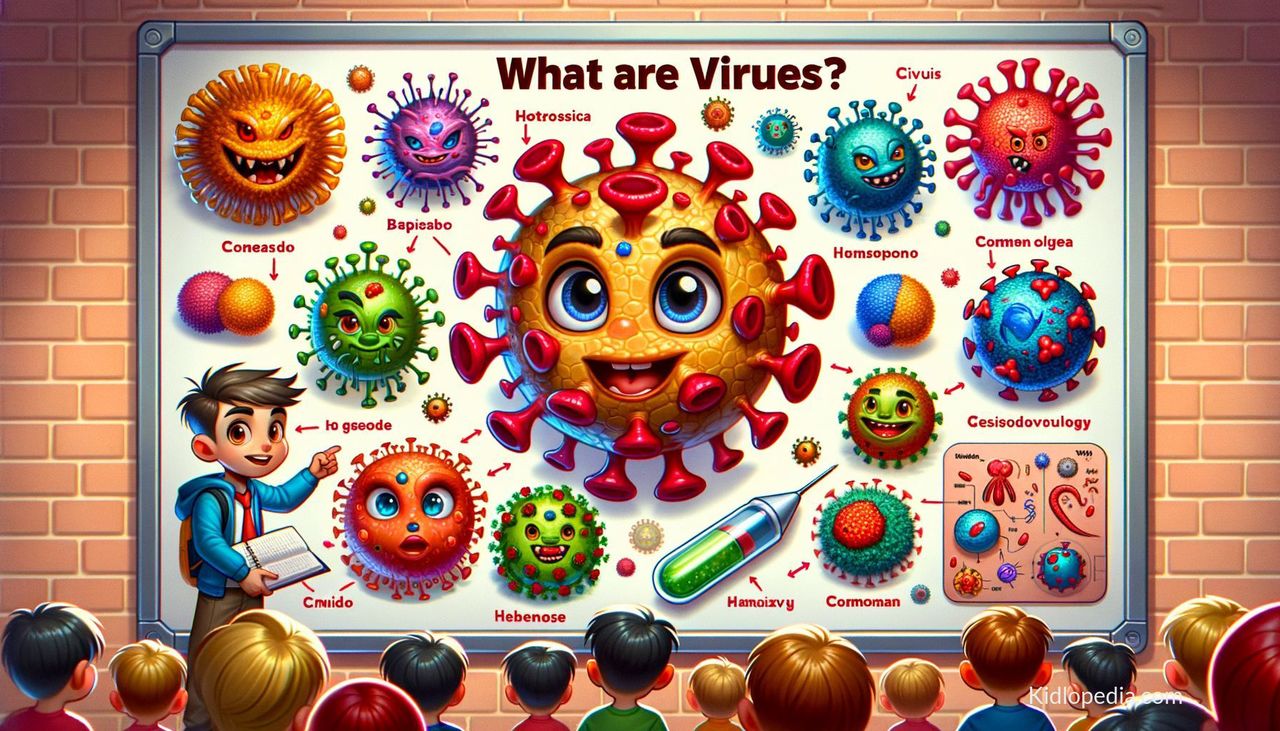
Viruses are tiny particles that cannot be seen without a special tool called a microscope. They are different from plants and animals because they need to enter a living cell to grow and reproduce, often causing illness in the process. Studying viruses, known as virology, helps scientists understand how to prevent diseases and protect our health.
Virology is the study of viruses.
Viruses are tiny particles that can only be seen with a special tool called a microscope.
Unlike plants and animals, viruses cannot live independently.
They need to enter a living cell to grow and reproduce.
When a virus infects a cell, it can make that cell sick.
Viruses parasitize, which means they use other living things to survive.
Inside a host cell, a virus takes over the cell's machinery to make copies of itself.
This process can damage the cell, often causing diseases in the organism.
For example, the flu virus infects cells in our respiratory system, leading to symptoms like coughing and fever.
Studying virology helps scientists understand how viruses work and how they spread.
This knowledge is important for developing vaccines and medicines.
Vaccines are special preparations that help our bodies learn to fight off viruses.
When we get vaccinated, our immune system gets ready to defend against real infections.
Many viruses can be prevented by practicing good hygiene.
Simple actions, such as washing hands with soap and water, covering your mouth when you cough or sneeze, and staying home when you are sick, help stop the spread of viruses.
Did you know?
There are viruses that can infect animals and plants, too! Scientists study these viruses to help protect not just human health, but also the health of animals and crops.
If you want to learn more about exciting topics like this, visit Kidlopedia.com.
Viruses are tiny particles that can only be seen with a special tool called a microscope.
Unlike plants and animals, viruses cannot live independently.
They need to enter a living cell to grow and reproduce.
When a virus infects a cell, it can make that cell sick.
Viruses parasitize, which means they use other living things to survive.
Inside a host cell, a virus takes over the cell's machinery to make copies of itself.
This process can damage the cell, often causing diseases in the organism.
For example, the flu virus infects cells in our respiratory system, leading to symptoms like coughing and fever.
Studying virology helps scientists understand how viruses work and how they spread.
This knowledge is important for developing vaccines and medicines.
Vaccines are special preparations that help our bodies learn to fight off viruses.
When we get vaccinated, our immune system gets ready to defend against real infections.
Many viruses can be prevented by practicing good hygiene.
Simple actions, such as washing hands with soap and water, covering your mouth when you cough or sneeze, and staying home when you are sick, help stop the spread of viruses.
Did you know?
There are viruses that can infect animals and plants, too! Scientists study these viruses to help protect not just human health, but also the health of animals and crops.
If you want to learn more about exciting topics like this, visit Kidlopedia.com.