How Bees Make Honey?
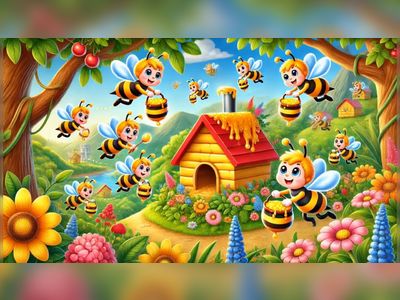
Bees make honey by collecting nectar from flowers. They use their long tongues to sip up the sweet liquid, which they store in a special honey stomach until they return to the hive. Inside the hive, bees pass the nectar and mix it with enzymes, turning it into honey, which they store in hexagon-shaped wax cells called honeycombs.
Bees make honey by collecting nectar from flowers.
Nectar is a sweet liquid found deep inside flowers.
Bees have long, tube-like tongues that help them sip up this nectar.
Once they gather enough nectar, they store it in a special part of their body called the honey stomach.
After collecting the nectar, bees fly back to their hive.
Inside the hive, they pass the nectar to other bees using their mouths.
This sharing process helps mix the nectar with enzymes made by the bees.
These enzymes change the nectar and begin the process of turning it into honey.
Once the nectar is transformed, it is placed into special wax cells called honeycombs.
These cells are shaped like hexagons, which helps save space in the hive.
The bees then fan the nectar with their wings to remove extra water, making it thicker and turning it into sweet, sticky honey.
When the honey is ready, the bees seal each cell with a thin layer of wax.
This keeps the honey clean and fresh for later.
Bees store honey as their food supply for cold months when flowers are not blooming.
Did you know that honey never spoils?
Scientists have found pots of honey in ancient Egyptian tombs that are over 3,000 years old! Also, it takes about 2 million flowers to make just one pound of honey.
If you want to learn more exciting topics, visit Kidlopedia.com!
Nectar is a sweet liquid found deep inside flowers.
Bees have long, tube-like tongues that help them sip up this nectar.
Once they gather enough nectar, they store it in a special part of their body called the honey stomach.
After collecting the nectar, bees fly back to their hive.
Inside the hive, they pass the nectar to other bees using their mouths.
This sharing process helps mix the nectar with enzymes made by the bees.
These enzymes change the nectar and begin the process of turning it into honey.
Once the nectar is transformed, it is placed into special wax cells called honeycombs.
These cells are shaped like hexagons, which helps save space in the hive.
The bees then fan the nectar with their wings to remove extra water, making it thicker and turning it into sweet, sticky honey.
When the honey is ready, the bees seal each cell with a thin layer of wax.
This keeps the honey clean and fresh for later.
Bees store honey as their food supply for cold months when flowers are not blooming.
Did you know that honey never spoils?
Scientists have found pots of honey in ancient Egyptian tombs that are over 3,000 years old! Also, it takes about 2 million flowers to make just one pound of honey.
If you want to learn more exciting topics, visit Kidlopedia.com!