Building Robots: Robotics
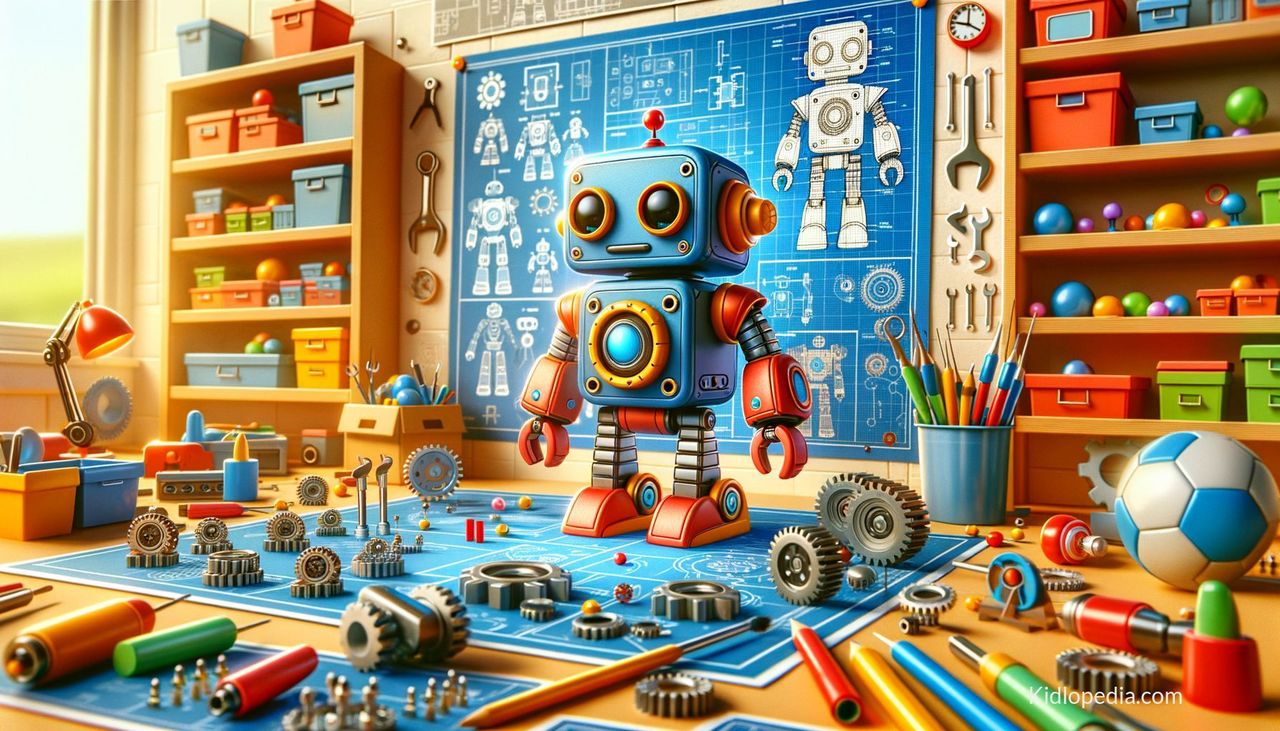
Robots are machines designed to perform tasks automatically. Building robots involves assembling parts like the body, arms, and legs, connecting wires, and programming them to follow commands. This process teaches problem-solving and engineering skills, which are important for innovation and creativity in technology.
Robotics are machines designed to perform tasks automatically.
They can work on their own or be controlled by humans.
Building robots requires assembling different parts, connecting wires, and programming them to follow certain commands.
First, you need to gather all the necessary parts.
These parts usually include a body, arms, legs, and other components.
You might also need tools like screws and a screwdriver.
Once you have everything, you start assembling the robot, similar to putting together a model or a puzzle.
Each piece fits together in a specific way to create the complete robot.
Next, you connect the wires.
These wires help the robot communicate and receive power.
Different colored wires often connect to matching colored ports.
It is important to make the right connections so the robot will work correctly.
After that, you can add details like a head with eyes and a mouth to give your robot a personality.
Programming the robot is the next step.
This is where you teach the robot what to do using simple codes.
For example, you might tell it to "move forward" or "turn left." Once the programming is complete, you power it up using a battery.
When everything is connected correctly, the robot comes to life and can start moving or performing tasks.
Building robots is not just fun; it also helps develop problem-solving and engineering skills.
These skills are useful in many areas of life, especially in science and technology.
Did you know that robots can be used in hospitals to assist doctors?
Or that there are robots designed to explore other planets?
To learn more exciting topics, visit Kidlopedia.com!
They can work on their own or be controlled by humans.
Building robots requires assembling different parts, connecting wires, and programming them to follow certain commands.
First, you need to gather all the necessary parts.
These parts usually include a body, arms, legs, and other components.
You might also need tools like screws and a screwdriver.
Once you have everything, you start assembling the robot, similar to putting together a model or a puzzle.
Each piece fits together in a specific way to create the complete robot.
Next, you connect the wires.
These wires help the robot communicate and receive power.
Different colored wires often connect to matching colored ports.
It is important to make the right connections so the robot will work correctly.
After that, you can add details like a head with eyes and a mouth to give your robot a personality.
Programming the robot is the next step.
This is where you teach the robot what to do using simple codes.
For example, you might tell it to "move forward" or "turn left." Once the programming is complete, you power it up using a battery.
When everything is connected correctly, the robot comes to life and can start moving or performing tasks.
Building robots is not just fun; it also helps develop problem-solving and engineering skills.
These skills are useful in many areas of life, especially in science and technology.
Did you know that robots can be used in hospitals to assist doctors?
Or that there are robots designed to explore other planets?
To learn more exciting topics, visit Kidlopedia.com!