The Universe's States: Quantum Superposition
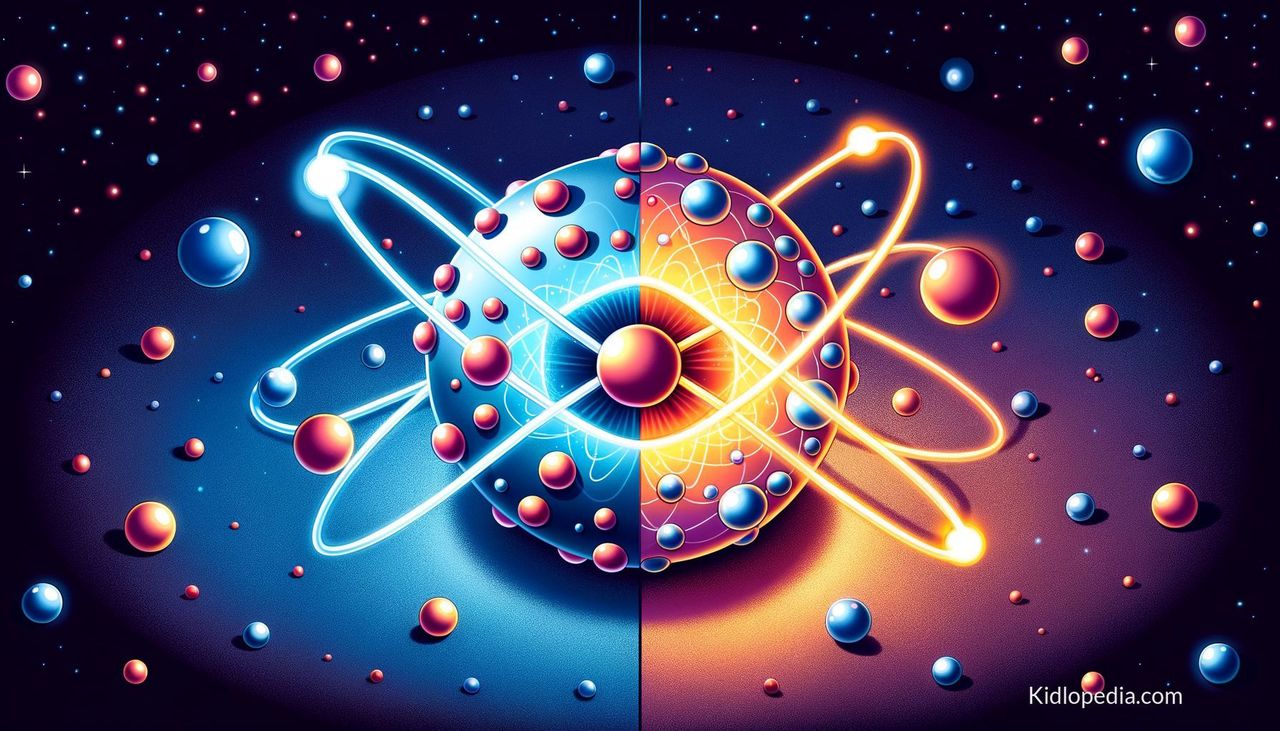
Quantum superposition is a principle in quantum physics where tiny particles, like electrons, can exist in multiple states or locations at the same time. This means that until we measure or observe them, they can be in two places at once. Understanding quantum superposition is important because it helps scientists learn more about the fundamental nature of the universe and how very small things behave.
Quantum superposition is a principle in quantum physics.
It describes how very small particles, like electrons, can exist in multiple states or locations at the same time.
This means that, until we measure or observe them, they can be in two places at once.
In real life, quantum superposition works like this: when scientists study tiny particles, they find that they can behave in ways that are different from larger objects we see every day.
For example, a coin can show heads or tails, but while it's spinning, it can be thought of as being in both states at once.
Similarly, a particle can be in two different positions until someone observes it.
Once we look closely, it "chooses" one state or location.
This concept is important for scientists.
It helps them understand how the universe operates at a fundamental level.
The behavior of tiny particles is the basis for many technologies, including computers and lasers.
Quantum superposition challenges our everyday ideas about reality and shows how strange and interesting the universe can be.
Did you know?
Quantum superposition is what allows quantum computers to process information in a way that regular computers cannot.
This could change how we use technology in the future! Also, when particles are in superposition, they can interfere with each other, creating patterns like waves.
Explore more fascinating topics at Kidlopedia.com!
It describes how very small particles, like electrons, can exist in multiple states or locations at the same time.
This means that, until we measure or observe them, they can be in two places at once.
In real life, quantum superposition works like this: when scientists study tiny particles, they find that they can behave in ways that are different from larger objects we see every day.
For example, a coin can show heads or tails, but while it's spinning, it can be thought of as being in both states at once.
Similarly, a particle can be in two different positions until someone observes it.
Once we look closely, it "chooses" one state or location.
This concept is important for scientists.
It helps them understand how the universe operates at a fundamental level.
The behavior of tiny particles is the basis for many technologies, including computers and lasers.
Quantum superposition challenges our everyday ideas about reality and shows how strange and interesting the universe can be.
Did you know?
Quantum superposition is what allows quantum computers to process information in a way that regular computers cannot.
This could change how we use technology in the future! Also, when particles are in superposition, they can interfere with each other, creating patterns like waves.
Explore more fascinating topics at Kidlopedia.com!