Visual Communication: Graphic Design
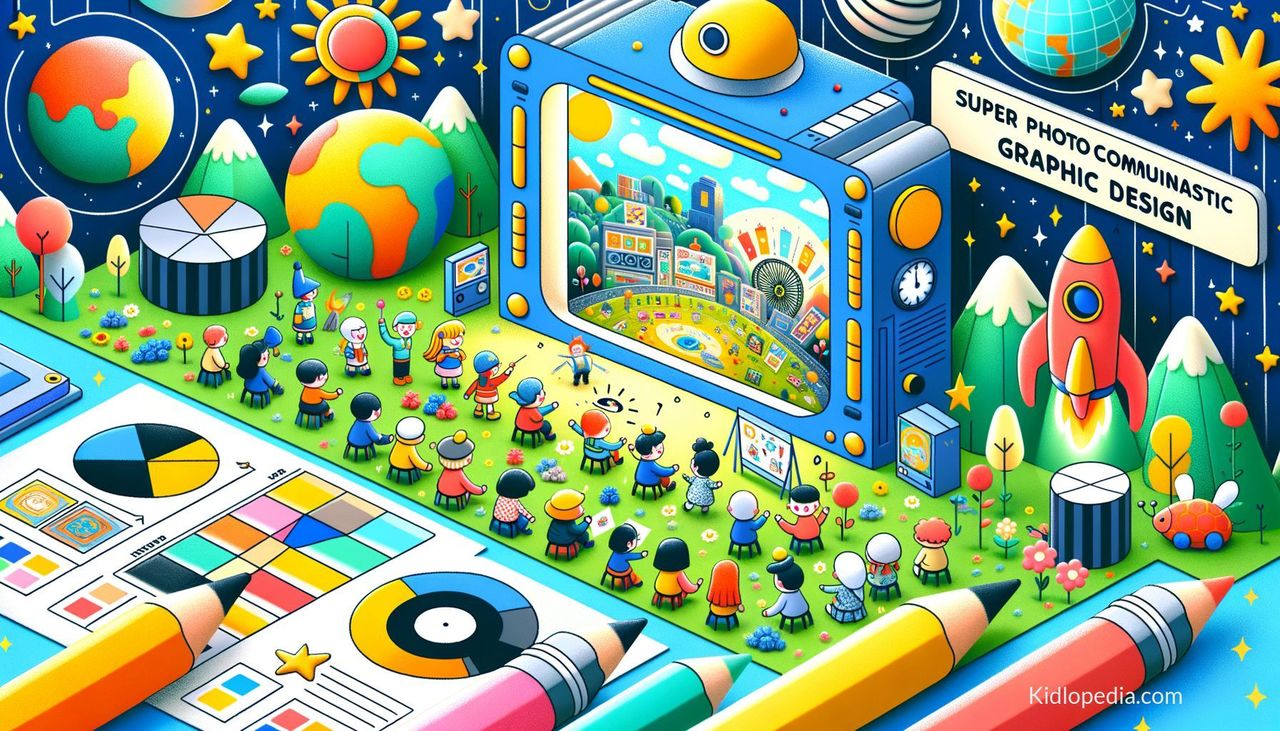
Visual communication is the use of pictures, symbols, and colors to share messages and ideas. It helps people understand information quickly and can express feelings or stories without using words. Graphic design, a form of visual communication, uses these elements creatively to capture attention and convey meaning in an engaging way.
Visual communication is the use of images, symbols, and colors to share messages and ideas.
It helps people understand information quickly, often without the need for words.
This type of communication is powerful because it can express feelings and tell stories in a way that is easy to see and remember.
Graphic design is a special kind of visual communication.
Designers combine colors, shapes, and pictures to create something engaging and meaningful.
For example, a bright red stop sign uses color and a simple shape to tell drivers to stop.
This shows how visual communication can give important information quickly and clearly.
In graphic design, the arrangement of elements is also important.
The way colors and images are placed together can lead viewers to understand a message better.
For instance, a poster for a school event might have colorful pictures of fun activities and bold text announcing the date and time.
The colors and images catch attention, while the text gives clear information.
Visual communication is present in many areas of life.
It can be found in advertising, book covers, educational materials, and even traffic signs.
All these examples use the principles of graphic design to communicate effectively.
Did you know that the colors we see can affect our feelings?
For example, blue often makes people feel calm, while yellow can make them feel happy! Visual communication is not just about what we see; it’s also about how it makes us feel.
Explore more cool topics at Kidlopedia.com!
It helps people understand information quickly, often without the need for words.
This type of communication is powerful because it can express feelings and tell stories in a way that is easy to see and remember.
Graphic design is a special kind of visual communication.
Designers combine colors, shapes, and pictures to create something engaging and meaningful.
For example, a bright red stop sign uses color and a simple shape to tell drivers to stop.
This shows how visual communication can give important information quickly and clearly.
In graphic design, the arrangement of elements is also important.
The way colors and images are placed together can lead viewers to understand a message better.
For instance, a poster for a school event might have colorful pictures of fun activities and bold text announcing the date and time.
The colors and images catch attention, while the text gives clear information.
Visual communication is present in many areas of life.
It can be found in advertising, book covers, educational materials, and even traffic signs.
All these examples use the principles of graphic design to communicate effectively.
Did you know that the colors we see can affect our feelings?
For example, blue often makes people feel calm, while yellow can make them feel happy! Visual communication is not just about what we see; it’s also about how it makes us feel.
Explore more cool topics at Kidlopedia.com!