Natural Growing: Organic Gardening
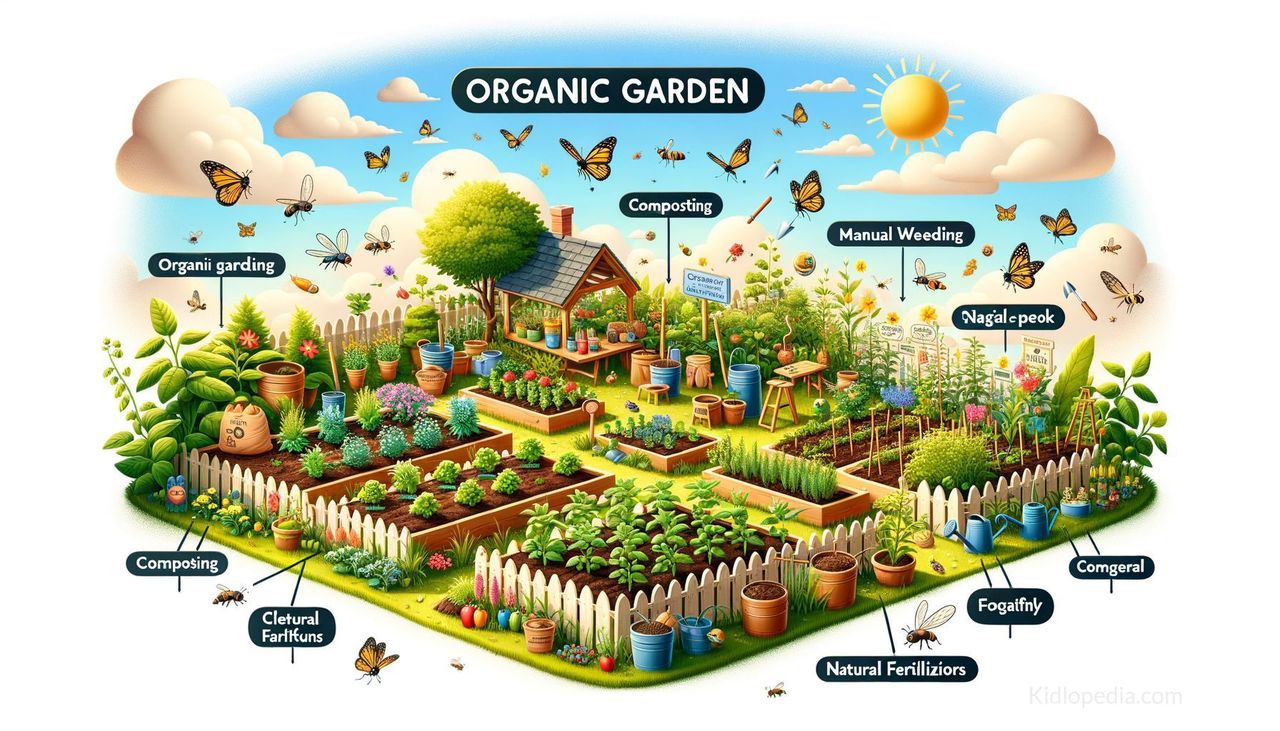
Organic gardening is a way of growing plants without using chemical fertilizers or pesticides. Instead, it relies on natural methods such as compost, beneficial insects, and healthy soil to produce fruits, vegetables, and flowers. This approach is important because it helps protect the environment, promotes biodiversity, and produces healthier food.
Organic gardening is a way of growing plants without using chemical fertilizers or pesticides.
This method focuses on natural techniques to cultivate healthy fruits, vegetables, and flowers.
Organic gardening promotes environmental health and encourages a balance of plants and animals.
To begin organic gardening, the first step is to prepare the soil.
Healthy soil is essential for plant growth.
Gardeners can improve soil quality by adding compost, which consists of decayed organic matter like vegetable scraps and leaves.
Compost provides important nutrients that help plants thrive.
Next, gardeners plant seeds.
It is important to create small holes in the soil and cover them gently with dirt.
After planting, the seeds need water to start growing.
Watering helps the seeds swell and sprout.
Gardeners must be careful not to overwater, as too much water can harm the seeds.
One way to manage pests is by encouraging beneficial insects.
These insects, such as ladybugs and bees, help protect plants by eating harmful pests or pollinating flowers.
By creating a welcoming environment for these friendly bugs, gardeners can keep their plants safe without using chemicals.
Finally, gardeners should regularly check their plants, water them, and add compost as needed.
Over time, with care and attention, the seeds grow into healthy plants.
The result is a vibrant garden full of colorful flowers and ripe fruits and vegetables.
Did you know that organic gardening can help save bees, which are crucial for pollination?
Also, organic gardens can be planted almost anywhere, even in small spaces using pots! Explore more fun topics at Kidlopedia.com.
This method focuses on natural techniques to cultivate healthy fruits, vegetables, and flowers.
Organic gardening promotes environmental health and encourages a balance of plants and animals.
To begin organic gardening, the first step is to prepare the soil.
Healthy soil is essential for plant growth.
Gardeners can improve soil quality by adding compost, which consists of decayed organic matter like vegetable scraps and leaves.
Compost provides important nutrients that help plants thrive.
Next, gardeners plant seeds.
It is important to create small holes in the soil and cover them gently with dirt.
After planting, the seeds need water to start growing.
Watering helps the seeds swell and sprout.
Gardeners must be careful not to overwater, as too much water can harm the seeds.
One way to manage pests is by encouraging beneficial insects.
These insects, such as ladybugs and bees, help protect plants by eating harmful pests or pollinating flowers.
By creating a welcoming environment for these friendly bugs, gardeners can keep their plants safe without using chemicals.
Finally, gardeners should regularly check their plants, water them, and add compost as needed.
Over time, with care and attention, the seeds grow into healthy plants.
The result is a vibrant garden full of colorful flowers and ripe fruits and vegetables.
Did you know that organic gardening can help save bees, which are crucial for pollination?
Also, organic gardens can be planted almost anywhere, even in small spaces using pots! Explore more fun topics at Kidlopedia.com.