Study of Diseases: Pathology
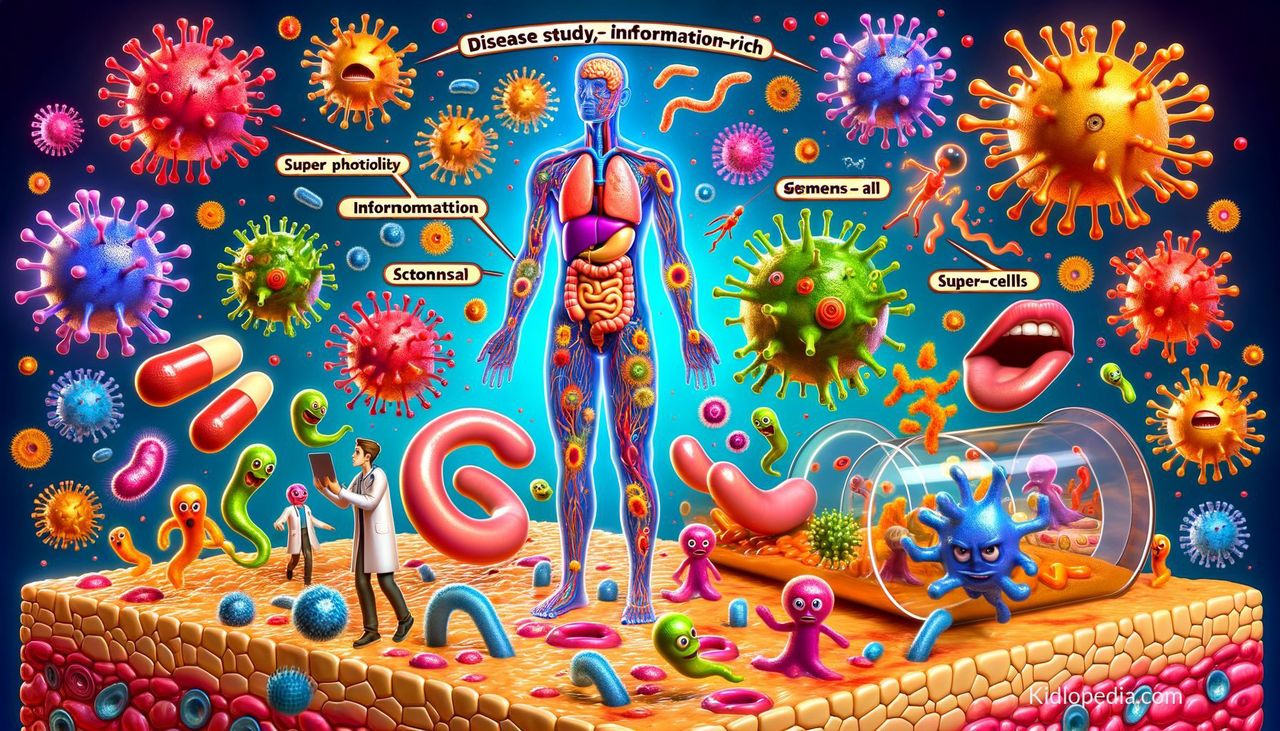
Pathology is the study of diseases, including their causes, development, and effects on the body. Understanding pathology helps scientists and doctors determine how diseases make us feel unwell and how our bodies fight against them. This knowledge is important for finding ways to prevent and treat illnesses, helping us stay healthy.
Pathology is the study of diseases.
It examines what causes diseases, how they develop, and their effects on the body.
Understanding pathology is important for doctors and scientists.
They use this knowledge to help people recover from illnesses and develop ways to prevent them.
When a disease occurs, it often begins with a germ, like a virus or bacteria.
Germs are tiny creatures that can only be seen with a special tool called a microscope.
They can enter the body through different ways, such as through the mouth, nose, or breaks in the skin.
Once inside, germs can start to grow and spread, making a person feel sick.
The body has a defense system to fight these germs.
Special cells in the body, known as white blood cells, work to chase the germs away.
These cells act like little soldiers, ready to protect the body from infections.
Sometimes, doctors also give medicine to help the body fight the germs.
This medicine can help a person feel better faster.
Pathology also helps scientists learn how diseases affect different parts of the body.
By studying diseases, scientists can understand how they work and how different factors like genetics and the environment can contribute to health problems.
This knowledge is essential for improving health care and finding new treatments.
Did you know?
The study of pathology can help scientists discover new medicines that can save lives.
Also, washing your hands frequently is one of the best ways to prevent the spread of germs!
For more interesting topics, visit Kidlopedia.com!
It examines what causes diseases, how they develop, and their effects on the body.
Understanding pathology is important for doctors and scientists.
They use this knowledge to help people recover from illnesses and develop ways to prevent them.
When a disease occurs, it often begins with a germ, like a virus or bacteria.
Germs are tiny creatures that can only be seen with a special tool called a microscope.
They can enter the body through different ways, such as through the mouth, nose, or breaks in the skin.
Once inside, germs can start to grow and spread, making a person feel sick.
The body has a defense system to fight these germs.
Special cells in the body, known as white blood cells, work to chase the germs away.
These cells act like little soldiers, ready to protect the body from infections.
Sometimes, doctors also give medicine to help the body fight the germs.
This medicine can help a person feel better faster.
Pathology also helps scientists learn how diseases affect different parts of the body.
By studying diseases, scientists can understand how they work and how different factors like genetics and the environment can contribute to health problems.
This knowledge is essential for improving health care and finding new treatments.
Did you know?
The study of pathology can help scientists discover new medicines that can save lives.
Also, washing your hands frequently is one of the best ways to prevent the spread of germs!
For more interesting topics, visit Kidlopedia.com!