Raising Bees: Beekeeping
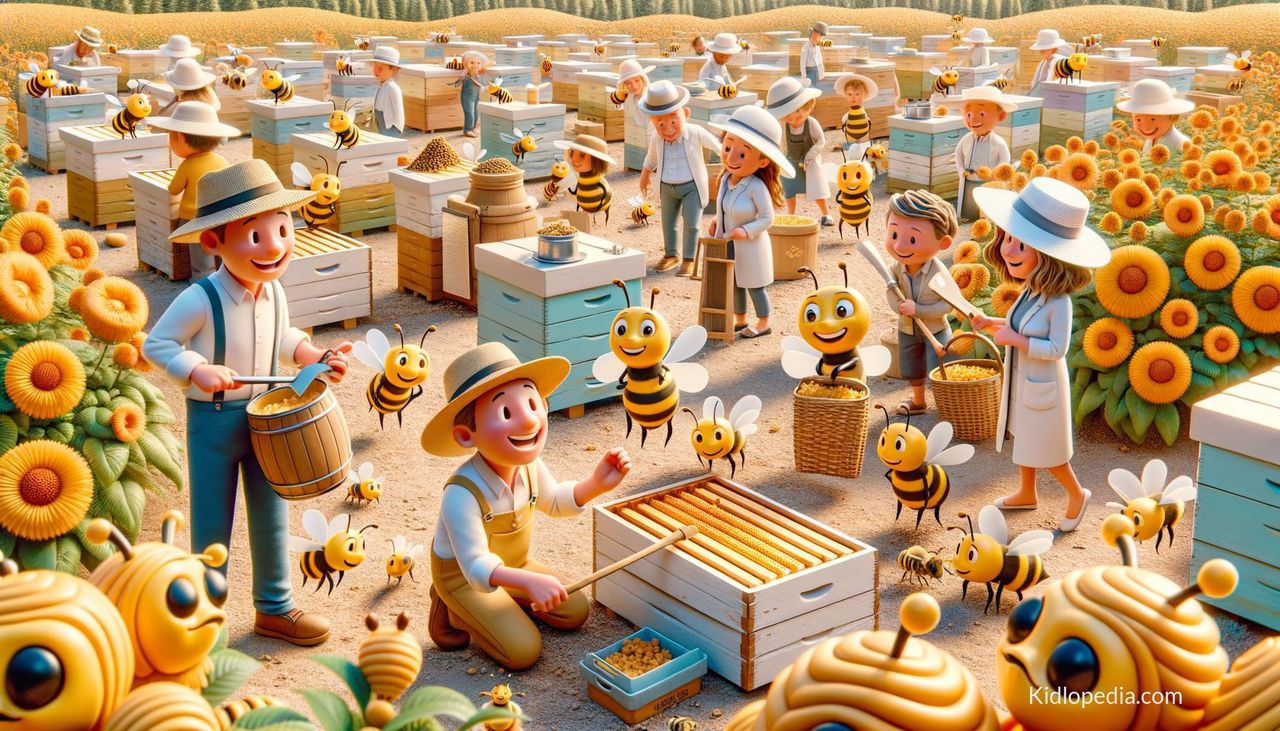
Beekeeping is the practice of raising and caring for bees, usually honeybees, in order to collect honey and other hive products. People keep bees because bees are important for pollinating flowers, which helps plants grow and produce food. By supporting bee populations, beekeepers help the environment and ensure that there are plenty of fruits, vegetables, and flowers for everyone to enjoy.
Beekeeping is the practice of raising and caring for bees.
Most beekeepers focus on honeybees.
They keep bees to collect honey and other products like beeswax and royal jelly.
Beekeeping is important because bees help pollinate flowers.
This process is essential for plants to grow and produce food for everyone.
To start beekeeping, a beekeeper needs to set up a beehive.
A beehive is a special home for bees where they store honey, raise their young, and live together.
Beekeepers often wear protective clothing, like bee suits, to prevent getting stung.
They inspect the hive to make sure the bees are healthy and to check how much honey is being produced.
Inside the hive, bees work together for their community.
The queen bee is the leader and lays eggs.
Worker bees gather nectar and pollen from flowers.
They take the nectar back to the hive and turn it into honey.
Pollen helps plants grow by allowing them to make seeds.
This process helps flowers bloom and supports the entire ecosystem.
Beekeeping contributes to the environment.
With more bees, there are more plants and food.
Many fruits and vegetables depend on bees for pollination.
Without bees, food production would decrease, causing fewer choices for people to eat.
Did you know that a single bee can visit up to 2,000 flowers in one day?
Also, honey never spoils; archaeologists have found pots of honey in ancient Egyptian tombs that are over 3,000 years old!
You can learn more exciting topics at Kidlopedia.com.
Most beekeepers focus on honeybees.
They keep bees to collect honey and other products like beeswax and royal jelly.
Beekeeping is important because bees help pollinate flowers.
This process is essential for plants to grow and produce food for everyone.
To start beekeeping, a beekeeper needs to set up a beehive.
A beehive is a special home for bees where they store honey, raise their young, and live together.
Beekeepers often wear protective clothing, like bee suits, to prevent getting stung.
They inspect the hive to make sure the bees are healthy and to check how much honey is being produced.
Inside the hive, bees work together for their community.
The queen bee is the leader and lays eggs.
Worker bees gather nectar and pollen from flowers.
They take the nectar back to the hive and turn it into honey.
Pollen helps plants grow by allowing them to make seeds.
This process helps flowers bloom and supports the entire ecosystem.
Beekeeping contributes to the environment.
With more bees, there are more plants and food.
Many fruits and vegetables depend on bees for pollination.
Without bees, food production would decrease, causing fewer choices for people to eat.
Did you know that a single bee can visit up to 2,000 flowers in one day?
Also, honey never spoils; archaeologists have found pots of honey in ancient Egyptian tombs that are over 3,000 years old!
You can learn more exciting topics at Kidlopedia.com.