Exploring Space: Space Missions
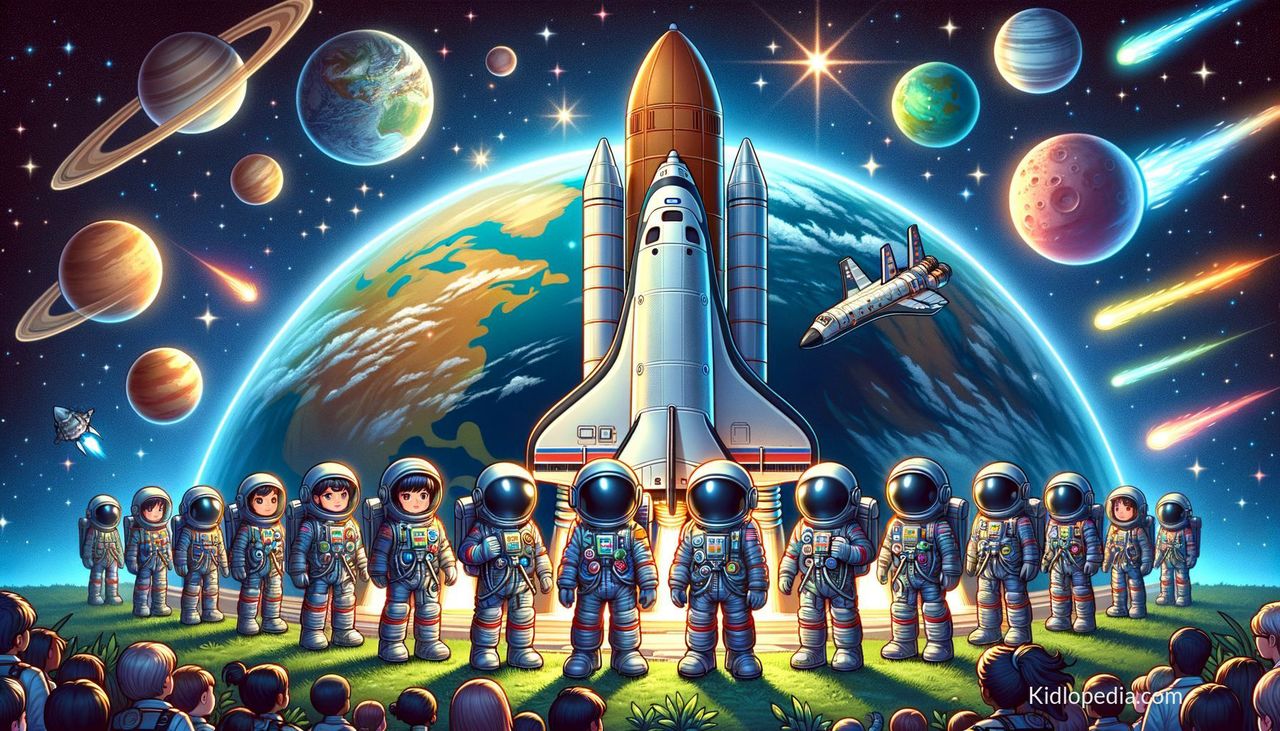

Space missions are operations that send astronauts and equipment into space for exploration and research. Astronauts travel to space in specially designed rockets, which propel them beyond Earth's atmosphere. These missions are important because they help scientists learn more about our universe, conduct experiments in microgravity, and advance technology that can benefit life on Earth.
Space missions are operations that send astronauts and equipment into space for exploration and research.
These missions help scientists learn about the universe and conduct important experiments in microgravity.
Microgravity is a condition in space where objects seem to float because there is very little gravity acting on them.
Astronauts prepare for their journey by putting on special suits called space suits.
These suits protect them from the cold temperatures and lack of air in space.
Once they are suited up, astronauts board a spacecraft attached to a rocket.
The rocket is designed to provide a strong force, or thrust, to propel the spacecraft into space.
It uses a lot of fuel to lift off and travels at very high speeds.
After the rocket launches, it breaks through Earth’s atmosphere and reaches space.
Inside the spacecraft, astronauts work on various tasks, like conducting experiments and fixing equipment.
They also get to experience the unique conditions of space, such as floating and seeing Earth from above.
When the mission is complete, the astronauts prepare to return to Earth.
The spacecraft carefully reenters the atmosphere, where it faces intense heat.
To ensure a safe landing, parachutes are deployed to slow down the descent.
This allows the spacecraft to land gently back on Earth.
Did you know?
The first human to travel into space was Yuri Gagarin in 1961.
Also, astronauts on the International Space Station can see 16 sunrises and sunsets each day!
If you want to learn more interesting facts, visit Kidlopedia.com!
These missions help scientists learn about the universe and conduct important experiments in microgravity.
Microgravity is a condition in space where objects seem to float because there is very little gravity acting on them.
Astronauts prepare for their journey by putting on special suits called space suits.
These suits protect them from the cold temperatures and lack of air in space.
Once they are suited up, astronauts board a spacecraft attached to a rocket.
The rocket is designed to provide a strong force, or thrust, to propel the spacecraft into space.
It uses a lot of fuel to lift off and travels at very high speeds.
After the rocket launches, it breaks through Earth’s atmosphere and reaches space.
Inside the spacecraft, astronauts work on various tasks, like conducting experiments and fixing equipment.
They also get to experience the unique conditions of space, such as floating and seeing Earth from above.
When the mission is complete, the astronauts prepare to return to Earth.
The spacecraft carefully reenters the atmosphere, where it faces intense heat.
To ensure a safe landing, parachutes are deployed to slow down the descent.
This allows the spacecraft to land gently back on Earth.
Did you know?
The first human to travel into space was Yuri Gagarin in 1961.
Also, astronauts on the International Space Station can see 16 sunrises and sunsets each day!
If you want to learn more interesting facts, visit Kidlopedia.com!