The Universe's Texture: The Quantum Foam
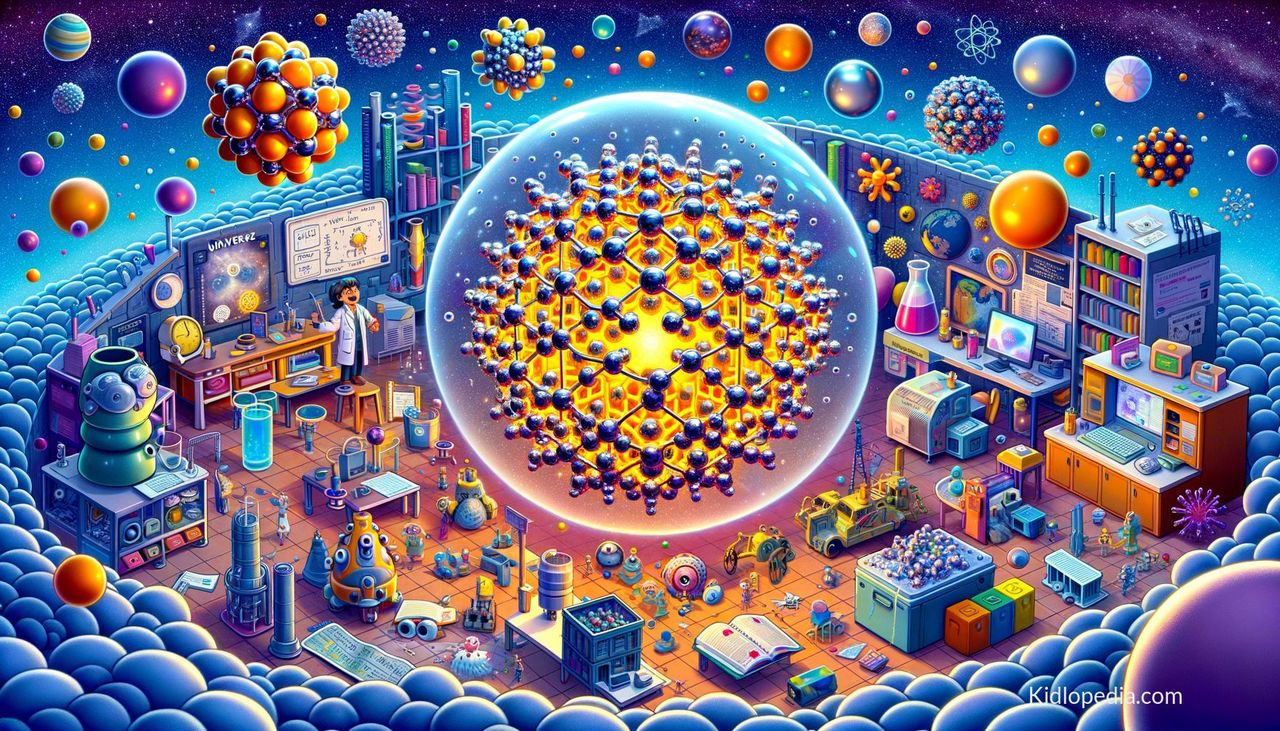
Quantum foam is the term used to describe the very smallest structures of the universe, found at the scale of subatomic particles. It consists of tiny, fluctuating bubbles of energy that pop in and out of existence, and it represents the fundamental nature of space and time. Understanding quantum foam helps scientists learn about the building blocks of everything in the universe, including stars, planets, and even ourselves.
Quantum foam is the smallest structure in the universe, made of tiny bubbles of energy.
These bubbles change quickly, popping in and out of existence.
Quantum foam exists at a scale much smaller than atoms and is important for understanding our universe.
It represents the fundamental nature of space and time.
Atoms are made up of even smaller particles, like protons, neutrons, and electrons.
When scientists study these particles, they find that below them lies quantum foam.
This foam is always in motion.
The bubbles created by quantum foam are too small for our eyes to see, but they are a fundamental part of everything in the universe.
The quantum foam affects the way we understand gravity, electromagnetism, and other forces.
It helps scientists learn how particles interact and how the universe is structured.
This knowledge is essential for everything from building rockets to understanding black holes.
Did you know that quantum foam could help explain why the universe is not empty?
It shows that even the emptiest space has energy and activity.
Also, the concept of quantum foam leads to interesting ideas about parallel universes and the nature of reality.
Explore more topics at Kidlopedia.com!
These bubbles change quickly, popping in and out of existence.
Quantum foam exists at a scale much smaller than atoms and is important for understanding our universe.
It represents the fundamental nature of space and time.
Atoms are made up of even smaller particles, like protons, neutrons, and electrons.
When scientists study these particles, they find that below them lies quantum foam.
This foam is always in motion.
The bubbles created by quantum foam are too small for our eyes to see, but they are a fundamental part of everything in the universe.
The quantum foam affects the way we understand gravity, electromagnetism, and other forces.
It helps scientists learn how particles interact and how the universe is structured.
This knowledge is essential for everything from building rockets to understanding black holes.
Did you know that quantum foam could help explain why the universe is not empty?
It shows that even the emptiest space has energy and activity.
Also, the concept of quantum foam leads to interesting ideas about parallel universes and the nature of reality.
Explore more topics at Kidlopedia.com!