What is Honey?
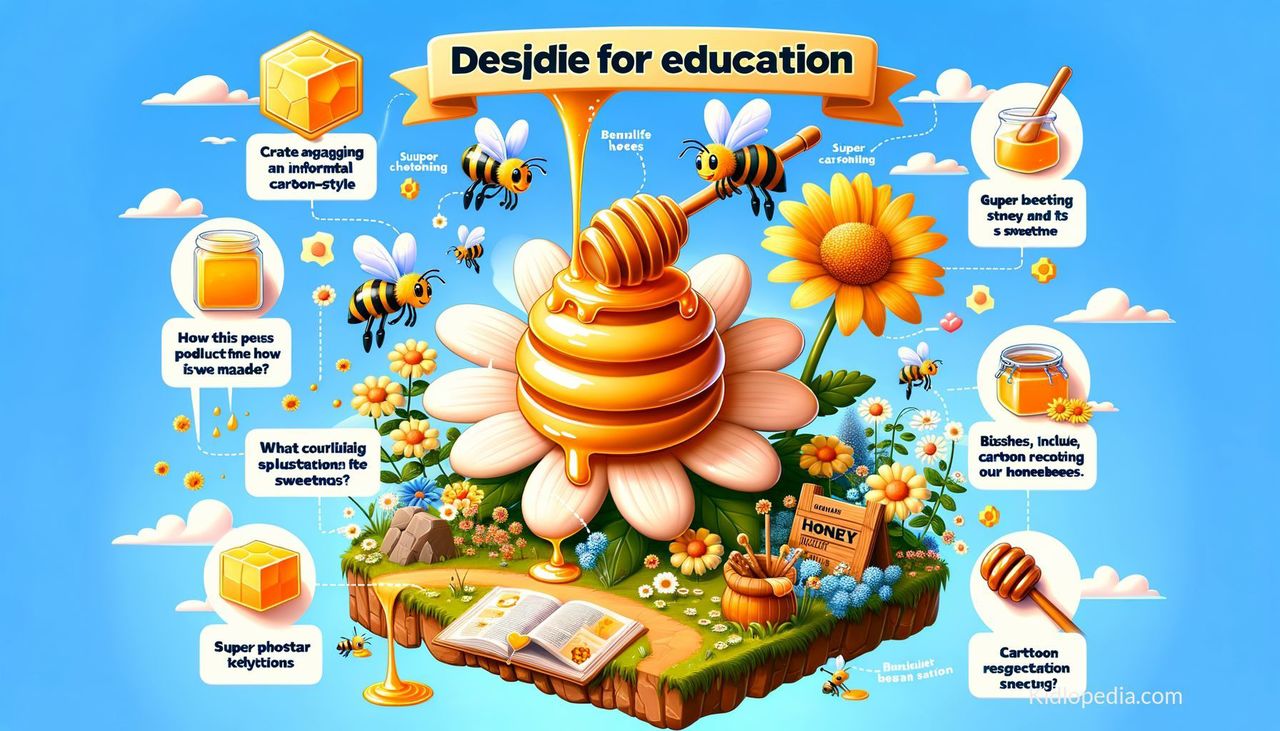
Honey is a thick, golden liquid produced by bees using nectar from flowers. It is sweet because it contains natural sugars, mainly fructose and glucose, which are transformed during the honey-making process. Honey is important as a food source for bees and is enjoyed by people for its delicious taste and energy-boosting properties.
Honey is a thick, golden liquid produced by bees using nectar from flowers.
It is sweet because it contains natural sugars, mainly fructose and glucose.
Bees transform the nectar into honey through a special process.
First, when a bee finds a flower, it uses its long tongue to sip the nectar.
The nectar goes into a part of the bee's body called the honey stomach, which is different from the stomach used for digestion.
When the bee returns to the hive, it passes the nectar to another bee through a process called trophallaxis, where the bees transfer the nectar mouth to mouth.
As the nectar moves from bee to bee, it mixes with enzymes from their bodies.
These enzymes start turning the nectar into honey.
After mixing, the bees place the nectar into small wax cells that they build in the hive.
These cells are shaped like hexagons, which helps them store the honey efficiently.
Next, the bees flap their wings to create warm air.
This warm air helps to evaporate water from the nectar, making it thicker and stickier.
This process is called evaporation.
As time passes, the nectar becomes honey, a delicious food full of energy.
Honey serves as an important food source for bees, especially during winter when flowers are not blooming.
It is also enjoyed by people for its taste and can be used in many ways, like on bread, in tea, or in cooking.
Did you know?
Honey never spoils and can last for thousands of years if stored properly! Also, bees can visit thousands of flowers in a single day to gather nectar.
Explore more fascinating topics at Kidlopedia.com!
It is sweet because it contains natural sugars, mainly fructose and glucose.
Bees transform the nectar into honey through a special process.
First, when a bee finds a flower, it uses its long tongue to sip the nectar.
The nectar goes into a part of the bee's body called the honey stomach, which is different from the stomach used for digestion.
When the bee returns to the hive, it passes the nectar to another bee through a process called trophallaxis, where the bees transfer the nectar mouth to mouth.
As the nectar moves from bee to bee, it mixes with enzymes from their bodies.
These enzymes start turning the nectar into honey.
After mixing, the bees place the nectar into small wax cells that they build in the hive.
These cells are shaped like hexagons, which helps them store the honey efficiently.
Next, the bees flap their wings to create warm air.
This warm air helps to evaporate water from the nectar, making it thicker and stickier.
This process is called evaporation.
As time passes, the nectar becomes honey, a delicious food full of energy.
Honey serves as an important food source for bees, especially during winter when flowers are not blooming.
It is also enjoyed by people for its taste and can be used in many ways, like on bread, in tea, or in cooking.
Did you know?
Honey never spoils and can last for thousands of years if stored properly! Also, bees can visit thousands of flowers in a single day to gather nectar.
Explore more fascinating topics at Kidlopedia.com!