Study of Fossils: Paleontology
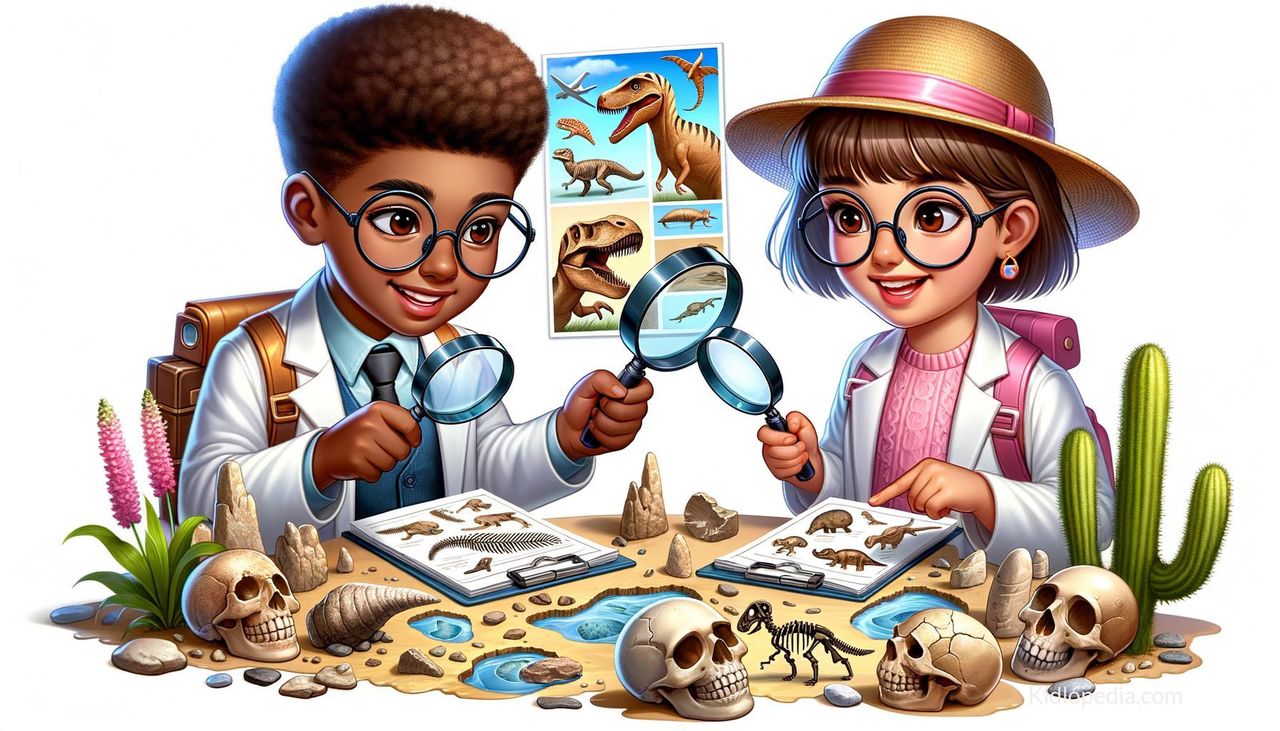
Paleontology is the study of fossils, which are the preserved remains or traces of ancient plants and animals. Fossils tell us about the past by providing evidence of what life was like millions of years ago, including the types of creatures that existed, their environments, and how they lived. Understanding fossils helps scientists learn about the history of Earth and the evolution of life.
Paleontology is the study of fossils.
Fossils are the preserved remains or traces of ancient plants and animals.
They can be found in rocks and soil.
Fossils can include bones, teeth, shells, and even footprints.
By studying these fossils, scientists can learn what life was like millions of years ago.
When a plant or animal dies, it can sometimes become a fossil.
Different conditions help create fossils.
For example, if a creature is quickly buried by mud or sand, its remains may be preserved.
Over millions of years, the remains can turn into rock.
Paleontologists, the scientists who study fossils, carefully dig up these buried treasures.
They examine them to gather information about how these ancient creatures lived.
Fossils provide a lot of information.
They tell us what types of animals and plants existed in the past.
They can also show us what the environment was like.
For instance, a fossil of a marine creature suggests that the area was once underwater.
By studying different fossils, scientists can understand the history of Earth and how life has evolved over time.
Did you know that some fossils are more than one hundred million years old?
Some scientists even use fossils to track changes in the planet's climate! You can discover more about these exciting topics at Kidlopedia.com.
Fossils are the preserved remains or traces of ancient plants and animals.
They can be found in rocks and soil.
Fossils can include bones, teeth, shells, and even footprints.
By studying these fossils, scientists can learn what life was like millions of years ago.
When a plant or animal dies, it can sometimes become a fossil.
Different conditions help create fossils.
For example, if a creature is quickly buried by mud or sand, its remains may be preserved.
Over millions of years, the remains can turn into rock.
Paleontologists, the scientists who study fossils, carefully dig up these buried treasures.
They examine them to gather information about how these ancient creatures lived.
Fossils provide a lot of information.
They tell us what types of animals and plants existed in the past.
They can also show us what the environment was like.
For instance, a fossil of a marine creature suggests that the area was once underwater.
By studying different fossils, scientists can understand the history of Earth and how life has evolved over time.
Did you know that some fossils are more than one hundred million years old?
Some scientists even use fossils to track changes in the planet's climate! You can discover more about these exciting topics at Kidlopedia.com.