Weather and Climate: Meteorology
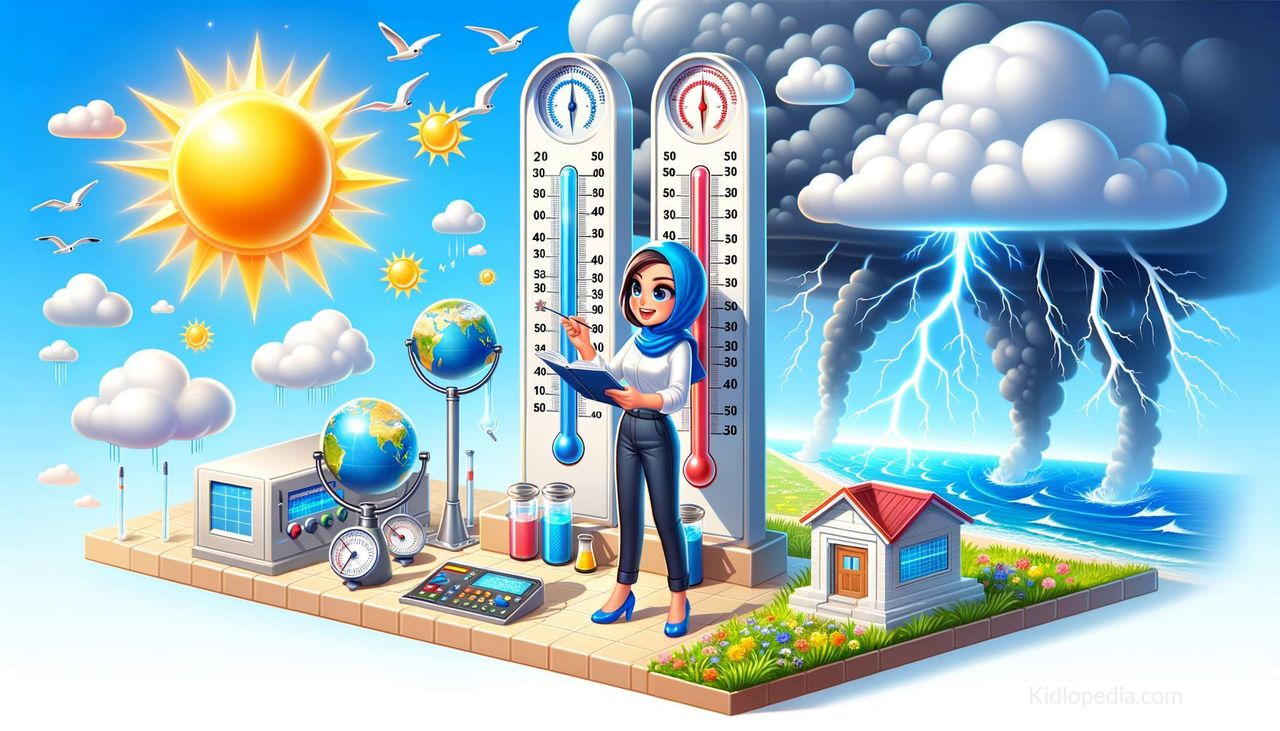
Meteorology is the scientific study of the atmosphere and weather. Meteorologists use tools like thermometers, rain gauges, and satellites to gather data that helps predict weather conditions such as rain, snow, or sunshine. Understanding weather patterns is important for planning activities and staying safe during severe weather.
Meteorology is the scientific study of the atmosphere and weather.
It helps us understand how weather works and what conditions are happening around us, like rain, snow, or sunshine.
Meteorologists are scientists who specialize in monitoring and predicting the weather.
They gather information using special tools and techniques.
Meteorologists use thermometers to measure temperature.
This tells them how hot or cold it is outside.
They use rain gauges to measure how much it rains.
This helps them know if it's going to be a wet day or a dry one.
Wind speed is measured with anemometers, which tell meteorologists how strong the wind is blowing.
In addition to these tools, meteorologists also use weather balloons and satellites.
Weather balloons are released into the atmosphere to collect data about air pressure and temperature at different altitudes.
Satellites orbit the Earth and take pictures of the weather from space, showing large weather patterns like storms and clouds.
Meteorologists analyze all of this data using computers.
They create weather maps that display the current conditions and forecast future weather.
These maps show areas of high and low pressure, which help predict changes in the weather.
Understanding the weather is important for everyone.
It helps us decide what to wear, plan outdoor activities, and stay safe during severe weather events like storms or heatwaves.
Did you know that meteorologists can sometimes predict the weather a week in advance?
They also study climate, which looks at weather patterns over a longer time, such as years or decades.
For more fascinating topics, visit Kidlopedia.com!
It helps us understand how weather works and what conditions are happening around us, like rain, snow, or sunshine.
Meteorologists are scientists who specialize in monitoring and predicting the weather.
They gather information using special tools and techniques.
Meteorologists use thermometers to measure temperature.
This tells them how hot or cold it is outside.
They use rain gauges to measure how much it rains.
This helps them know if it's going to be a wet day or a dry one.
Wind speed is measured with anemometers, which tell meteorologists how strong the wind is blowing.
In addition to these tools, meteorologists also use weather balloons and satellites.
Weather balloons are released into the atmosphere to collect data about air pressure and temperature at different altitudes.
Satellites orbit the Earth and take pictures of the weather from space, showing large weather patterns like storms and clouds.
Meteorologists analyze all of this data using computers.
They create weather maps that display the current conditions and forecast future weather.
These maps show areas of high and low pressure, which help predict changes in the weather.
Understanding the weather is important for everyone.
It helps us decide what to wear, plan outdoor activities, and stay safe during severe weather events like storms or heatwaves.
Did you know that meteorologists can sometimes predict the weather a week in advance?
They also study climate, which looks at weather patterns over a longer time, such as years or decades.
For more fascinating topics, visit Kidlopedia.com!