The Visible Part: The Observable Universe
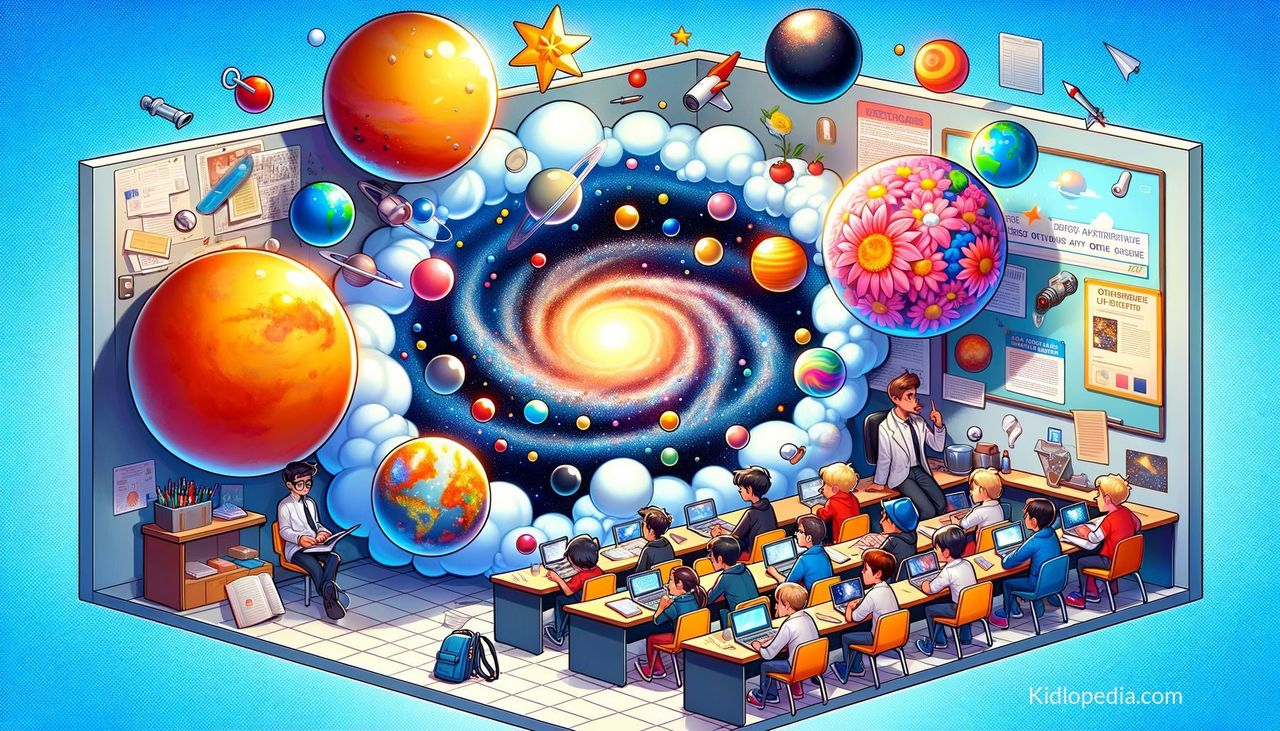
The observable universe is the part of the universe that we can see from Earth using our eyes and telescopes. It includes all the stars, planets, and galaxies whose light has reached us since the beginning of time. Understanding the observable universe helps scientists learn more about the cosmos and our place in it.
The observable universe is the part of the universe that we can see from Earth.
It consists of all the stars, planets, and galaxies whose light has reached us since the beginning of time.
This area of space is vast and stretches out for billions of light-years in every direction.
A light-year is the distance that light travels in one year, which is about 5.88 trillion miles (9.46 trillion kilometers).
When we look up at the night sky, we see only a tiny fraction of what exists in the universe.
Most of the stars we see are located within our galaxy, the Milky Way.
The observable universe also includes many other galaxies, which are like huge collections of stars.
Scientists use powerful telescopes to observe these distant stars and galaxies.
These telescopes can capture light that our eyes cannot see, helping us learn more about what is out there in space.
Light from the farthest parts of the universe takes a long time to reach us.
For example, if a star is 100 light-years away, the light we see from it today started its journey 100 years ago.
Because of this, when we look at distant stars, we are actually seeing them as they were in the past.
The observable universe also helps scientists answer big questions about how the universe began and how it is changing.
By studying light from different objects, scientists can learn about their composition, temperature, and motion.
This knowledge helps us understand our own planet and the cosmic neighborhood we live in.
Did you know that the observable universe is estimated to be about 93 billion light-years in diameter?
Also, there are more stars in the universe than there are grains of sand on all the Earth’s beaches combined!
For more interesting topics, visit Kidlopedia.com.
It consists of all the stars, planets, and galaxies whose light has reached us since the beginning of time.
This area of space is vast and stretches out for billions of light-years in every direction.
A light-year is the distance that light travels in one year, which is about 5.88 trillion miles (9.46 trillion kilometers).
When we look up at the night sky, we see only a tiny fraction of what exists in the universe.
Most of the stars we see are located within our galaxy, the Milky Way.
The observable universe also includes many other galaxies, which are like huge collections of stars.
Scientists use powerful telescopes to observe these distant stars and galaxies.
These telescopes can capture light that our eyes cannot see, helping us learn more about what is out there in space.
Light from the farthest parts of the universe takes a long time to reach us.
For example, if a star is 100 light-years away, the light we see from it today started its journey 100 years ago.
Because of this, when we look at distant stars, we are actually seeing them as they were in the past.
The observable universe also helps scientists answer big questions about how the universe began and how it is changing.
By studying light from different objects, scientists can learn about their composition, temperature, and motion.
This knowledge helps us understand our own planet and the cosmic neighborhood we live in.
Did you know that the observable universe is estimated to be about 93 billion light-years in diameter?
Also, there are more stars in the universe than there are grains of sand on all the Earth’s beaches combined!
For more interesting topics, visit Kidlopedia.com.