Growing in Cities: Urban Farming
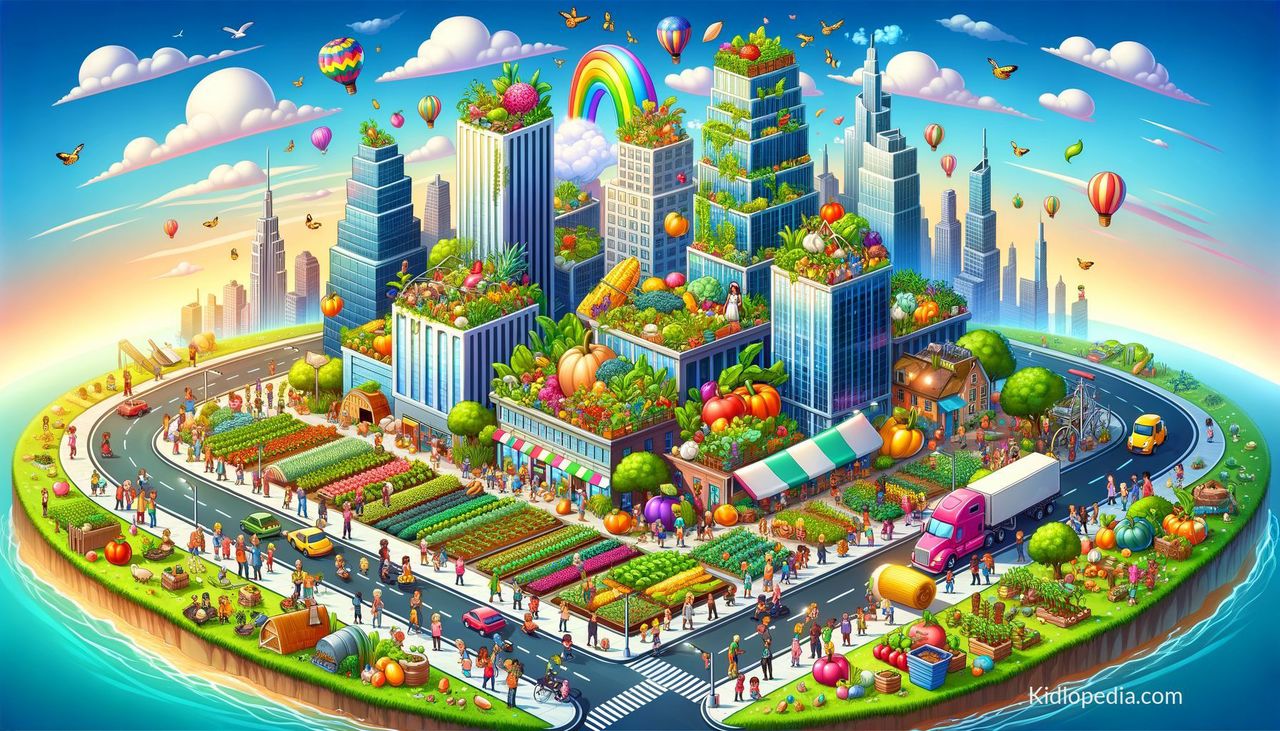
Urban farming is the practice of growing food in urban areas, such as cities. It allows people to cultivate vegetables, fruits, and flowers in small spaces like rooftops, balconies, and community gardens. Urban farming matters because it provides fresh produce, enhances the beauty of cities, and benefits the environment by improving air quality.
Urban farming is the practice of growing food in cities.
It involves cultivating vegetables, fruits, and flowers in small spaces like rooftops, balconies, and vacant lots.
This practice is becoming more popular as people look for ways to produce fresh food and beautify their surroundings.
Urban farming works in several ways.
First, it allows city residents to grow their own food.
This can include planting tomatoes, carrots, or herbs right outside their homes.
These gardens not only provide fresh ingredients for cooking, but they also help people connect with nature.
Second, urban farms help improve the environment.
Green spaces in cities can clean the air and reduce pollution.
Plants absorb carbon dioxide and release oxygen, making the city healthier for everyone.
Some urban farms also use composting, which recycles food waste into nutrient-rich soil, helping plants to grow better.
Third, urban farming makes neighborhoods more beautiful.
By adding plants and flowers, it creates green areas that can make people feel happier.
A rooftop garden can turn a dull building into a vibrant space, attracting butterflies and other wildlife.
Did you know that urban farming can also help communities come together?
People often work together to create community gardens, where they can share their gardening skills and enjoy the benefits of fresh produce.
Did you know that some cities even have competitions for the best rooftop gardens?
These events encourage more people to start urban farming and share their success!
Explore more exciting topics at Kidlopedia.com!
It involves cultivating vegetables, fruits, and flowers in small spaces like rooftops, balconies, and vacant lots.
This practice is becoming more popular as people look for ways to produce fresh food and beautify their surroundings.
Urban farming works in several ways.
First, it allows city residents to grow their own food.
This can include planting tomatoes, carrots, or herbs right outside their homes.
These gardens not only provide fresh ingredients for cooking, but they also help people connect with nature.
Second, urban farms help improve the environment.
Green spaces in cities can clean the air and reduce pollution.
Plants absorb carbon dioxide and release oxygen, making the city healthier for everyone.
Some urban farms also use composting, which recycles food waste into nutrient-rich soil, helping plants to grow better.
Third, urban farming makes neighborhoods more beautiful.
By adding plants and flowers, it creates green areas that can make people feel happier.
A rooftop garden can turn a dull building into a vibrant space, attracting butterflies and other wildlife.
Did you know that urban farming can also help communities come together?
People often work together to create community gardens, where they can share their gardening skills and enjoy the benefits of fresh produce.
Did you know that some cities even have competitions for the best rooftop gardens?
These events encourage more people to start urban farming and share their success!
Explore more exciting topics at Kidlopedia.com!