Stellar Groups: Star Clusters
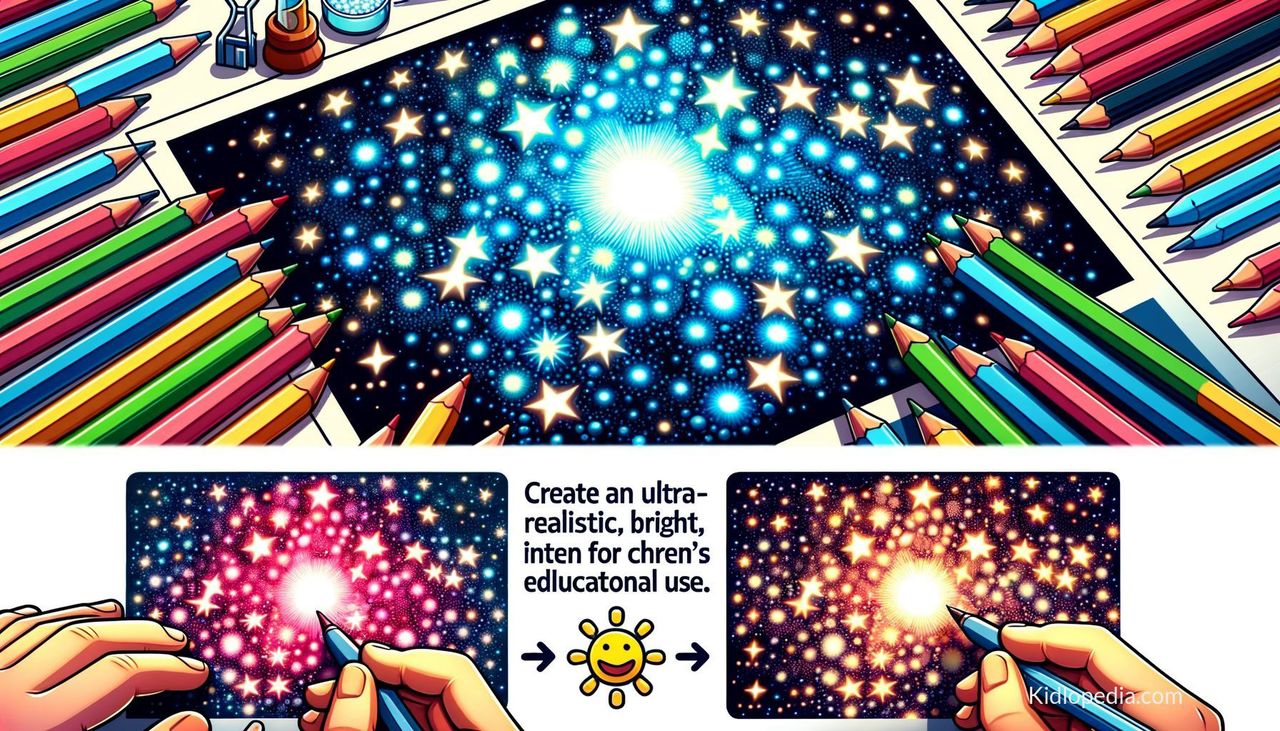
Star clusters are groups of stars that are close together in space. There are two main types: open clusters, which are young groups of stars formed from the same gas cloud, and globular clusters, which are much older, dense collections of hundreds of thousands of stars. Studying star clusters helps astronomers understand the formation and evolution of stars and galaxies.
Star clusters are groups of stars that are located close together in space.
There are two main types of star clusters: open clusters and globular clusters.
Both types of clusters are important for understanding how stars form and how they live.
Open clusters are young groups of stars.
They form from the same cloud of gas and dust.
When parts of this cloud collapse, they create new stars that are born around the same time.
Open clusters are usually found in the arms of spiral galaxies, like our Milky Way.
They often contain dozens to a few hundred stars that can be seen together in the sky.
Globular clusters are very different.
They are much older and contain many more stars.
These clusters can have hundreds of thousands of stars packed closely together.
Globular clusters are spherical in shape and orbit around the center of a galaxy.
They contain some of the oldest stars in the universe and are often found in the halo of galaxies.
Studying star clusters helps astronomers learn about the life cycles of stars.
By examining how stars in these clusters behave, scientists can better understand how stars evolve over time.
Star clusters also provide clues about the history and structure of galaxies.
Did you know that the stars in an open cluster are usually very young, while the stars in a globular cluster can be billions of years old?
Also, the closest star cluster to Earth is called the Pleiades, and it can be seen with the naked eye!
If you want to learn more interesting topics, visit Kidlopedia.com!
There are two main types of star clusters: open clusters and globular clusters.
Both types of clusters are important for understanding how stars form and how they live.
Open clusters are young groups of stars.
They form from the same cloud of gas and dust.
When parts of this cloud collapse, they create new stars that are born around the same time.
Open clusters are usually found in the arms of spiral galaxies, like our Milky Way.
They often contain dozens to a few hundred stars that can be seen together in the sky.
Globular clusters are very different.
They are much older and contain many more stars.
These clusters can have hundreds of thousands of stars packed closely together.
Globular clusters are spherical in shape and orbit around the center of a galaxy.
They contain some of the oldest stars in the universe and are often found in the halo of galaxies.
Studying star clusters helps astronomers learn about the life cycles of stars.
By examining how stars in these clusters behave, scientists can better understand how stars evolve over time.
Star clusters also provide clues about the history and structure of galaxies.
Did you know that the stars in an open cluster are usually very young, while the stars in a globular cluster can be billions of years old?
Also, the closest star cluster to Earth is called the Pleiades, and it can be seen with the naked eye!
If you want to learn more interesting topics, visit Kidlopedia.com!