Where Does Rain Come From?
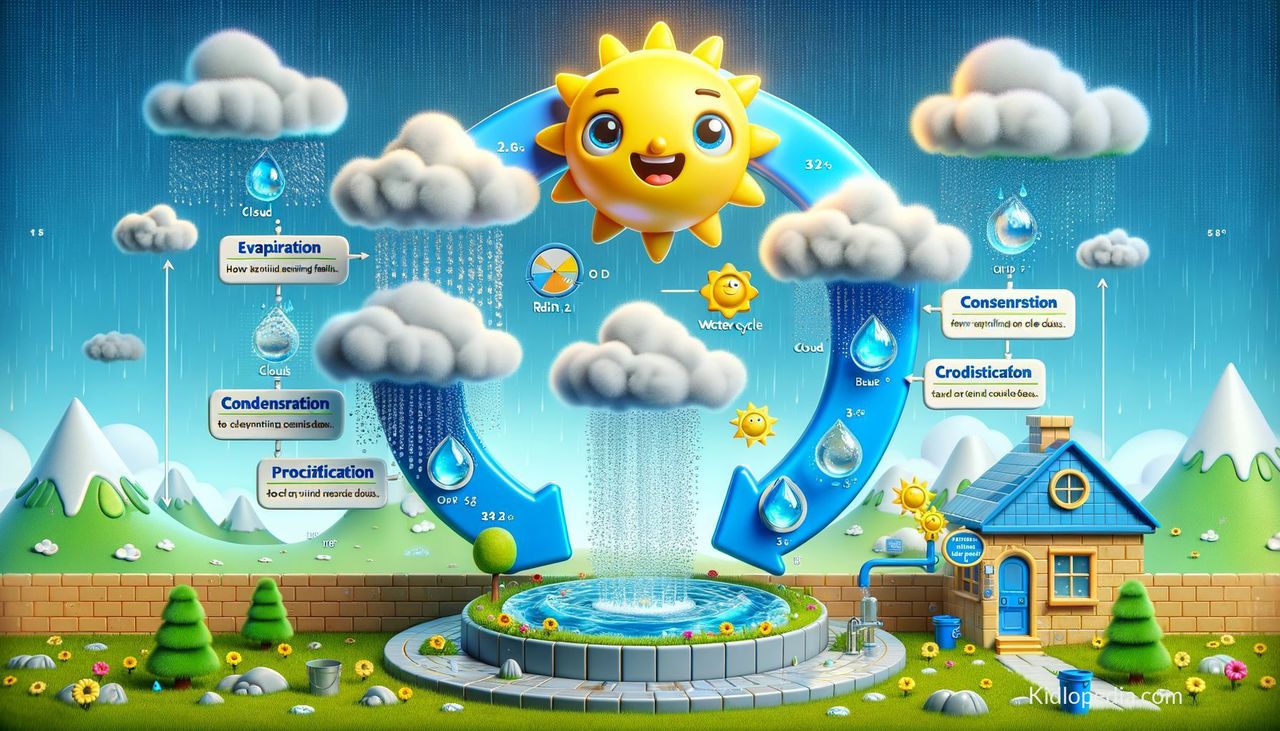
Rain is water that falls from clouds in the sky. It forms from a process called evaporation, where the sun heats up water from oceans, lakes, or puddles, turning it into an invisible gas that rises into the atmosphere. As this gas cools, it turns back into tiny water drops through condensation, forming clouds; when those clouds become heavy, the water falls back to Earth as precipitation, which we know as rain.
Rain is water that falls from clouds in the sky.
It is an important part of the Earth's water cycle.
Rain helps plants grow, fills rivers and lakes, and provides water for animals and people.
The process of rain begins when the sun shines on bodies of water like oceans, lakes, or puddles.
The heat from the sun warms the water, causing some of it to turn into an invisible gas called water vapor.
This process is known as evaporation.
As the water vapor rises into the atmosphere, it cools down.
When the water vapor reaches cooler air, it changes back into tiny water droplets through a process called condensation.
These tiny droplets come together to form clouds.
Clouds are made of millions of these tiny water droplets floating high in the sky.
As the clouds gather more and more water droplets, they become heavy.
When they can no longer hold all the water, the droplets fall back to Earth.
This falling water is called precipitation.
Most of the time, this precipitation falls as rain.
Rain is essential for life on Earth.
It provides the water needed for plants to grow.
It also replenishes rivers and lakes, ensuring that animals and people have enough water to drink.
This entire process of evaporation, condensation, and precipitation forms a cycle that repeats over and over again.
Did you know?
A single storm can release millions of tons of rainwater! Also, not all precipitation is rain; it can also fall as snow, sleet, or hail.
To learn more exciting topics, visit Kidlopedia.com!
It is an important part of the Earth's water cycle.
Rain helps plants grow, fills rivers and lakes, and provides water for animals and people.
The process of rain begins when the sun shines on bodies of water like oceans, lakes, or puddles.
The heat from the sun warms the water, causing some of it to turn into an invisible gas called water vapor.
This process is known as evaporation.
As the water vapor rises into the atmosphere, it cools down.
When the water vapor reaches cooler air, it changes back into tiny water droplets through a process called condensation.
These tiny droplets come together to form clouds.
Clouds are made of millions of these tiny water droplets floating high in the sky.
As the clouds gather more and more water droplets, they become heavy.
When they can no longer hold all the water, the droplets fall back to Earth.
This falling water is called precipitation.
Most of the time, this precipitation falls as rain.
Rain is essential for life on Earth.
It provides the water needed for plants to grow.
It also replenishes rivers and lakes, ensuring that animals and people have enough water to drink.
This entire process of evaporation, condensation, and precipitation forms a cycle that repeats over and over again.
Did you know?
A single storm can release millions of tons of rainwater! Also, not all precipitation is rain; it can also fall as snow, sleet, or hail.
To learn more exciting topics, visit Kidlopedia.com!