Earth's Structure: Geology
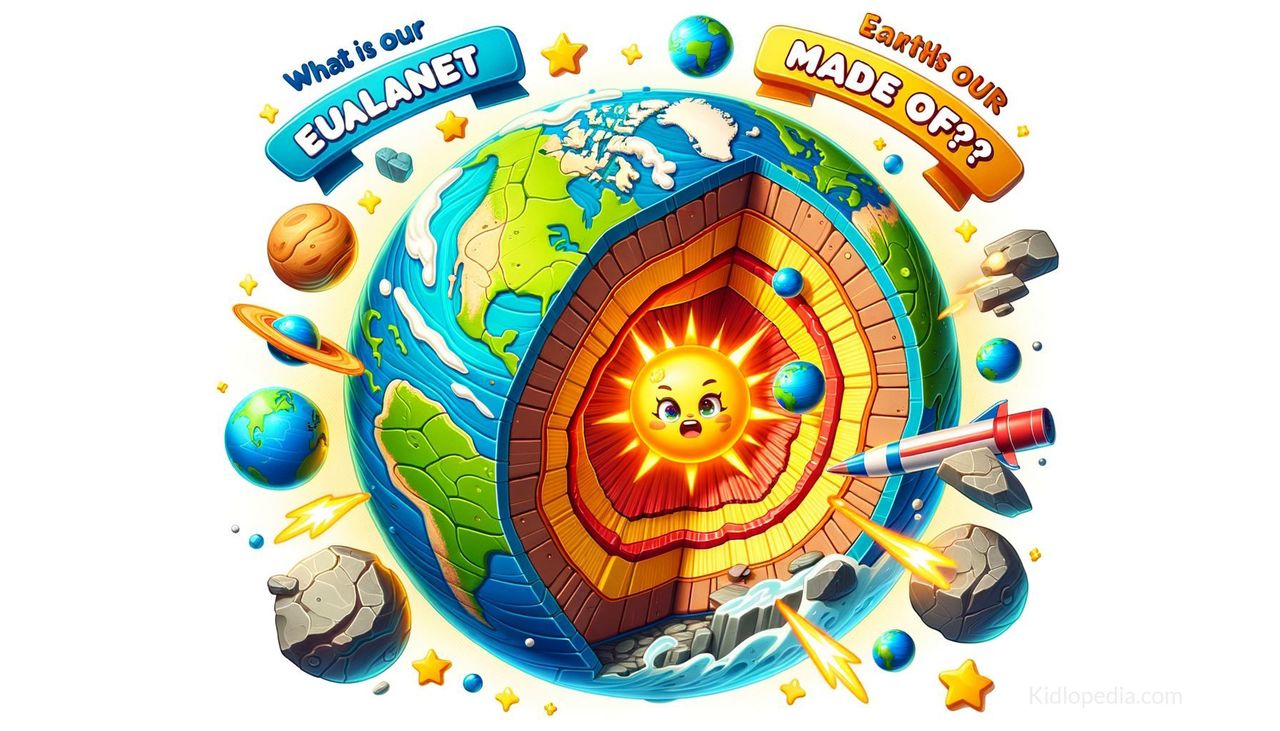
Earth's structure is made up of several layers that each play an important role in how our planet works. The outermost layer is called the crust, where we live, and below it lies the mantle, made of hot, slowly moving rock. Deeper still are the outer and inner cores, composed of liquid and solid metal, which help generate Earth's magnetic field and support the dynamic processes like volcanoes and earthquakes.
Earth's structure is made up of several layers that each play an important role in how our planet works.
The outermost layer is called the crust.
It is where we live and contains land, water, and all living things.
The crust is relatively thin compared to the layers below it.
Beneath the crust is the mantle.
The mantle is made of hot, slowly moving rock.
It is much thicker than the crust and can reach temperatures of up to 2,500 degrees Celsius (4,500 degrees Fahrenheit).
This layer is responsible for the movement of tectonic plates that can cause earthquakes and create mountains over long periods.
Deeper down are the outer core and inner core.
The outer core is made of liquid metal, and it is very hot, with temperatures reaching about 4,000 to 5,000 degrees Celsius (7,200 to 9,000 degrees Fahrenheit).
The movement of this liquid metal creates Earth's magnetic field, which protects us from harmful radiation from space.
The inner core is the very center of the Earth.
It is made of solid metal and is extremely hot as well, with temperatures similar to the surface of the sun, around 5,000 to 6,000 degrees Celsius (9,000 to 10,800 degrees Fahrenheit).
The intense pressure from the layers above keeps it solid, even though it is so hot.
Understanding Earth's structure helps scientists study and predict natural events like volcanoes and earthquakes.
It also explains why we have mountains and valleys on the surface.
Did you know?
The Earth's crust is only about 30 kilometers (18 miles) thick on land, but it can be much thinner under oceans! Additionally, the temperature in the inner core is as hot as the surface of the sun!
For more fascinating topics, visit Kidlopedia.com!
The outermost layer is called the crust.
It is where we live and contains land, water, and all living things.
The crust is relatively thin compared to the layers below it.
Beneath the crust is the mantle.
The mantle is made of hot, slowly moving rock.
It is much thicker than the crust and can reach temperatures of up to 2,500 degrees Celsius (4,500 degrees Fahrenheit).
This layer is responsible for the movement of tectonic plates that can cause earthquakes and create mountains over long periods.
Deeper down are the outer core and inner core.
The outer core is made of liquid metal, and it is very hot, with temperatures reaching about 4,000 to 5,000 degrees Celsius (7,200 to 9,000 degrees Fahrenheit).
The movement of this liquid metal creates Earth's magnetic field, which protects us from harmful radiation from space.
The inner core is the very center of the Earth.
It is made of solid metal and is extremely hot as well, with temperatures similar to the surface of the sun, around 5,000 to 6,000 degrees Celsius (9,000 to 10,800 degrees Fahrenheit).
The intense pressure from the layers above keeps it solid, even though it is so hot.
Understanding Earth's structure helps scientists study and predict natural events like volcanoes and earthquakes.
It also explains why we have mountains and valleys on the surface.
Did you know?
The Earth's crust is only about 30 kilometers (18 miles) thick on land, but it can be much thinner under oceans! Additionally, the temperature in the inner core is as hot as the surface of the sun!
For more fascinating topics, visit Kidlopedia.com!