The Immune System: Immunology
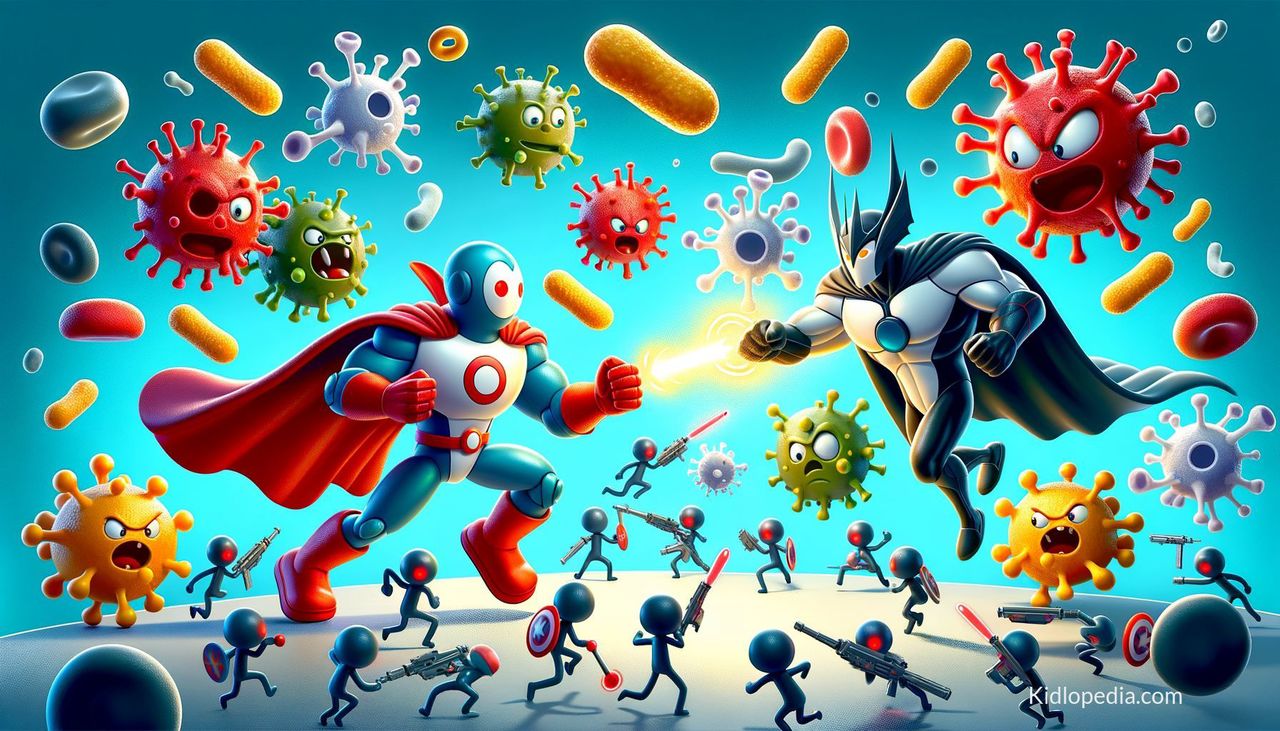
The immune system is a network of cells and organs that work together to protect our body from germs, like bacteria and viruses. It identifies harmful invaders and fights them off to keep us healthy. Understanding how the immune system functions helps us learn how to take care of our bodies and stay well.
The immune system is a network of cells and organs that protects our body from germs, such as bacteria and viruses.
It helps us stay healthy by identifying harmful invaders and fighting them off.
The immune system works like a team of heroes, ready to defend us against illness.
The immune system includes different types of cells.
One of the main types is called white blood cells.
These cells patrol our body and look for germs that can make us sick.
When they find these germs, they act quickly to destroy them.
They are like tiny soldiers that protect us from invaders.
Another important part of the immune system is antibodies.
Antibodies are special proteins that recognize specific germs.
They can lock onto germs, making it easier for white blood cells to find and attack them.
Think of antibodies as keys that help the body's defenders know exactly where to strike.
Lymph nodes also play a crucial role in fighting infections.
These are small structures located throughout our body, which help produce more white blood cells when they are needed.
They can swell up when the body is fighting an infection, showing that the immune system is working hard.
Overall, the immune system is essential for keeping us safe from diseases.
It works tirelessly every day, even when we don’t see it.
When we eat nutritious foods, get plenty of rest, and wash our hands, we help our immune system do its job even better.
Did you know?
White blood cells can develop a "memory" of germs, so they can respond quicker if the same germ invades again.
Also, some vaccines help our immune system learn to fight specific viruses without getting sick.
If you want to learn more fun facts, visit Kidlopedia.com!
It helps us stay healthy by identifying harmful invaders and fighting them off.
The immune system works like a team of heroes, ready to defend us against illness.
The immune system includes different types of cells.
One of the main types is called white blood cells.
These cells patrol our body and look for germs that can make us sick.
When they find these germs, they act quickly to destroy them.
They are like tiny soldiers that protect us from invaders.
Another important part of the immune system is antibodies.
Antibodies are special proteins that recognize specific germs.
They can lock onto germs, making it easier for white blood cells to find and attack them.
Think of antibodies as keys that help the body's defenders know exactly where to strike.
Lymph nodes also play a crucial role in fighting infections.
These are small structures located throughout our body, which help produce more white blood cells when they are needed.
They can swell up when the body is fighting an infection, showing that the immune system is working hard.
Overall, the immune system is essential for keeping us safe from diseases.
It works tirelessly every day, even when we don’t see it.
When we eat nutritious foods, get plenty of rest, and wash our hands, we help our immune system do its job even better.
Did you know?
White blood cells can develop a "memory" of germs, so they can respond quicker if the same germ invades again.
Also, some vaccines help our immune system learn to fight specific viruses without getting sick.
If you want to learn more fun facts, visit Kidlopedia.com!