How Airplanes Fly
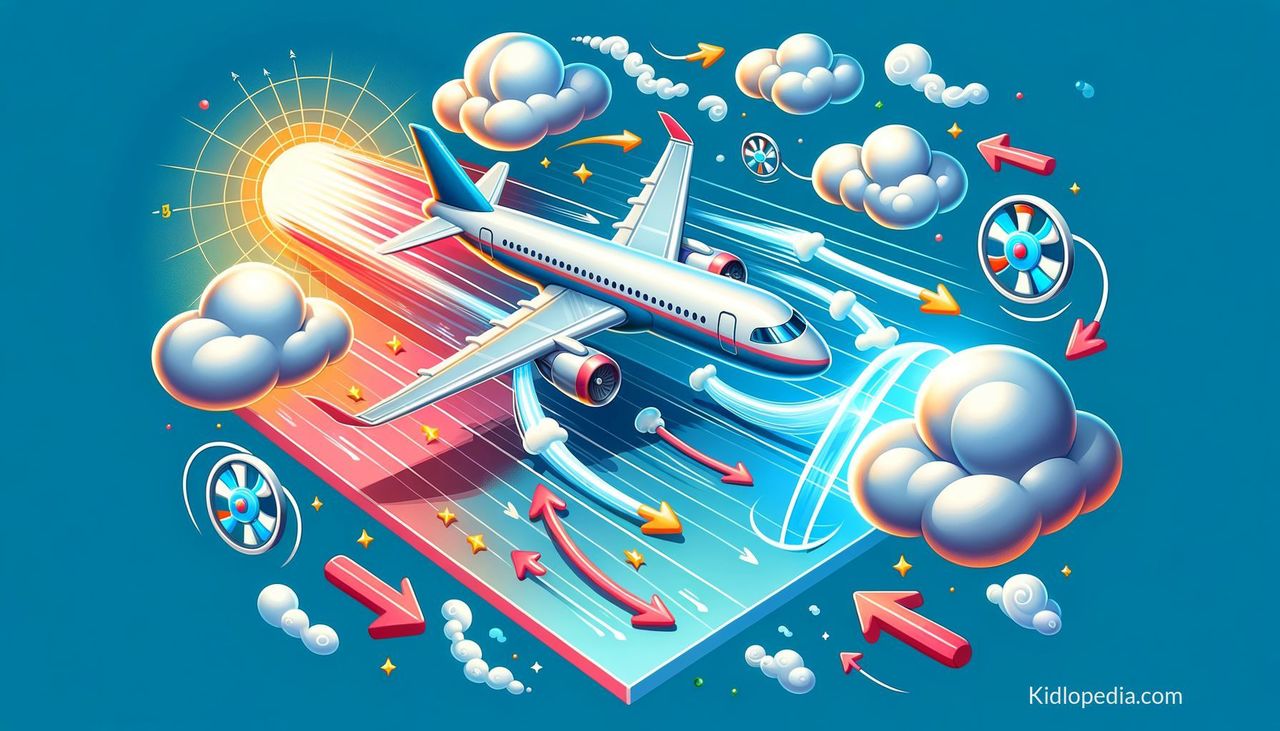
Airplanes fly by using four main forces: lift, thrust, gravity, and drag. Lift is created by the airplane's wings, which move through the air; this makes air pressure below the wings greater than above, helping the plane rise. Thrust is produced by engines or propellers that push the airplane forward, while gravity pulls it down towards the Earth, and drag slows it down as it moves through the air.
Airplanes fly by using four main forces: lift, thrust, gravity, and drag.
Each of these forces plays an important role in helping an airplane soar through the sky.
Lift is created by the wings of the airplane.
As the airplane moves forward, air flows over and under the wings.
The shape of the wings is designed so that the air pressure below the wings is higher than the air pressure above them.
This difference in pressure pushes the airplane upward, allowing it to rise into the sky.
Thrust is the force that propels the airplane forward.
It is produced by engines or propellers.
Engines can be jet engines or propeller engines, and they push air backward, which helps to move the airplane ahead.
Without thrust, the airplane would not be able to gain speed and lift off the ground.
Gravity is the force that pulls everything down towards the Earth.
It acts on the airplane at all times.
When an airplane is in the air, gravity is always trying to pull it down.
For an airplane to stay up, it must generate enough lift to overcome the pull of gravity.
Drag is another important force that works against the airplane.
It is the resistance that air creates as the airplane moves through it.
Drag slows the airplane down.
Pilots and engineers work to design airplanes to be as smooth as possible, which helps reduce drag and allows the airplane to fly efficiently.
Did you know?
The first successful powered flight was achieved by the Wright brothers in 1903.
Also, modern commercial airplanes can fly at altitudes of around 30,000 to 40,000 feet!
For more fascinating topics, visit Kidlopedia.com!
Each of these forces plays an important role in helping an airplane soar through the sky.
Lift is created by the wings of the airplane.
As the airplane moves forward, air flows over and under the wings.
The shape of the wings is designed so that the air pressure below the wings is higher than the air pressure above them.
This difference in pressure pushes the airplane upward, allowing it to rise into the sky.
Thrust is the force that propels the airplane forward.
It is produced by engines or propellers.
Engines can be jet engines or propeller engines, and they push air backward, which helps to move the airplane ahead.
Without thrust, the airplane would not be able to gain speed and lift off the ground.
Gravity is the force that pulls everything down towards the Earth.
It acts on the airplane at all times.
When an airplane is in the air, gravity is always trying to pull it down.
For an airplane to stay up, it must generate enough lift to overcome the pull of gravity.
Drag is another important force that works against the airplane.
It is the resistance that air creates as the airplane moves through it.
Drag slows the airplane down.
Pilots and engineers work to design airplanes to be as smooth as possible, which helps reduce drag and allows the airplane to fly efficiently.
Did you know?
The first successful powered flight was achieved by the Wright brothers in 1903.
Also, modern commercial airplanes can fly at altitudes of around 30,000 to 40,000 feet!
For more fascinating topics, visit Kidlopedia.com!