Building Space Vehicles: Spacecraft Engineering
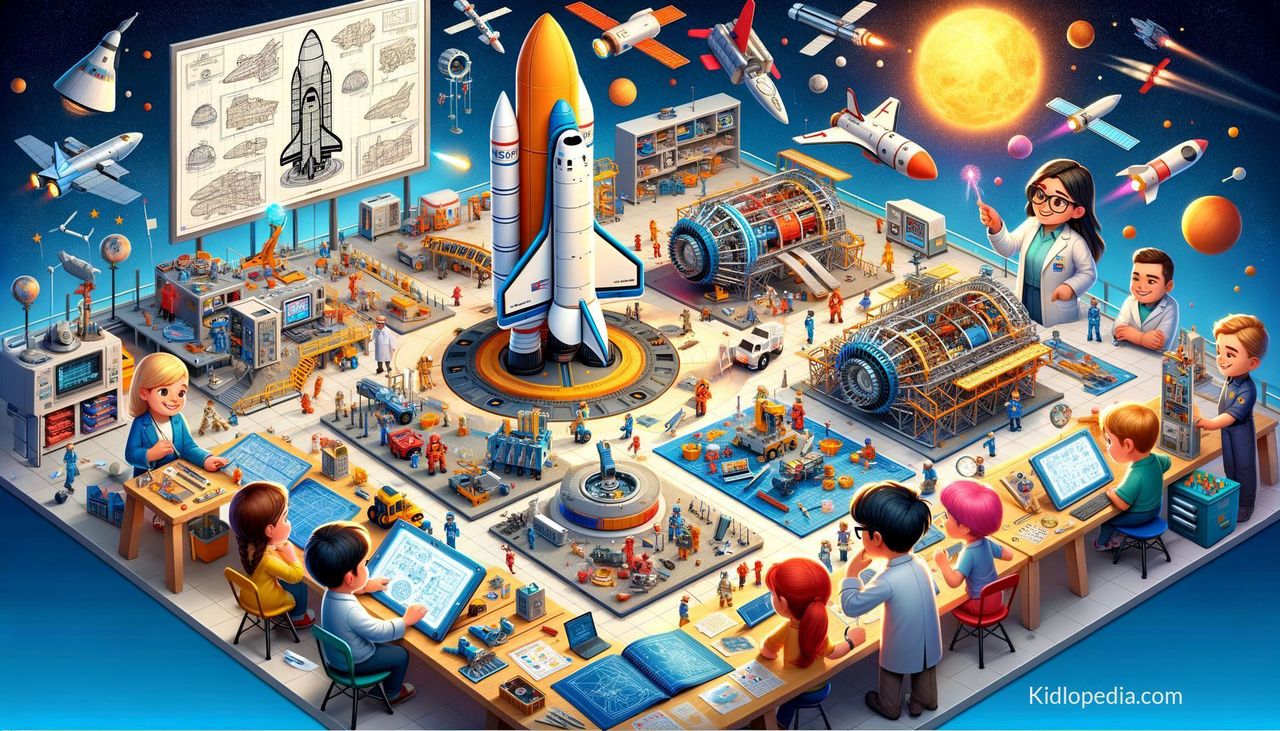
Building space vehicles, or spacecraft engineering, is the process of designing and constructing ships that can travel into outer space. This involves creating detailed plans, gathering special parts, assembling them safely, and ensuring everything works correctly before launching. Understanding how spaceships are made is important because it helps scientists and engineers explore new worlds and conduct experiments that can benefit life on Earth.
Building space vehicles, or spacecraft engineering, is the process of designing and constructing ships that can travel into outer space.
This involves several key steps to ensure that the spacecraft can withstand the challenges of space travel.
Engineers work hard to create safe and effective vehicles for exploring the universe.
The first step in building a spacecraft is drafting a blueprint.
A blueprint is a detailed drawing that shows how the spacecraft will look and function.
Engineers must consider various elements, such as size, shape, and the technology needed for the mission.
They work together to create plans that detail every part of the spacecraft.
Next, engineers gather all the necessary parts to build the spacecraft.
These parts can include strong metals, engines, and control systems.
It is important to choose quality materials that can survive the harsh conditions of space.
Each component serves a specific purpose, and they all must work together flawlessly.
Once all the parts are collected, the engineers begin to assemble the spacecraft.
This involves following the blueprints exactly to put everything together correctly.
They carefully connect engines, attach wings, and install control panels.
Each step must be done with precision to ensure that the spacecraft functions as intended.
Before the spacecraft can be launched, a safety check is conducted.
This involves reviewing a checklist to ensure that every part is in place and functioning properly.
Engineers look for any loose connections or issues that could cause problems during flight.
A thorough safety check is essential to protect both the spacecraft and its future missions.
Finally, when everything is ready, it is time for the launch.
The spacecraft is transported to a launch pad, where a countdown signals the start of its journey.
During the launch, powerful rocket engines ignite, propelling the spacecraft into the sky and beyond Earth's atmosphere.
Did you know?
The first human-made spacecraft to reach the moon was called Apollo 11, and it carried astronauts Neil Armstrong and Buzz Aldrin! Also, the International Space Station orbits Earth and serves as a home for astronauts from many different countries.
To learn more about fun topics like this, visit Kidlopedia.com!
This involves several key steps to ensure that the spacecraft can withstand the challenges of space travel.
Engineers work hard to create safe and effective vehicles for exploring the universe.
The first step in building a spacecraft is drafting a blueprint.
A blueprint is a detailed drawing that shows how the spacecraft will look and function.
Engineers must consider various elements, such as size, shape, and the technology needed for the mission.
They work together to create plans that detail every part of the spacecraft.
Next, engineers gather all the necessary parts to build the spacecraft.
These parts can include strong metals, engines, and control systems.
It is important to choose quality materials that can survive the harsh conditions of space.
Each component serves a specific purpose, and they all must work together flawlessly.
Once all the parts are collected, the engineers begin to assemble the spacecraft.
This involves following the blueprints exactly to put everything together correctly.
They carefully connect engines, attach wings, and install control panels.
Each step must be done with precision to ensure that the spacecraft functions as intended.
Before the spacecraft can be launched, a safety check is conducted.
This involves reviewing a checklist to ensure that every part is in place and functioning properly.
Engineers look for any loose connections or issues that could cause problems during flight.
A thorough safety check is essential to protect both the spacecraft and its future missions.
Finally, when everything is ready, it is time for the launch.
The spacecraft is transported to a launch pad, where a countdown signals the start of its journey.
During the launch, powerful rocket engines ignite, propelling the spacecraft into the sky and beyond Earth's atmosphere.
Did you know?
The first human-made spacecraft to reach the moon was called Apollo 11, and it carried astronauts Neil Armstrong and Buzz Aldrin! Also, the International Space Station orbits Earth and serves as a home for astronauts from many different countries.
To learn more about fun topics like this, visit Kidlopedia.com!