How Flowers Grow
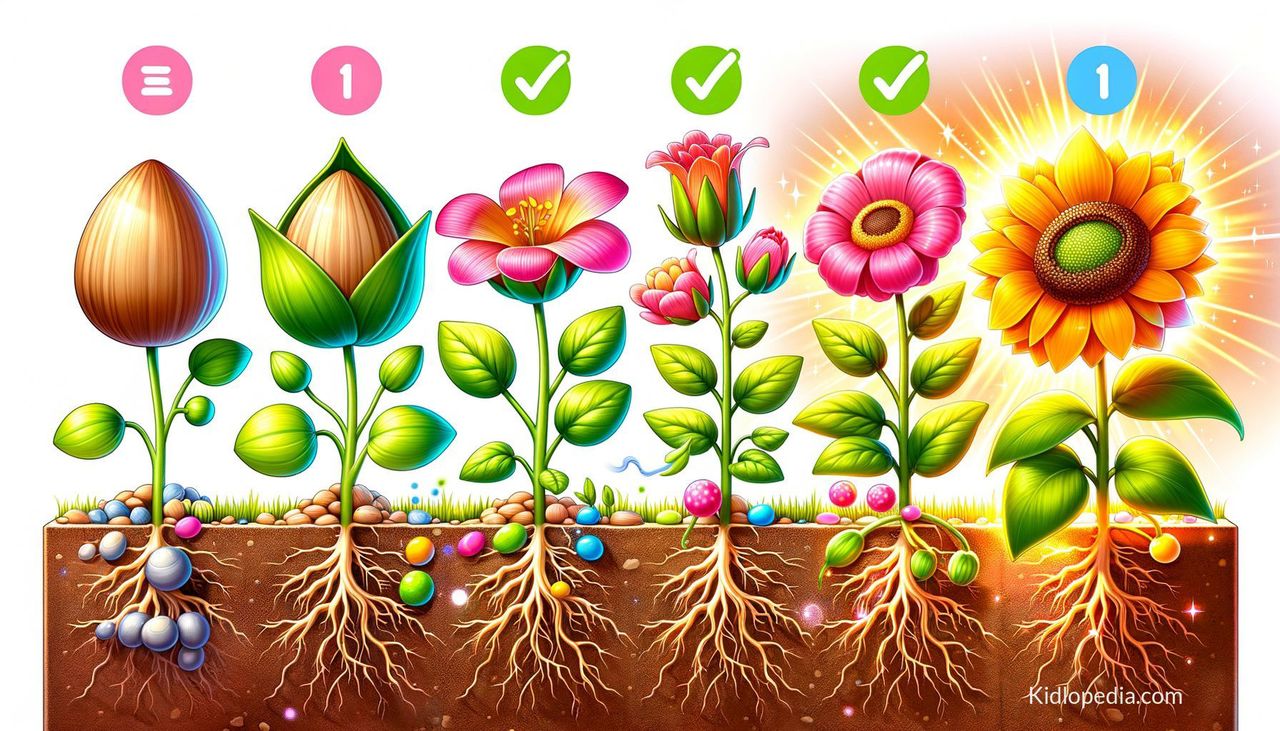
Flowers grow from seeds, which are tiny packets of potential life. When a seed is planted in soil and provided with water and sunlight, it begins to germinate and sprout. This process is important because it allows plants to grow, reproduce, and provide food and oxygen for many living beings.
Flowers are the reproductive structures of flowering plants.
They grow from seeds, which are tiny packets containing all the necessary information to become new plants.
When a seed is planted in the soil and provided with water and sunlight, it starts a process called germination.
This means the seed begins to grow and eventually breaks through the soil.
First, the seed absorbs water from the soil.
This water activates the seed, causing it to swell and soften.
Next, the seed's outer shell splits open, and a small root begins to grow downward into the soil.
This root anchors the plant and helps it take in more water and nutrients from the earth.
At the same time, a shoot starts to grow upward, reaching for the sunlight.
As the shoot emerges from the soil, it develops leaves.
These leaves are important because they use sunlight to make food for the plant through a process called photosynthesis.
The plant converts sunlight, carbon dioxide from the air, and water from the soil into energy, allowing it to grow taller and stronger.
Over time, the plant continues to grow, developing more leaves and a stem.
Eventually, it produces a flower.
Flowers come in many shapes, sizes, and colors, and they are important for attracting pollinators, such as bees and butterflies.
These pollinators help flowers reproduce by transferring pollen, which allows seeds to form.
Did you know that a single flower can have hundreds of seeds?
And some plants can produce thousands of seeds in one season, ensuring that they can grow again next year!
To learn more about plants and nature, visit Kidlopedia.com.
They grow from seeds, which are tiny packets containing all the necessary information to become new plants.
When a seed is planted in the soil and provided with water and sunlight, it starts a process called germination.
This means the seed begins to grow and eventually breaks through the soil.
First, the seed absorbs water from the soil.
This water activates the seed, causing it to swell and soften.
Next, the seed's outer shell splits open, and a small root begins to grow downward into the soil.
This root anchors the plant and helps it take in more water and nutrients from the earth.
At the same time, a shoot starts to grow upward, reaching for the sunlight.
As the shoot emerges from the soil, it develops leaves.
These leaves are important because they use sunlight to make food for the plant through a process called photosynthesis.
The plant converts sunlight, carbon dioxide from the air, and water from the soil into energy, allowing it to grow taller and stronger.
Over time, the plant continues to grow, developing more leaves and a stem.
Eventually, it produces a flower.
Flowers come in many shapes, sizes, and colors, and they are important for attracting pollinators, such as bees and butterflies.
These pollinators help flowers reproduce by transferring pollen, which allows seeds to form.
Did you know that a single flower can have hundreds of seeds?
And some plants can produce thousands of seeds in one season, ensuring that they can grow again next year!
To learn more about plants and nature, visit Kidlopedia.com.