Galaxy Group: The Virgo Cluster
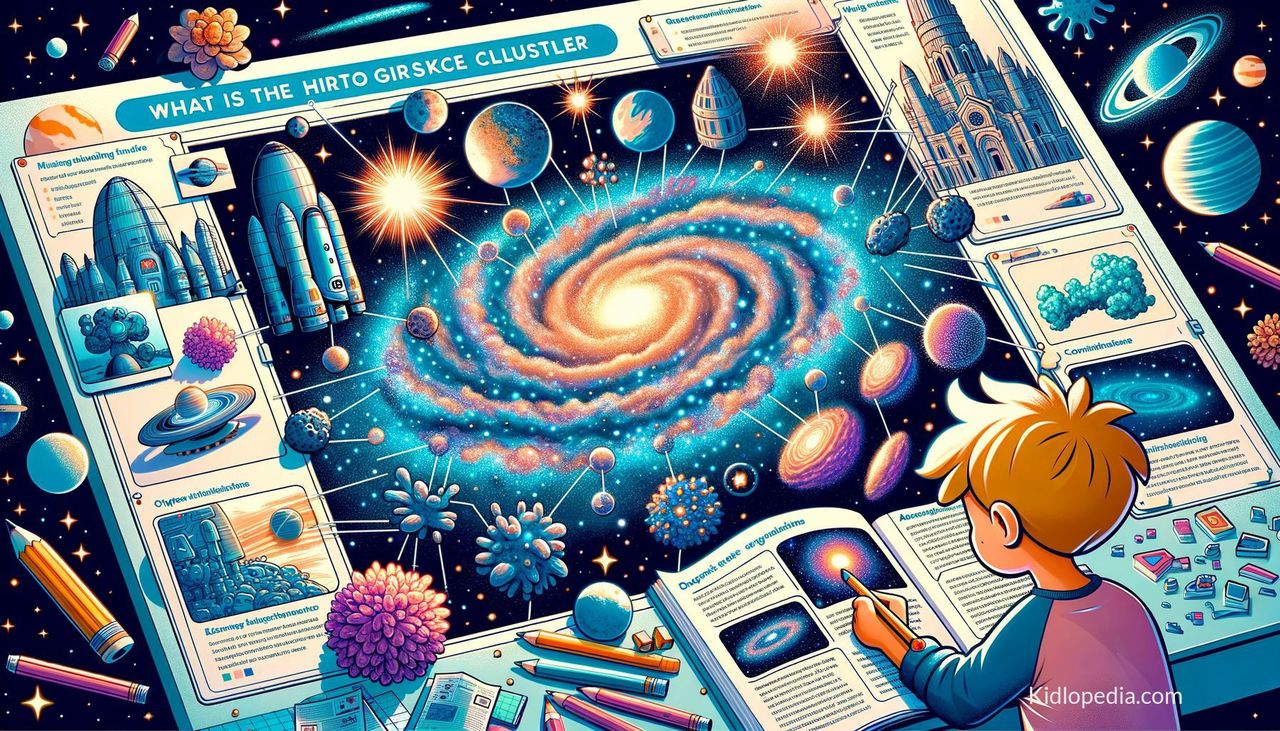

The Virgo Cluster is a large group of galaxies that is part of our universe. It contains over 1,300 galaxies, making it one of the most well-known galaxy clusters. Studying the Virgo Cluster helps scientists understand how galaxies form and interact with each other.
The Virgo Cluster is a large group of galaxies located in our universe.
It is one of the most well-known galaxy clusters, containing over 1,300 galaxies.
These galaxies are held together by gravity and form a community in space.
The Virgo Cluster is part of a larger structure called the Local Supercluster, which includes our own Milky Way galaxy.
Within the cluster, galaxies can be different shapes and sizes.
Some examples are spiral galaxies, which have arms that swirl outward like a pinwheel.
There are also elliptical galaxies, which look like smooth, bright balls, and irregular galaxies, which have odd, lumpy shapes.
Galaxies in the Virgo Cluster interact with one another.
They can move closer together and sometimes even collide.
These interactions can change the way galaxies look and how they behave.
For example, when galaxies merge, they can form new shapes and create new stars.
These processes are important for understanding how the universe works.
Studying the Virgo Cluster helps scientists learn about the history of galaxies and how they evolve over time.
By observing this cluster, scientists can gather information about dark matter and the expansion of the universe, which are key elements in astrophysics.
Did you know?
The Virgo Cluster is located about 54 million light-years from Earth! Also, the Milky Way galaxy is part of the Virgo Supercluster, which contains many other galaxy clusters.
If you want to discover more interesting topics, visit Kidlopedia.com!
It is one of the most well-known galaxy clusters, containing over 1,300 galaxies.
These galaxies are held together by gravity and form a community in space.
The Virgo Cluster is part of a larger structure called the Local Supercluster, which includes our own Milky Way galaxy.
Within the cluster, galaxies can be different shapes and sizes.
Some examples are spiral galaxies, which have arms that swirl outward like a pinwheel.
There are also elliptical galaxies, which look like smooth, bright balls, and irregular galaxies, which have odd, lumpy shapes.
Galaxies in the Virgo Cluster interact with one another.
They can move closer together and sometimes even collide.
These interactions can change the way galaxies look and how they behave.
For example, when galaxies merge, they can form new shapes and create new stars.
These processes are important for understanding how the universe works.
Studying the Virgo Cluster helps scientists learn about the history of galaxies and how they evolve over time.
By observing this cluster, scientists can gather information about dark matter and the expansion of the universe, which are key elements in astrophysics.
Did you know?
The Virgo Cluster is located about 54 million light-years from Earth! Also, the Milky Way galaxy is part of the Virgo Supercluster, which contains many other galaxy clusters.
If you want to discover more interesting topics, visit Kidlopedia.com!