How Electricity Works
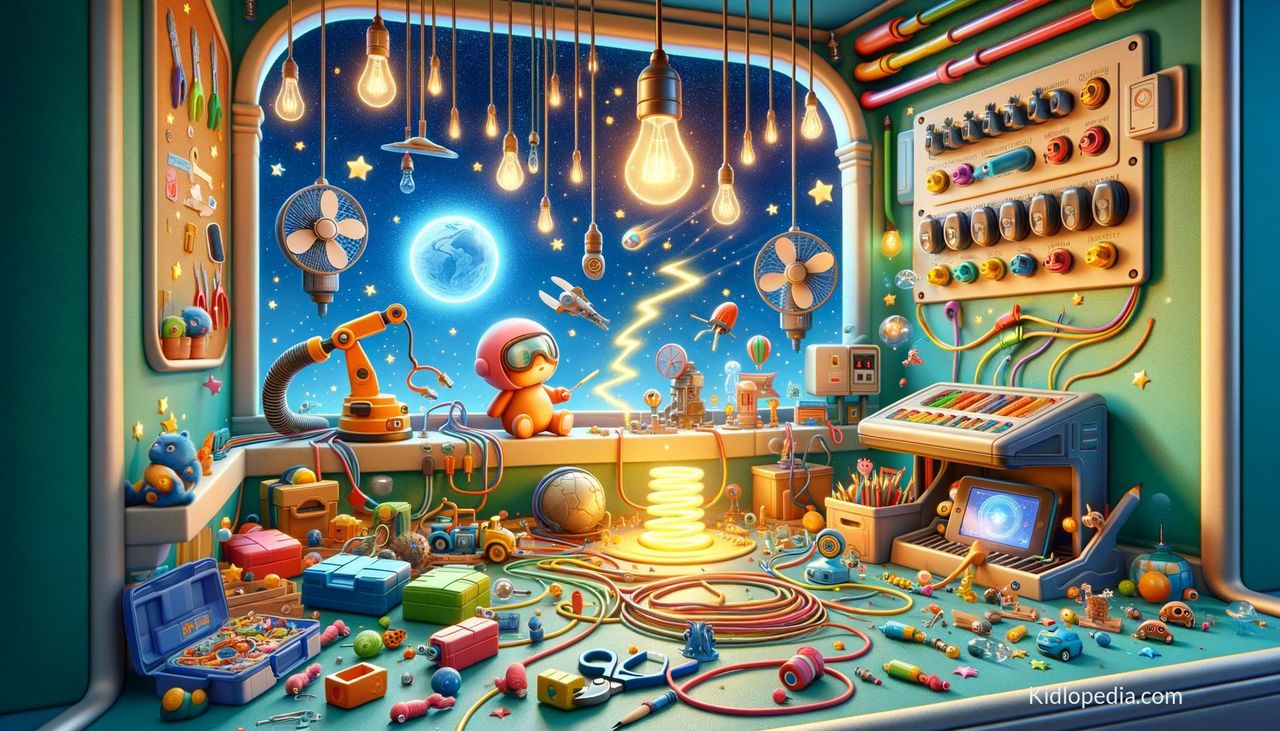
Electricity is the flow of electric charge that powers many of the devices we use every day. It travels through wires and circuits to help make lights shine, toasters toast, and toys run. Understanding how electricity works is important because it allows us to use and appreciate the technology that makes our lives easier and more fun.
Electricity is the flow of electric charge that powers many devices we use every day.
It travels through wires and circuits.
This flow helps make lights shine, toasters toast, and toys run.
Understanding how electricity works helps us appreciate the technology around us.
Electricity starts with atoms.
Atoms are tiny building blocks of everything.
They have particles called electrons, which can move from one atom to another.
When electrons move, they create an electric current.
This current travels through conductors, like metal wires.
Wires are found in almost every electrical device.
A circuit is a complete path for electricity to flow.
When you turn on a light switch, you complete the circuit.
This allows electricity to flow to the light bulb and make it shine.
If the circuit is broken, like when a lamp is unplugged, electricity cannot flow, and the light goes out.
Electricity is used in many everyday tools.
For example, toasters convert electricity into heat.
When you press the lever, it closes the circuit, allowing electricity to flow and toast the bread.
Toy trains use batteries that provide electrical energy to move.
The electricity powers the train's motor, making it go.
Did you know?
Lightning is a natural form of electricity that can be seen during thunderstorms.
Also, static electricity can occur when you rub certain materials together, creating a small shock!
Explore more exciting topics at Kidlopedia.com!
It travels through wires and circuits.
This flow helps make lights shine, toasters toast, and toys run.
Understanding how electricity works helps us appreciate the technology around us.
Electricity starts with atoms.
Atoms are tiny building blocks of everything.
They have particles called electrons, which can move from one atom to another.
When electrons move, they create an electric current.
This current travels through conductors, like metal wires.
Wires are found in almost every electrical device.
A circuit is a complete path for electricity to flow.
When you turn on a light switch, you complete the circuit.
This allows electricity to flow to the light bulb and make it shine.
If the circuit is broken, like when a lamp is unplugged, electricity cannot flow, and the light goes out.
Electricity is used in many everyday tools.
For example, toasters convert electricity into heat.
When you press the lever, it closes the circuit, allowing electricity to flow and toast the bread.
Toy trains use batteries that provide electrical energy to move.
The electricity powers the train's motor, making it go.
Did you know?
Lightning is a natural form of electricity that can be seen during thunderstorms.
Also, static electricity can occur when you rub certain materials together, creating a small shock!
Explore more exciting topics at Kidlopedia.com!