Study of Volcanoes: Volcanology
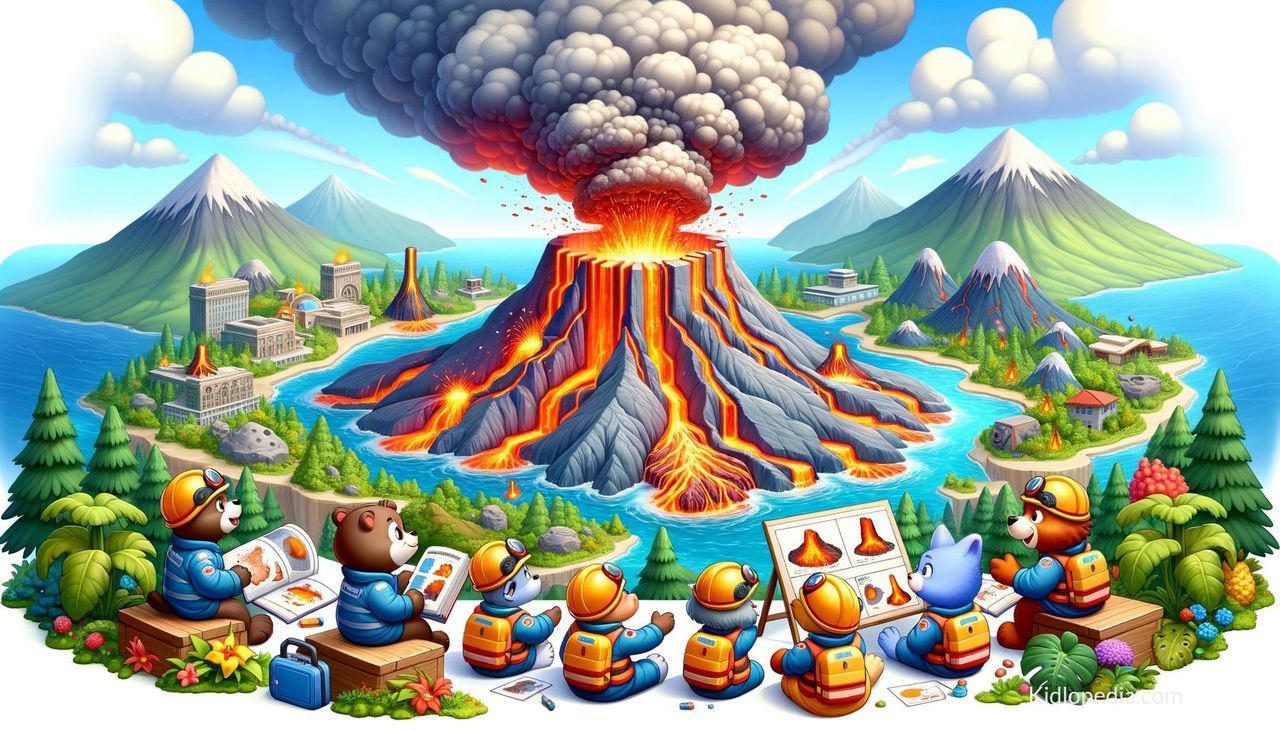
Volcanology is the study of volcanoes and how they work. Volcanoes erupt when molten rock called magma rises from deep inside the Earth due to pressure from gases and heat. Understanding volcanic eruptions helps scientists predict volcanic activity, which is important for keeping people and the environment safe.
Volcanology is the study of volcanoes, their eruptions, and the processes that create them.
Scientists called volcanologists examine how volcanoes work and why they erupt.
This knowledge is important for predicting volcanic activity, which can help protect people and the environment from dangerous eruptions.
Volcanoes erupt when molten rock, called magma, rises from deep within the Earth.
The Earth is made up of layers, and the mantle is the layer where magma forms.
As magma accumulates, gases build up and create pressure.
When the pressure becomes too strong, the magma pushes its way to the surface, causing an eruption.
During an eruption, magma that reaches the surface is called lava.
Lava can flow down the sides of the volcano or explode into the air as ash and rocks.
This can create new land and shape the landscape.
The eruptions can vary in intensity.
Some volcanoes have quiet flows of lava, while others can explode with great force.
After a volcano erupts, it can leave behind new landforms.
The cooled lava may turn into solid rock, creating mountains or islands.
Over time, these areas can become home to diverse plants and animals.
Studying these eruptions and their effects helps scientists understand how volcanoes can change our planet.
Did you know?
The largest volcano in our solar system is on Mars.
It is called Olympus Mons and is about three times taller than Mount Everest! Volcanoes can also be found under the ocean, where they create new ocean floor as they erupt.
You can explore more exciting topics at Kidlopedia.com!
Scientists called volcanologists examine how volcanoes work and why they erupt.
This knowledge is important for predicting volcanic activity, which can help protect people and the environment from dangerous eruptions.
Volcanoes erupt when molten rock, called magma, rises from deep within the Earth.
The Earth is made up of layers, and the mantle is the layer where magma forms.
As magma accumulates, gases build up and create pressure.
When the pressure becomes too strong, the magma pushes its way to the surface, causing an eruption.
During an eruption, magma that reaches the surface is called lava.
Lava can flow down the sides of the volcano or explode into the air as ash and rocks.
This can create new land and shape the landscape.
The eruptions can vary in intensity.
Some volcanoes have quiet flows of lava, while others can explode with great force.
After a volcano erupts, it can leave behind new landforms.
The cooled lava may turn into solid rock, creating mountains or islands.
Over time, these areas can become home to diverse plants and animals.
Studying these eruptions and their effects helps scientists understand how volcanoes can change our planet.
Did you know?
The largest volcano in our solar system is on Mars.
It is called Olympus Mons and is about three times taller than Mount Everest! Volcanoes can also be found under the ocean, where they create new ocean floor as they erupt.
You can explore more exciting topics at Kidlopedia.com!