Our Cosmic Neighborhood: The Local Group
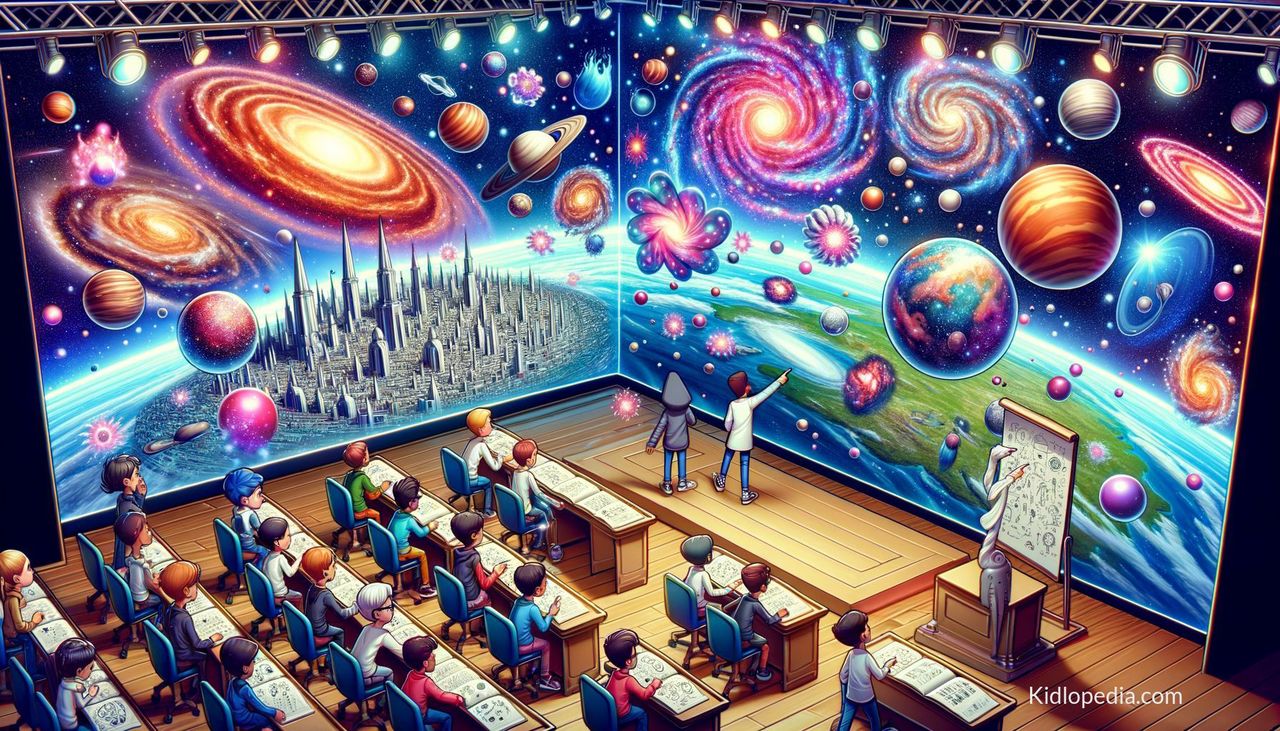
The Local Group is a collection of galaxies that are close to each other in space. It includes well-known galaxies like the Milky Way and Andromeda, along with smaller ones such as the Triangulum galaxy and several dwarf galaxies. Understanding the Local Group helps scientists learn about the structure of the universe and the relationships between galaxies.
The Local Group is a collection of galaxies that are close to each other in space.
It contains about 54 galaxies, with the largest being the Milky Way and Andromeda.
Other notable members are the Triangulum Galaxy and several smaller dwarf galaxies.
These galaxies are bound together by gravity, which means they are attracted to each other and stay close through space.
The Milky Way Galaxy is where our Solar System is located.
It is a spiral galaxy filled with billions of stars, including our Sun.
Andromeda is another spiral galaxy, and it is even larger than the Milky Way.
The Triangulum Galaxy, although smaller, is still an important part of the Local Group.
Dwarf galaxies are much smaller and can contain only a few billion stars.
They still play a vital role in understanding the dynamics of the Local Group.
The galaxies in the Local Group move through space together.
They sometimes collide or interact with each other due to their gravitational pull.
These interactions can lead to the formation of new stars and other cosmic phenomena.
Scientists study the Local Group to learn about galaxy formation and evolution, which helps us understand the universe's larger structure.
The Local Group is part of a bigger structure called the Virgo Supercluster.
This is a vast collection of galaxy groups and clusters all tied together by gravity.
Learning about the Local Group is essential for astronomers because it provides clues about how galaxies behave over time.
Did you know that the Milky Way and Andromeda are on a collision course?
They are expected to collide in about 4.5 billion years! Also, the Local Group is just one of many groups of galaxies in the universe, making our cosmic neighborhood very interesting.
For more exciting topics, visit Kidlopedia.com!
It contains about 54 galaxies, with the largest being the Milky Way and Andromeda.
Other notable members are the Triangulum Galaxy and several smaller dwarf galaxies.
These galaxies are bound together by gravity, which means they are attracted to each other and stay close through space.
The Milky Way Galaxy is where our Solar System is located.
It is a spiral galaxy filled with billions of stars, including our Sun.
Andromeda is another spiral galaxy, and it is even larger than the Milky Way.
The Triangulum Galaxy, although smaller, is still an important part of the Local Group.
Dwarf galaxies are much smaller and can contain only a few billion stars.
They still play a vital role in understanding the dynamics of the Local Group.
The galaxies in the Local Group move through space together.
They sometimes collide or interact with each other due to their gravitational pull.
These interactions can lead to the formation of new stars and other cosmic phenomena.
Scientists study the Local Group to learn about galaxy formation and evolution, which helps us understand the universe's larger structure.
The Local Group is part of a bigger structure called the Virgo Supercluster.
This is a vast collection of galaxy groups and clusters all tied together by gravity.
Learning about the Local Group is essential for astronomers because it provides clues about how galaxies behave over time.
Did you know that the Milky Way and Andromeda are on a collision course?
They are expected to collide in about 4.5 billion years! Also, the Local Group is just one of many groups of galaxies in the universe, making our cosmic neighborhood very interesting.
For more exciting topics, visit Kidlopedia.com!