Living in Space: Space Stations
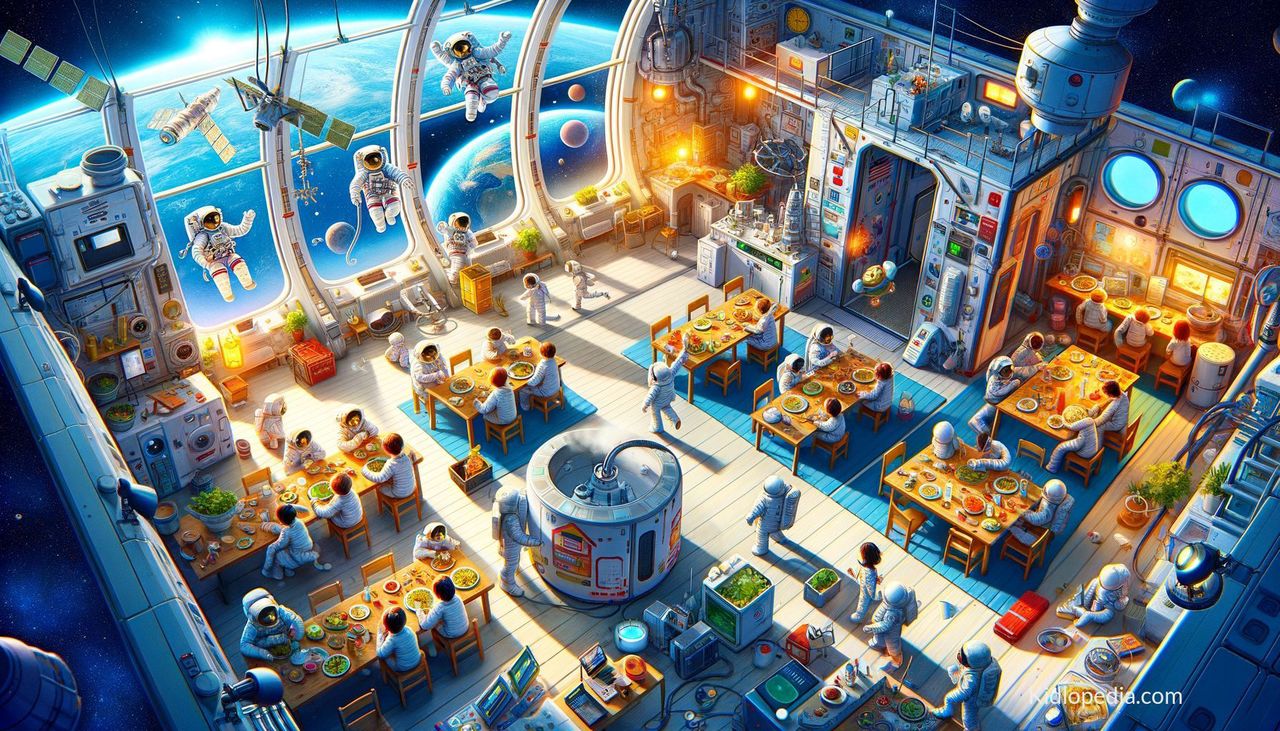
Space stations are large structures in orbit around Earth where astronauts live and work. They are designed to support life in space, providing an environment for sleeping, eating, and conducting scientific experiments. Living in a space station helps scientists learn more about our universe and test how humans can survive in space for extended periods of time.
Space stations are large structures in orbit around Earth where astronauts live and work.
They provide a special environment that allows humans to survive and conduct experiments in the harsh conditions of space.
Space stations are important for scientific research and help us understand more about our universe.
Living in a space station is different from living on Earth.
One major difference is the lack of gravity.
In space, astronauts float instead of walking.
This means they need to use special sleeping bags attached to the walls to sleep and prevent themselves from floating away.
Eating in space also requires special arrangements.
Astronauts eat food that is packaged carefully, so it does not float away.
For example, food like space pudding and crunchy carrots are designed to be easy to eat in microgravity.
Exercise is a crucial part of daily life in a space station.
Astronauts use special equipment like treadmills and stationary bikes that are secured to the walls.
They exercise every day to keep their muscles and bones strong.
In space, without gravity, their bodies can weaken if they don’t stay active.
Space stations also serve as laboratories for conducting scientific experiments.
Astronauts study a variety of subjects, such as how plants grow without gravity, the effects of space on the human body, and the behavior of fluids.
This research helps scientists learn how to keep humans safe during long space missions, like traveling to Mars.
Did you know that the International Space Station (ISS) travels at a speed of about 17,500 miles per hour?
That’s fast enough to orbit the Earth approximately every 90 minutes! Also, astronauts aboard the ISS experience 16 sunrises and sunsets each day because they orbit the Earth so quickly.
For more fun and interesting topics, visit Kidlopedia.com!
They provide a special environment that allows humans to survive and conduct experiments in the harsh conditions of space.
Space stations are important for scientific research and help us understand more about our universe.
Living in a space station is different from living on Earth.
One major difference is the lack of gravity.
In space, astronauts float instead of walking.
This means they need to use special sleeping bags attached to the walls to sleep and prevent themselves from floating away.
Eating in space also requires special arrangements.
Astronauts eat food that is packaged carefully, so it does not float away.
For example, food like space pudding and crunchy carrots are designed to be easy to eat in microgravity.
Exercise is a crucial part of daily life in a space station.
Astronauts use special equipment like treadmills and stationary bikes that are secured to the walls.
They exercise every day to keep their muscles and bones strong.
In space, without gravity, their bodies can weaken if they don’t stay active.
Space stations also serve as laboratories for conducting scientific experiments.
Astronauts study a variety of subjects, such as how plants grow without gravity, the effects of space on the human body, and the behavior of fluids.
This research helps scientists learn how to keep humans safe during long space missions, like traveling to Mars.
Did you know that the International Space Station (ISS) travels at a speed of about 17,500 miles per hour?
That’s fast enough to orbit the Earth approximately every 90 minutes! Also, astronauts aboard the ISS experience 16 sunrises and sunsets each day because they orbit the Earth so quickly.
For more fun and interesting topics, visit Kidlopedia.com!