Small Stars: White Dwarfs
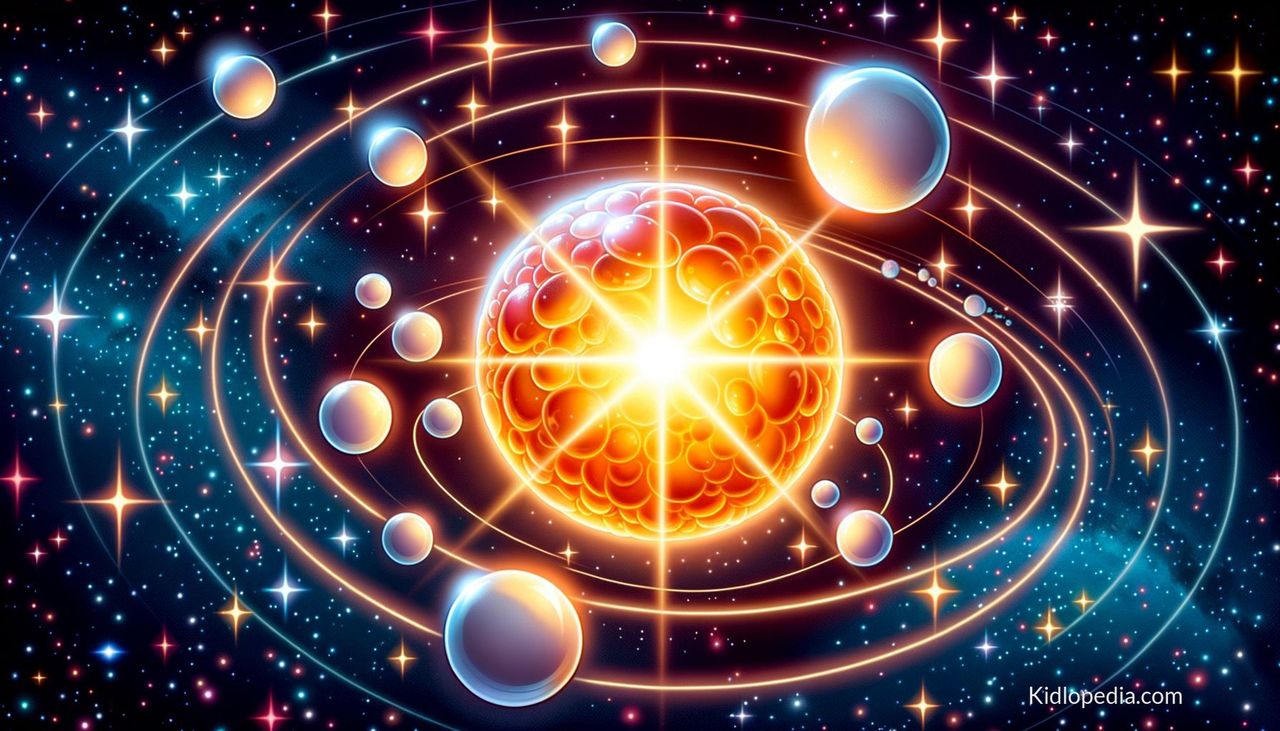

White dwarfs are small, dense stars that are the remnants of larger stars that have exhausted their nuclear fuel. After these stars burn bright and expand into red giants, they shed their outer layers and collapse into white dwarfs, which still emit light but have a lower temperature than when they were active. Understanding white dwarfs helps scientists learn about the life cycle of stars and the evolution of the universe.
White dwarfs are small, dense stars that form when larger stars reach the end of their life cycles.
These stars burn for many millions of years and use up their nuclear fuel.
When they can no longer produce energy, they expand into a phase called a red giant.
Afterward, they shed their outer layers and what remains is the core, which becomes a white dwarf.
White dwarfs are smaller than most stars but are very dense, meaning they are packed tightly with matter.
They are roughly the size of Earth but can have a mass similar to that of the Sun.
This means that white dwarfs are incredibly heavy for their size.
As they collapse, they retain some of the heat and light from when they were larger stars.
However, they are cooler than red giants and shine with a white light.
After a white dwarf forms, it slowly cools down and dims over time.
This process can take billions of years.
Eventually, white dwarfs will no longer emit significant light and will fade away, becoming what we call black dwarfs, a theoretical state that may not have been seen yet in the universe because it takes so long.
Studying white dwarfs helps scientists understand the life cycle of stars.
It provides insights into how stars evolve and how they contribute to the chemical makeup of the universe.
Their existence shows that the universe is full of changes and transformations over time.
Did you know?
The nearest known white dwarf star to Earth is Procyon B, located about 11.5 light-years away! Also, after a white dwarf cools down, it may take trillions of years before it stops shining completely!
If you’d like to learn more exciting facts about the universe, visit Kidlopedia.com!
These stars burn for many millions of years and use up their nuclear fuel.
When they can no longer produce energy, they expand into a phase called a red giant.
Afterward, they shed their outer layers and what remains is the core, which becomes a white dwarf.
White dwarfs are smaller than most stars but are very dense, meaning they are packed tightly with matter.
They are roughly the size of Earth but can have a mass similar to that of the Sun.
This means that white dwarfs are incredibly heavy for their size.
As they collapse, they retain some of the heat and light from when they were larger stars.
However, they are cooler than red giants and shine with a white light.
After a white dwarf forms, it slowly cools down and dims over time.
This process can take billions of years.
Eventually, white dwarfs will no longer emit significant light and will fade away, becoming what we call black dwarfs, a theoretical state that may not have been seen yet in the universe because it takes so long.
Studying white dwarfs helps scientists understand the life cycle of stars.
It provides insights into how stars evolve and how they contribute to the chemical makeup of the universe.
Their existence shows that the universe is full of changes and transformations over time.
Did you know?
The nearest known white dwarf star to Earth is Procyon B, located about 11.5 light-years away! Also, after a white dwarf cools down, it may take trillions of years before it stops shining completely!
If you’d like to learn more exciting facts about the universe, visit Kidlopedia.com!