Failed Stars: Brown Dwarfs
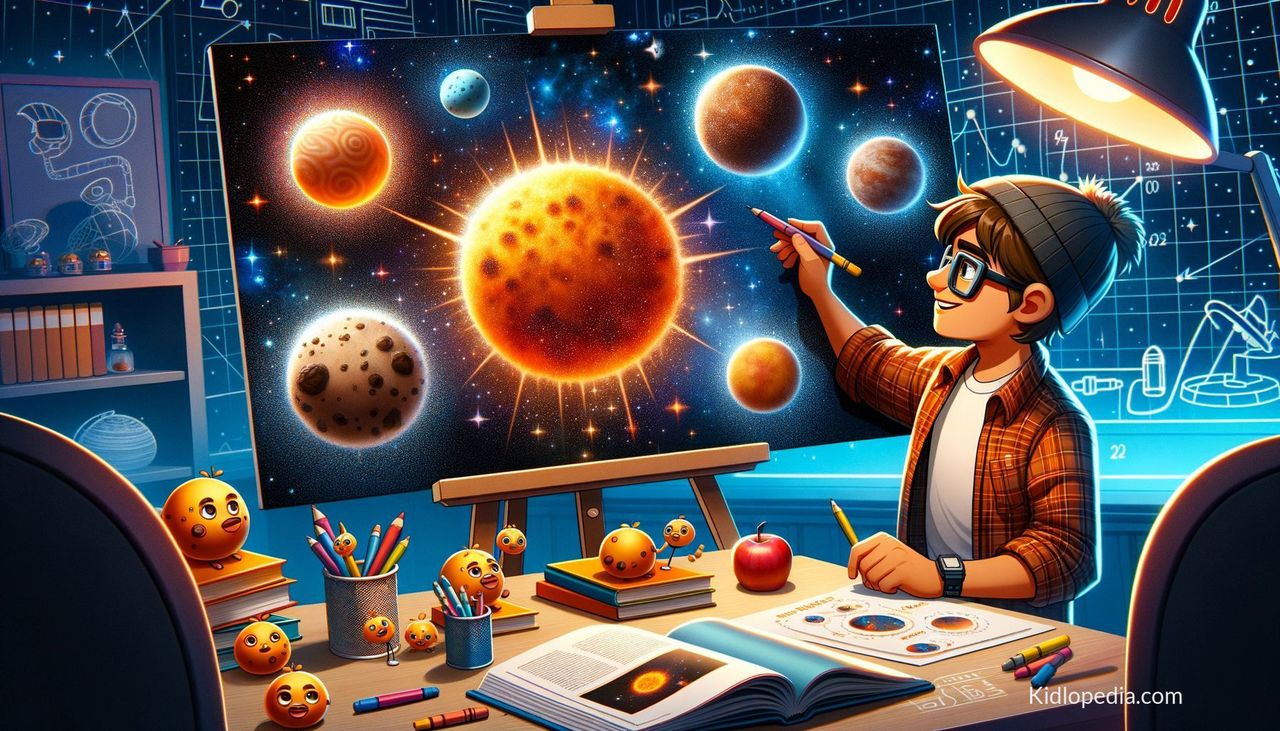

Brown dwarfs are a type of celestial object that falls between a large star and a planet. They are made up of gas, similar to stars, but they do not possess enough energy to shine brightly like big stars do. Brown dwarfs are important because they help scientists learn more about the universe and the processes that create stars and planets.
Brown dwarfs are celestial objects that are larger than planets but smaller than stars.
They are often referred to as "failed stars" because they do not have enough mass to ignite nuclear fusion in their cores, which is what makes stars shine brightly.
Instead, brown dwarfs can only glow faintly.
Brown dwarfs are made of gas, just like true stars.
They contain mainly hydrogen and helium.
A normal star, like our Sun, uses nuclear fusion to convert hydrogen into helium, producing a lot of energy and light.
Brown dwarfs, however, do not have the necessary temperature or pressure in their cores to start the fusion process.
This means they cannot shine like big stars.
Despite not shining brightly, brown dwarfs do produce some heat and light.
They can glow dimly in the infrared spectrum, which is a type of light that is invisible to our eyes but can be detected by special cameras.
This allows scientists to study them even if they are not very bright.
Brown dwarfs are important for scientists.
They help researchers understand how stars and planets form.
By studying the characteristics of brown dwarfs, scientists can learn about the conditions that lead to star formation and the differences between stars and planets in our universe.
Did you know?
Some brown dwarfs are so similar to large gas planets that they are hard to tell apart! Also, there are billions of brown dwarfs in our galaxy, but most of them are difficult to see with telescopes.
For more exciting topics, visit Kidlopedia.com!
They are often referred to as "failed stars" because they do not have enough mass to ignite nuclear fusion in their cores, which is what makes stars shine brightly.
Instead, brown dwarfs can only glow faintly.
Brown dwarfs are made of gas, just like true stars.
They contain mainly hydrogen and helium.
A normal star, like our Sun, uses nuclear fusion to convert hydrogen into helium, producing a lot of energy and light.
Brown dwarfs, however, do not have the necessary temperature or pressure in their cores to start the fusion process.
This means they cannot shine like big stars.
Despite not shining brightly, brown dwarfs do produce some heat and light.
They can glow dimly in the infrared spectrum, which is a type of light that is invisible to our eyes but can be detected by special cameras.
This allows scientists to study them even if they are not very bright.
Brown dwarfs are important for scientists.
They help researchers understand how stars and planets form.
By studying the characteristics of brown dwarfs, scientists can learn about the conditions that lead to star formation and the differences between stars and planets in our universe.
Did you know?
Some brown dwarfs are so similar to large gas planets that they are hard to tell apart! Also, there are billions of brown dwarfs in our galaxy, but most of them are difficult to see with telescopes.
For more exciting topics, visit Kidlopedia.com!