Capturing Space: Astrophotography
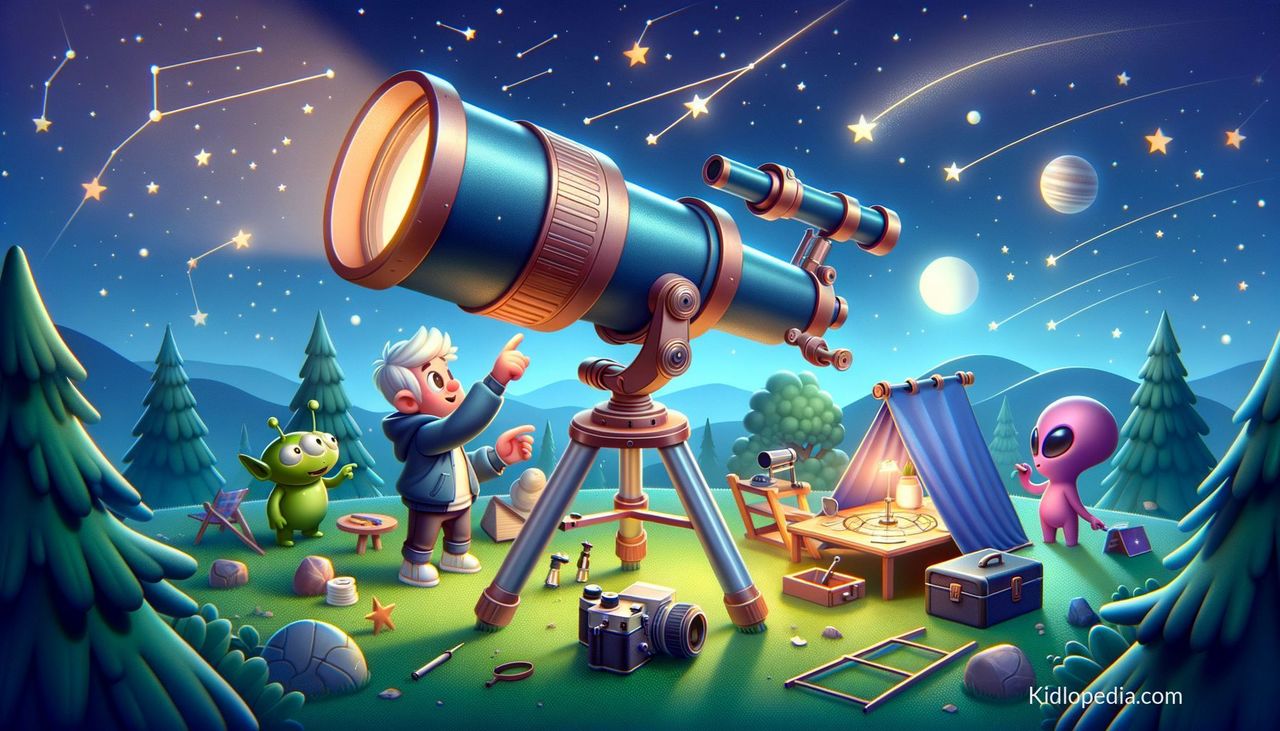
Astrophotography is the practice of taking photographs of celestial objects, such as stars, planets, and galaxies. It allows us to capture the beauty of the night sky and reveal details that are not visible to the naked eye. This art form helps astronomers and enthusiasts appreciate the vastness of space and learn more about our universe.
Astrophotography is the practice of taking photographs of celestial objects, such as stars, planets, and galaxies.
It involves using special cameras and techniques to capture images of the night sky.
This process helps us see the beauty of space and learn more about our universe.
To take astrophotographs, a clear and dark night is essential.
The stars shine brightest when there are no clouds or city lights.
Photographers often go to remote areas where the sky is free of light pollution.
Once in the right place, they set up their camera on a sturdy tripod.
This keeps the camera steady, which is very important to avoid blurry images.
Next, astrophotographers use a technique called “long exposure.” This means the camera’s shutter stays open for a longer time, allowing more light to enter.
Since stars are very faint, collecting more light helps to capture their twinkling glow.
During this time, it is crucial not to touch the camera.
Many use a timer or remote to take the picture without causing any movement.
After taking the photo, the results can be amazing.
Pictures often reveal many stars and even colorful nebulas that our eyes cannot see.
This happens because the camera can detect more light than the human eye.
Astrophotography also allows people to photograph other celestial objects, like the moon and planets.
For brighter objects like the moon, shorter exposures are used to get the best results.
Did you know?
The Hubble Space Telescope takes pictures of distant galaxies that are billions of light-years away! Also, astrophotography can be done with smartphones using special apps to adjust settings.
Explore the wonders of the universe and learn more topics at Kidlopedia.com!
It involves using special cameras and techniques to capture images of the night sky.
This process helps us see the beauty of space and learn more about our universe.
To take astrophotographs, a clear and dark night is essential.
The stars shine brightest when there are no clouds or city lights.
Photographers often go to remote areas where the sky is free of light pollution.
Once in the right place, they set up their camera on a sturdy tripod.
This keeps the camera steady, which is very important to avoid blurry images.
Next, astrophotographers use a technique called “long exposure.” This means the camera’s shutter stays open for a longer time, allowing more light to enter.
Since stars are very faint, collecting more light helps to capture their twinkling glow.
During this time, it is crucial not to touch the camera.
Many use a timer or remote to take the picture without causing any movement.
After taking the photo, the results can be amazing.
Pictures often reveal many stars and even colorful nebulas that our eyes cannot see.
This happens because the camera can detect more light than the human eye.
Astrophotography also allows people to photograph other celestial objects, like the moon and planets.
For brighter objects like the moon, shorter exposures are used to get the best results.
Did you know?
The Hubble Space Telescope takes pictures of distant galaxies that are billions of light-years away! Also, astrophotography can be done with smartphones using special apps to adjust settings.
Explore the wonders of the universe and learn more topics at Kidlopedia.com!