How Snow Forms
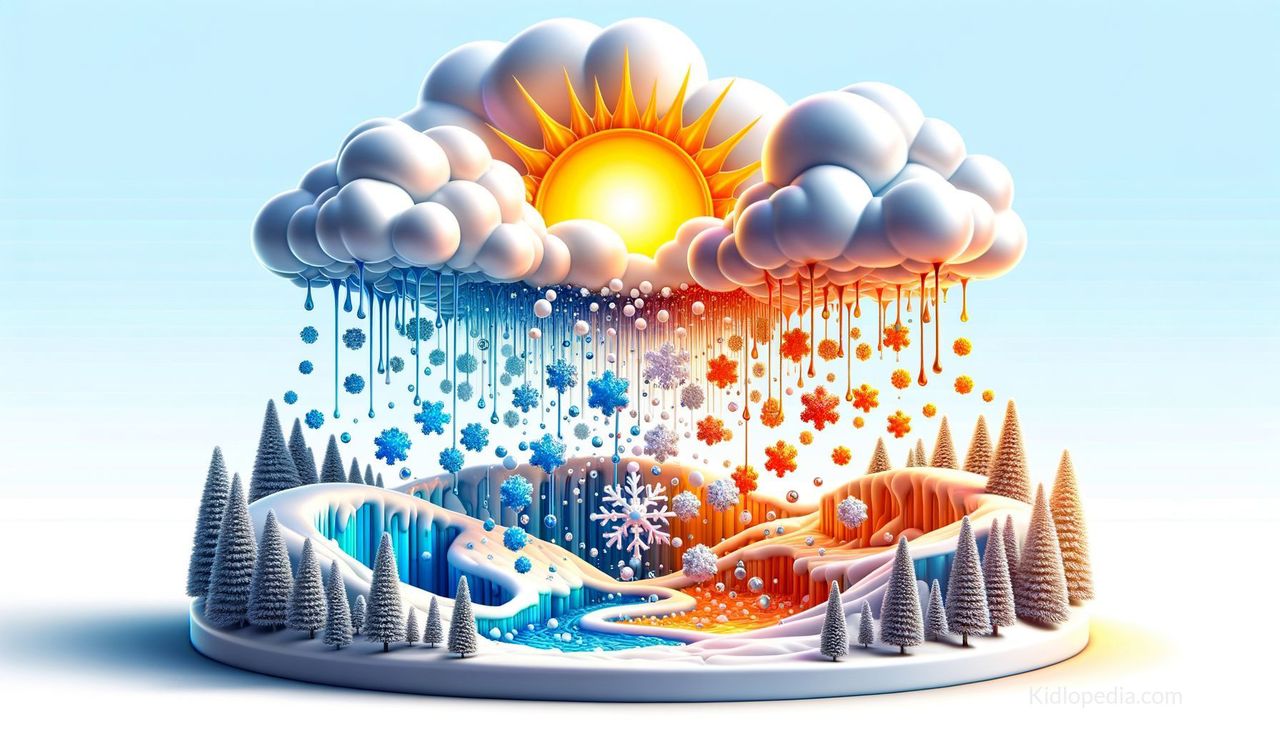
Snow forms when water vapor in the air freezes into tiny ice crystals. These crystals join together to create larger snowflakes. When enough snowflakes gather, they can fall from clouds to the ground, creating a snowy landscape that can be soft and fun for people to enjoy.
Snow forms when water vapor in the air freezes into tiny ice crystals.
These ice crystals are created when the temperature drops below freezing.
When many of these crystals join together, they form larger structures known as snowflakes.
The process begins in clouds, where water vapor, which is a gas, cools down.
When it gets cold enough, this vapor turns into ice.
Each ice crystal has a unique shape depending on the temperature and humidity around it.
As more ice crystals form and cluster together, they create a snowflake.
When clouds become heavy with these snowflakes, they can no longer hold them up.
Eventually, the snowflakes fall to the ground as snow.
When snow covers the ground, it creates a soft and fluffy layer that can be fun to play in.
People enjoy activities like building snowmen or having snowball fights when it snows.
Did you know that no two snowflakes are exactly the same?
Each one has a unique pattern! Also, it takes about a million snowflakes to make just one inch of snow on the ground.
If you're curious about more amazing topics, visit Kidlopedia.com!
These ice crystals are created when the temperature drops below freezing.
When many of these crystals join together, they form larger structures known as snowflakes.
The process begins in clouds, where water vapor, which is a gas, cools down.
When it gets cold enough, this vapor turns into ice.
Each ice crystal has a unique shape depending on the temperature and humidity around it.
As more ice crystals form and cluster together, they create a snowflake.
When clouds become heavy with these snowflakes, they can no longer hold them up.
Eventually, the snowflakes fall to the ground as snow.
When snow covers the ground, it creates a soft and fluffy layer that can be fun to play in.
People enjoy activities like building snowmen or having snowball fights when it snows.
Did you know that no two snowflakes are exactly the same?
Each one has a unique pattern! Also, it takes about a million snowflakes to make just one inch of snow on the ground.
If you're curious about more amazing topics, visit Kidlopedia.com!