Life Underwater: Marine Biology
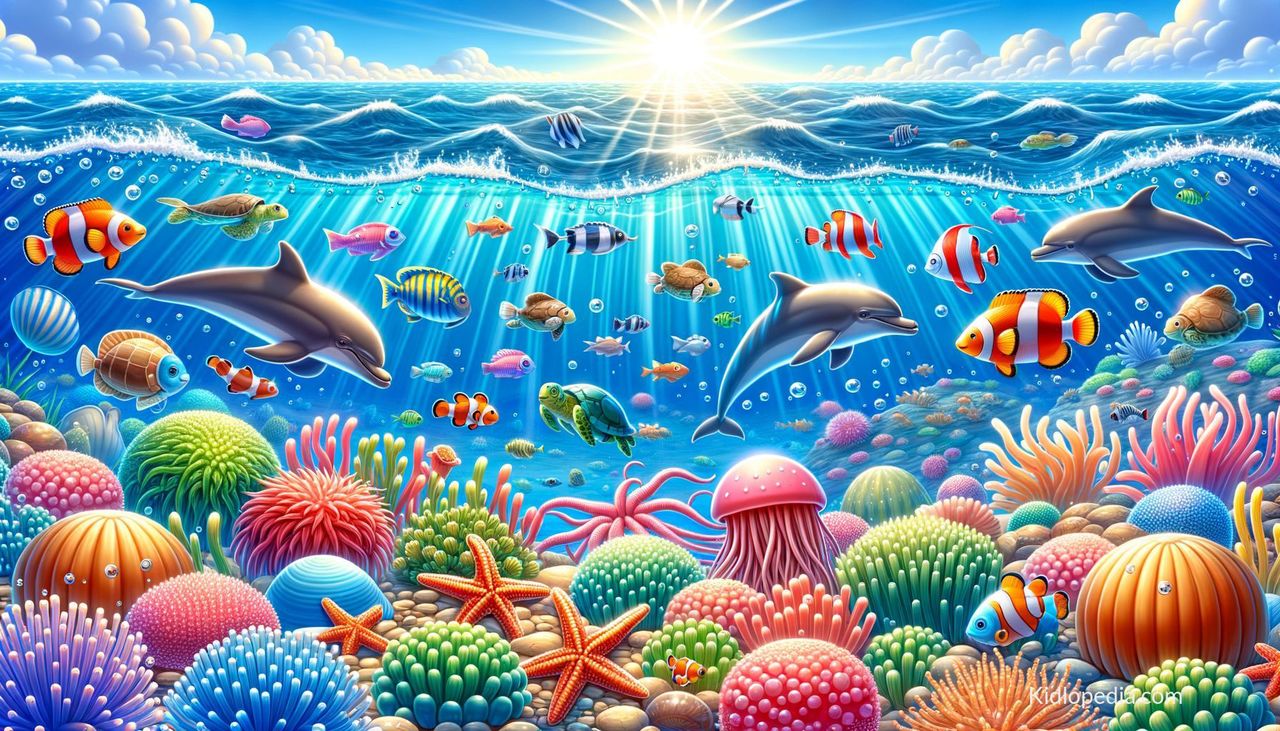
Marine biology is the study of living organisms in the ocean and other saltwater environments. It involves understanding the various creatures that inhabit these waters, from tiny plankton to large whales, and how they interact with each other and their surroundings. Learning about marine biology is important because it helps us protect the ocean's biodiversity and the health of our planet.
Marine biology is the study of living organisms in the ocean and other saltwater environments.
It includes everything from tiny plankton to large whales.
Marine biologists explore how these creatures live, grow, and interact with each other and their surroundings.
This field is important for understanding the ocean's ecosystems and helps us protect marine life and the health of our planet.
The ocean is home to many different habitats, such as coral reefs, deep-sea environments, and open waters.
Coral reefs are colorful underwater structures made from tiny animals called corals.
These reefs provide shelter and food for many fishes and other sea creatures.
Deep-sea environments are darker and colder, hosting unique species that have adapted to extreme conditions.
Each habitat supports various forms of life, making the ocean a diverse place.
Marine organisms play important roles in the ecosystem.
For example, phytoplankton are tiny plants that live in the water.
They produce oxygen and are the base of the ocean food web.
Small fish and other animals eat them, and larger fish and birds eat those smaller animals.
This chain of life helps keep the ocean balanced and healthy.
Many creatures have special adaptations to help them survive.
Some fish can change color to blend in with their environment, while others can produce bioluminescent light to attract mates or scare off predators.
Sea turtles, like Tommy the Turtle, have flippers to help them swim long distances in search of food and mates.
These adaptations are key to their survival in the vast ocean.
Did you know that there are about 230,000 known marine species, and scientists believe there may be over 2 million more yet to be discovered?
Also, the ocean is so deep that some parts have never been seen by humans!
Explore more amazing topics at Kidlopedia.com!
It includes everything from tiny plankton to large whales.
Marine biologists explore how these creatures live, grow, and interact with each other and their surroundings.
This field is important for understanding the ocean's ecosystems and helps us protect marine life and the health of our planet.
The ocean is home to many different habitats, such as coral reefs, deep-sea environments, and open waters.
Coral reefs are colorful underwater structures made from tiny animals called corals.
These reefs provide shelter and food for many fishes and other sea creatures.
Deep-sea environments are darker and colder, hosting unique species that have adapted to extreme conditions.
Each habitat supports various forms of life, making the ocean a diverse place.
Marine organisms play important roles in the ecosystem.
For example, phytoplankton are tiny plants that live in the water.
They produce oxygen and are the base of the ocean food web.
Small fish and other animals eat them, and larger fish and birds eat those smaller animals.
This chain of life helps keep the ocean balanced and healthy.
Many creatures have special adaptations to help them survive.
Some fish can change color to blend in with their environment, while others can produce bioluminescent light to attract mates or scare off predators.
Sea turtles, like Tommy the Turtle, have flippers to help them swim long distances in search of food and mates.
These adaptations are key to their survival in the vast ocean.
Did you know that there are about 230,000 known marine species, and scientists believe there may be over 2 million more yet to be discovered?
Also, the ocean is so deep that some parts have never been seen by humans!
Explore more amazing topics at Kidlopedia.com!