Managing Forests: Forestry
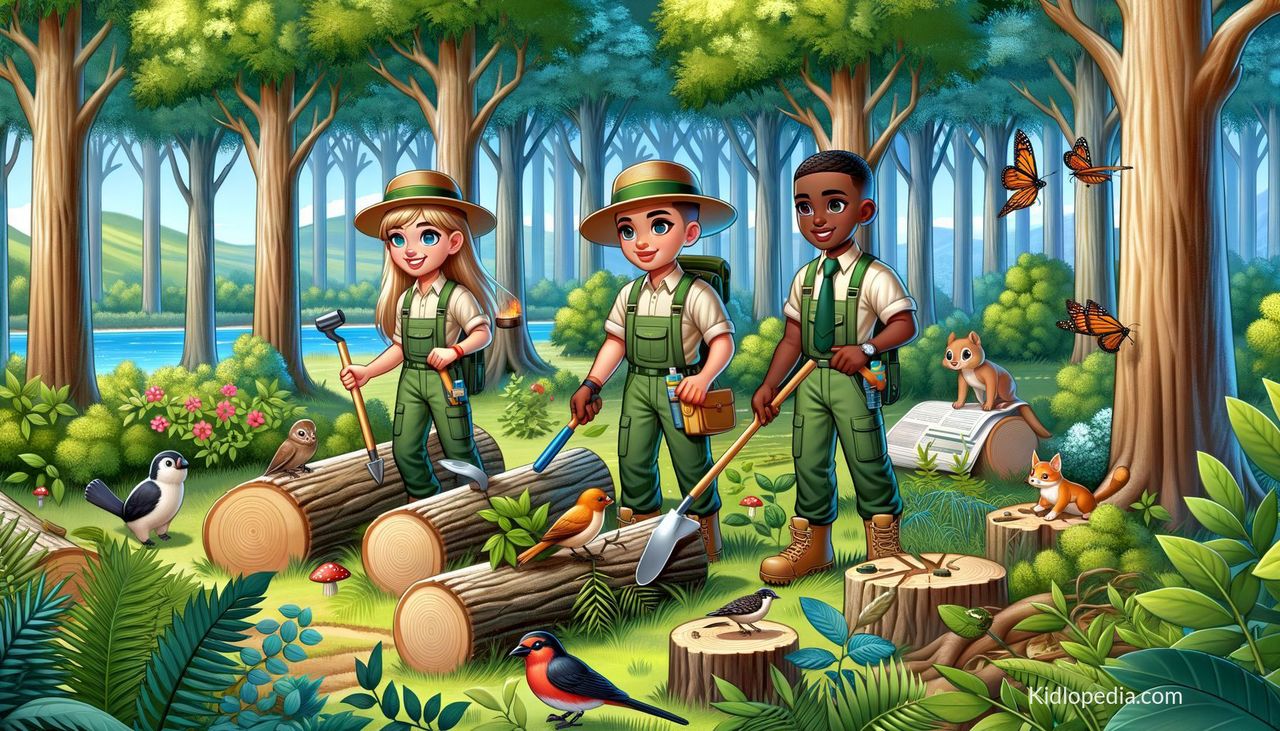

Forestry is the science and practice of managing forests to maintain their health and productivity. It involves activities such as planting trees, protecting wildlife, cleaning up litter, and conserving water to ensure that forests can thrive for both nature and people. Proper forestry care is essential because forests provide habitats for animals, clean air, and resources for human communities.
Forestry is the science and practice of managing forests to keep them healthy and productive.
It involves several important activities.
These include planting trees, protecting wildlife, cleaning up litter, and conserving water.
Managing forests helps ensure that they thrive for both nature and people.
Planting trees is one of the main tasks in forestry.
New trees provide fresh air and habitats for animals.
Just like how we need food to grow strong, trees need space and care to grow tall and healthy.
Foresters often plant young trees, called saplings, and help them grow by providing water and protection.
Protecting wildlife is another crucial part of forestry.
Forests are home to many animals, birds, and insects.
To ensure these creatures are safe, foresters monitor their populations and protect their habitats.
This helps maintain balance in the ecosystem.
For example, when animal populations are healthy, they help pollinate plants and disperse seeds, which is important for forest growth.
Cleaning up litter in forests is also essential.
Trash and waste can harm plants and animals.
Foresters regularly organize clean-up events to pick up litter and keep the environment safe.
This helps the forest look beautiful and remain a healthy place for all its inhabitants.
Finally, conserving water is vital in forestry.
Water is needed for plants to grow and for animals to survive.
Foresters make sure that there are enough water resources in forests.
They create ponds and monitor water levels to prevent droughts, ensuring that the ecosystem remains healthy.
Did you know that forests cover about 30% of the Earth's land area?
Also, trees can live for hundreds, or even thousands, of years!
Explore more exciting topics at Kidlopedia.com!
It involves several important activities.
These include planting trees, protecting wildlife, cleaning up litter, and conserving water.
Managing forests helps ensure that they thrive for both nature and people.
Planting trees is one of the main tasks in forestry.
New trees provide fresh air and habitats for animals.
Just like how we need food to grow strong, trees need space and care to grow tall and healthy.
Foresters often plant young trees, called saplings, and help them grow by providing water and protection.
Protecting wildlife is another crucial part of forestry.
Forests are home to many animals, birds, and insects.
To ensure these creatures are safe, foresters monitor their populations and protect their habitats.
This helps maintain balance in the ecosystem.
For example, when animal populations are healthy, they help pollinate plants and disperse seeds, which is important for forest growth.
Cleaning up litter in forests is also essential.
Trash and waste can harm plants and animals.
Foresters regularly organize clean-up events to pick up litter and keep the environment safe.
This helps the forest look beautiful and remain a healthy place for all its inhabitants.
Finally, conserving water is vital in forestry.
Water is needed for plants to grow and for animals to survive.
Foresters make sure that there are enough water resources in forests.
They create ponds and monitor water levels to prevent droughts, ensuring that the ecosystem remains healthy.
Did you know that forests cover about 30% of the Earth's land area?
Also, trees can live for hundreds, or even thousands, of years!
Explore more exciting topics at Kidlopedia.com!