Our Neighbor Galaxy: Andromeda
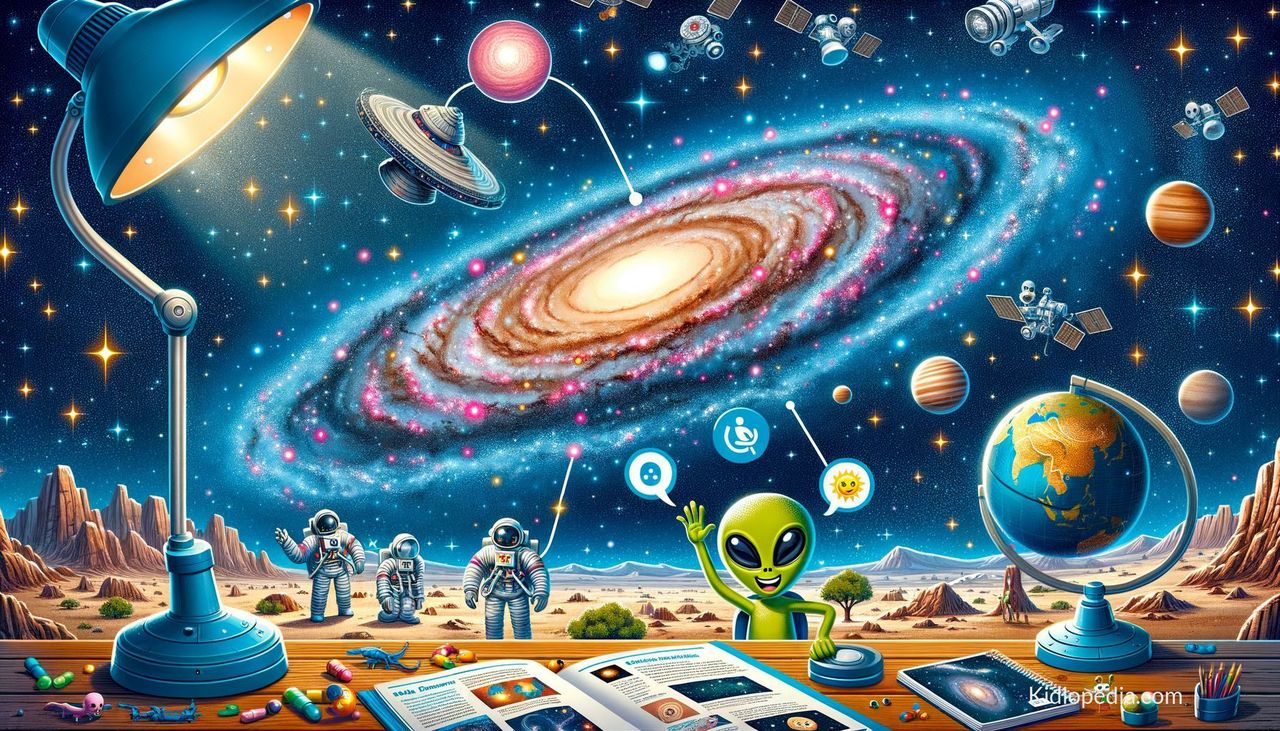
The Andromeda galaxy is a large collection of stars, dust, and gas located about 2.537 million light-years away from Earth. It is the closest spiral galaxy to our own Milky Way and contains approximately one trillion stars. Understanding Andromeda helps scientists learn more about the universe and how galaxies form and evolve over time.
Andromeda is a large galaxy located about 2.537 million light-years from Earth.
It is the closest spiral galaxy to our own galaxy, the Milky Way.
Andromeda is made up of stars, gas, and dust.
Scientists estimate that it contains approximately one trillion stars.
This makes it one of the largest galaxies in our local group of galaxies.
Galaxies like Andromeda are huge collections of stars, along with other materials such as gas and dust.
They are held together by gravity.
Within a galaxy, stars are formed from clouds of gas and dust.
Over millions of years, these materials come together to create new stars.
Just like Andromeda, our Milky Way also has billions of stars and possibly many planets orbiting them.
Andromeda and the Milky Way are on a slow journey toward each other.
In about 4.5 billion years, they are expected to collide and merge into one larger galaxy.
This process is called galactic collision, and it happens very slowly over a long period of time.
When galaxies collide, they can share stars and materials, leading to new star formation.
Scientists study Andromeda to learn more about how galaxies are formed and how they change over time.
Observing Andromeda helps astronomers understand the history of our universe.
The light we see from Andromeda today started its journey more than two million years ago!
Did you know that Andromeda can be seen with the naked eye from Earth on clear nights?
It looks like a fuzzy patch in the sky.
Also, some scientists believe there may be planets in Andromeda that could be similar to Earth!
Want to learn more exciting facts about our universe?
Visit Kidlopedia.com for more topics!
It is the closest spiral galaxy to our own galaxy, the Milky Way.
Andromeda is made up of stars, gas, and dust.
Scientists estimate that it contains approximately one trillion stars.
This makes it one of the largest galaxies in our local group of galaxies.
Galaxies like Andromeda are huge collections of stars, along with other materials such as gas and dust.
They are held together by gravity.
Within a galaxy, stars are formed from clouds of gas and dust.
Over millions of years, these materials come together to create new stars.
Just like Andromeda, our Milky Way also has billions of stars and possibly many planets orbiting them.
Andromeda and the Milky Way are on a slow journey toward each other.
In about 4.5 billion years, they are expected to collide and merge into one larger galaxy.
This process is called galactic collision, and it happens very slowly over a long period of time.
When galaxies collide, they can share stars and materials, leading to new star formation.
Scientists study Andromeda to learn more about how galaxies are formed and how they change over time.
Observing Andromeda helps astronomers understand the history of our universe.
The light we see from Andromeda today started its journey more than two million years ago!
Did you know that Andromeda can be seen with the naked eye from Earth on clear nights?
It looks like a fuzzy patch in the sky.
Also, some scientists believe there may be planets in Andromeda that could be similar to Earth!
Want to learn more exciting facts about our universe?
Visit Kidlopedia.com for more topics!