Spinning Stars: Pulsars
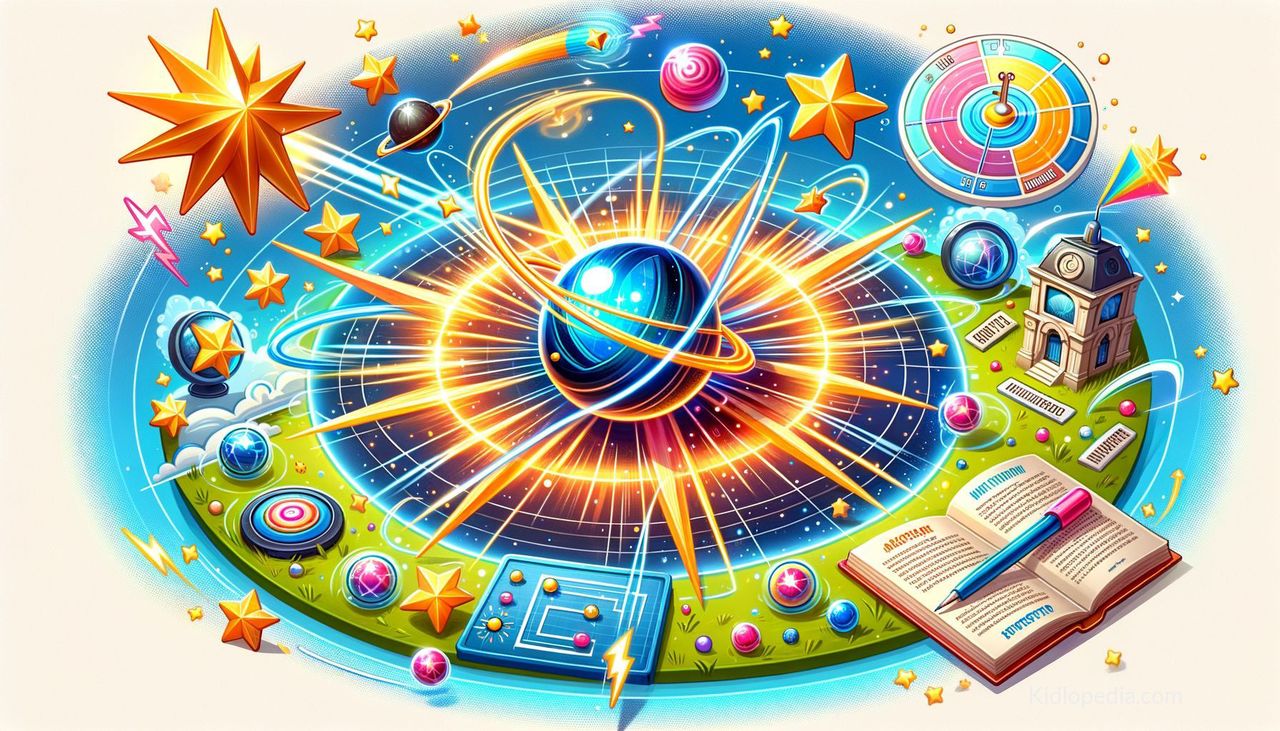
Pulsars are highly magnetized, rotating neutron stars that emit beams of electromagnetic radiation out from their magnetic poles. As they spin, these beams can be detected from Earth as bursts of radio waves, making pulsars resemble cosmic lighthouses. Pulsars are important for studying the universe, as they help astronomers understand the behavior of matter under extreme conditions and aid in the exploration of space.
Pulsars are highly magnetized, rotating neutron stars that emit beams of electromagnetic radiation. These beams come from their magnetic poles and can often be detected on Earth as bursts of radio waves. Because of this, pulsars are sometimes called cosmic lighthouses. As they spin, they create a regular pattern of bursts that appears almost like a heartbeat, helping astronomers study the universe.
A pulsar forms when a massive star ends its life in a supernova explosion. This explosion leaves behind a core that is incredibly dense. Pulsars can weigh more than our Sun but are packed into an area just a few kilometers wide. This unique combination of mass and size gives pulsars their strong gravitational and magnetic fields.
The spinning motion of a pulsar is a result of the conservation of angular momentum. Imagine spinning a figure skater pulling in their arms to spin faster. As the core collapses, it spins faster and faster, allowing pulsars to rotate many times per second. Some pulsars can complete hundreds of rotations in just one second!
When a pulsar spins, its magnetic field generates beams of radiation. These beams are not always visible to the naked eye but can be detected as radio waves. Astronomers use special telescopes to find these waves, much like how lighthouses use light to guide ships. The regularity of the bursts helps scientists learn more about the universe and the laws of physics.
Did you know that some pulsars can be so precise that they could help keep time accurately, just like an atomic clock? Also, there are pulsars that are part of binary systems, where they orbit another star!
To learn more about fascinating topics like pulsars, visit Kidlopedia.com!