Ecosystems and Habitats: Ecology
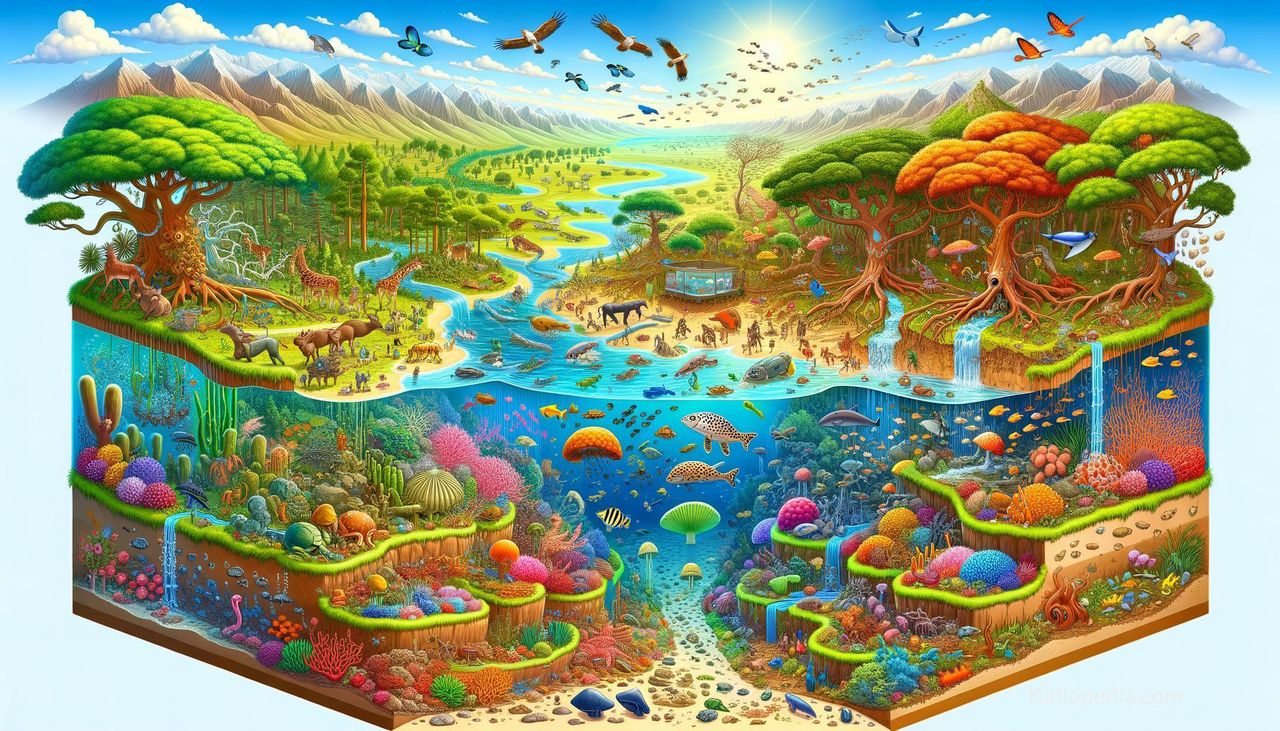
Ecosystems are networks of living organisms, such as plants and animals, interacting with each other and their physical environment. They help maintain balance in nature by allowing different species to play specific roles; for example, some provide food, while others contribute to soil health and pollination. Understanding ecosystems is important because it helps us learn how to protect our environment and ensure all living things can thrive together.
Ecosystems are communities of living organisms, including plants, animals, and microorganisms, interacting with one another and their environment.
Each ecosystem has unique characteristics based on its location, climate, and the types of life it supports.
Common ecosystems include forests, grasslands, deserts, and aquatic environments like oceans and lakes.
Each living organism in an ecosystem plays a specific role or function.
For example, plants produce oxygen through photosynthesis and serve as food for animals.
Herbivores, like rabbits, eat plants, while carnivores, like hawks, hunt other animals.
Decomposers, such as fungi and bacteria, break down dead material, returning nutrients to the soil.
This network of interactions helps maintain balance and supports life.
Habitat is the specific place where an organism lives.
It provides everything an organism needs to survive, including food, shelter, and space to grow.
For instance, a cactus provides shade and water storage in a desert ecosystem, while a tree offers shelter and food in a forest.
Different organisms adapt to their habitats through physical characteristics and behaviors.
Ecosystems are important for several reasons.
They support biodiversity, which means a variety of living things coexist.
This diversity ensures that ecosystems can function well and recover from changes.
Understanding ecosystems helps scientists and people protect the environment, making sure all living things have a chance to thrive.
Did you know that a single tree can support hundreds of different species?
Also, some ecosystems, like coral reefs, are so diverse that they are often called the "rainforests of the sea."
To learn more about nature and other interesting topics, visit Kidlopedia.com!
Each ecosystem has unique characteristics based on its location, climate, and the types of life it supports.
Common ecosystems include forests, grasslands, deserts, and aquatic environments like oceans and lakes.
Each living organism in an ecosystem plays a specific role or function.
For example, plants produce oxygen through photosynthesis and serve as food for animals.
Herbivores, like rabbits, eat plants, while carnivores, like hawks, hunt other animals.
Decomposers, such as fungi and bacteria, break down dead material, returning nutrients to the soil.
This network of interactions helps maintain balance and supports life.
Habitat is the specific place where an organism lives.
It provides everything an organism needs to survive, including food, shelter, and space to grow.
For instance, a cactus provides shade and water storage in a desert ecosystem, while a tree offers shelter and food in a forest.
Different organisms adapt to their habitats through physical characteristics and behaviors.
Ecosystems are important for several reasons.
They support biodiversity, which means a variety of living things coexist.
This diversity ensures that ecosystems can function well and recover from changes.
Understanding ecosystems helps scientists and people protect the environment, making sure all living things have a chance to thrive.
Did you know that a single tree can support hundreds of different species?
Also, some ecosystems, like coral reefs, are so diverse that they are often called the "rainforests of the sea."
To learn more about nature and other interesting topics, visit Kidlopedia.com!