Underwater Exploration: Scuba Diving
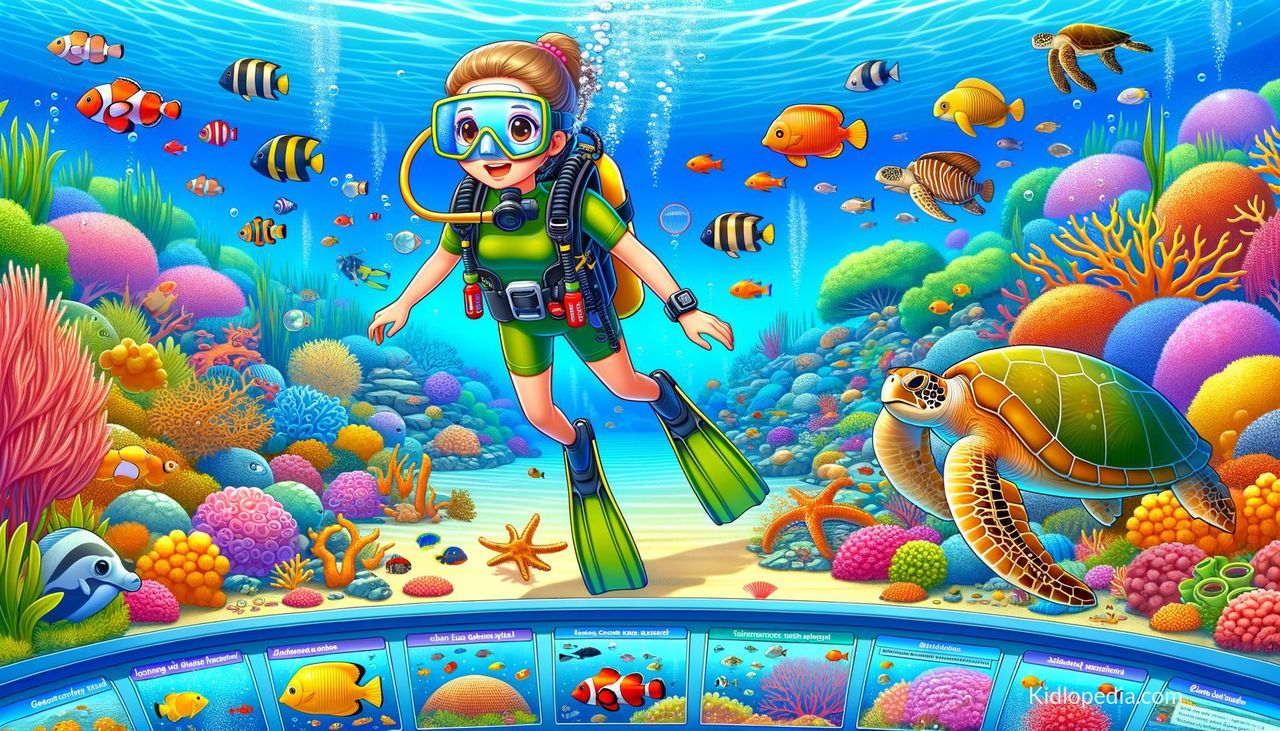
Scuba diving is a way to explore underwater environments using special equipment that allows people to breathe while submerged. Divers can see vibrant coral reefs, various fish species, and other ocean creatures in their natural habitats. This type of exploration is important because it helps us learn about marine life and emphasizes the need to protect our oceans.
Scuba diving is a method of exploring underwater environments using special equipment.
The equipment includes a wetsuit, a scuba tank for air supply, a mask for clear vision, and fins for easy swimming.
Divers can go beneath the surface of the water to see plants and animals in their natural habitats.
When scuba divers enter the water, they wear a wetsuit to keep warm.
The wetsuit also protects their skin from sharp objects or stings.
The scuba tank holds compressed air, which allows divers to breathe while they are submerged.
This is different from snorkeling, where a snorkel only allows breathing at the surface.
While underwater, divers can observe many fascinating things.
They may see colorful coral reefs, which are essential for marine life.
Coral reefs are made of tiny creatures called corals, and they provide homes for fish and other sea animals.
Divers might also encounter schools of fish swimming together for safety.
Scuba diving helps scientists learn more about the ocean ecosystem.
It is important for understanding how to protect our oceans.
Every dive can reveal new discoveries about marine life and the effects of pollution on underwater environments.
Did you know?
The deepest scuba dive ever recorded was over 1,000 feet! Also, the Great Barrier Reef in Australia is the largest coral reef system in the world.
To learn more amazing topics like this, visit Kidlopedia.com!
The equipment includes a wetsuit, a scuba tank for air supply, a mask for clear vision, and fins for easy swimming.
Divers can go beneath the surface of the water to see plants and animals in their natural habitats.
When scuba divers enter the water, they wear a wetsuit to keep warm.
The wetsuit also protects their skin from sharp objects or stings.
The scuba tank holds compressed air, which allows divers to breathe while they are submerged.
This is different from snorkeling, where a snorkel only allows breathing at the surface.
While underwater, divers can observe many fascinating things.
They may see colorful coral reefs, which are essential for marine life.
Coral reefs are made of tiny creatures called corals, and they provide homes for fish and other sea animals.
Divers might also encounter schools of fish swimming together for safety.
Scuba diving helps scientists learn more about the ocean ecosystem.
It is important for understanding how to protect our oceans.
Every dive can reveal new discoveries about marine life and the effects of pollution on underwater environments.
Did you know?
The deepest scuba dive ever recorded was over 1,000 feet! Also, the Great Barrier Reef in Australia is the largest coral reef system in the world.
To learn more amazing topics like this, visit Kidlopedia.com!