Empty Hand Martial Art: Karate
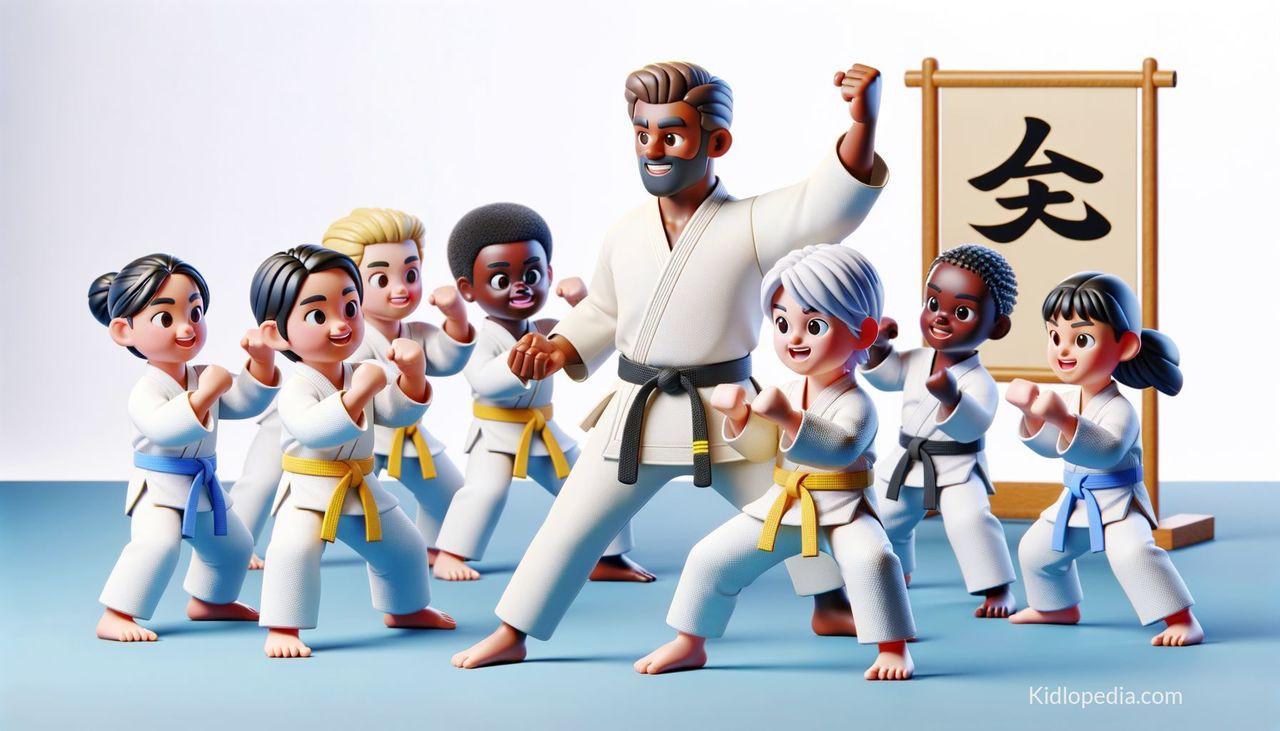
Karate is a martial art that means "empty hand" in Japanese. It teaches people how to use their bodies to stay strong and safe without the need for weapons. Karate is not only about learning kicks and punches; it also emphasizes respect, discipline, and kindness towards others.
Karate is a martial art that means "empty hand" in Japanese.
It teaches people how to use their bodies to defend themselves without weapons.
Karate is practiced by people of all ages around the world.
It includes techniques such as kicks, punches, and blocks.
But karate is not just about fighting; it also teaches respect, discipline, and kindness.
In karate, students start with warm-up exercises.
Warm-ups prepare the body for movement and help prevent injuries.
They may include stretching and light exercises.
This step is important because karate requires flexibility and strength.
Next, students learn basic techniques.
They practice how to block an attack, which is essential for self-defense.
Blocks help protect the body from strikes.
After mastering blocks, karate students learn how to punch and kick.
They practice these moves carefully to ensure they use their skills safely.
Karate training also involves learning about respect.
Students bow to their instructors and classmates as a sign of respect.
This tradition helps create a positive environment in the dojo, or training place.
It reminds everyone that karate is about helping each other grow.
Karate is not just a physical activity; it also teaches important life skills.
Students learn to stay calm, even when faced with challenges.
They learn to be disciplined and work hard to improve.
Most importantly, they understand that karate should never be used to start fights but to protect themselves and others.
Did you know?
The word "karate" is made up of two parts: "kara," meaning empty, and "te," meaning hand.
Also, many karate schools have a belt system that shows a student’s level of skill.
Explore more exciting topics at Kidlopedia.com!
It teaches people how to use their bodies to defend themselves without weapons.
Karate is practiced by people of all ages around the world.
It includes techniques such as kicks, punches, and blocks.
But karate is not just about fighting; it also teaches respect, discipline, and kindness.
In karate, students start with warm-up exercises.
Warm-ups prepare the body for movement and help prevent injuries.
They may include stretching and light exercises.
This step is important because karate requires flexibility and strength.
Next, students learn basic techniques.
They practice how to block an attack, which is essential for self-defense.
Blocks help protect the body from strikes.
After mastering blocks, karate students learn how to punch and kick.
They practice these moves carefully to ensure they use their skills safely.
Karate training also involves learning about respect.
Students bow to their instructors and classmates as a sign of respect.
This tradition helps create a positive environment in the dojo, or training place.
It reminds everyone that karate is about helping each other grow.
Karate is not just a physical activity; it also teaches important life skills.
Students learn to stay calm, even when faced with challenges.
They learn to be disciplined and work hard to improve.
Most importantly, they understand that karate should never be used to start fights but to protect themselves and others.
Did you know?
The word "karate" is made up of two parts: "kara," meaning empty, and "te," meaning hand.
Also, many karate schools have a belt system that shows a student’s level of skill.
Explore more exciting topics at Kidlopedia.com!