Observing Stars: Stargazing
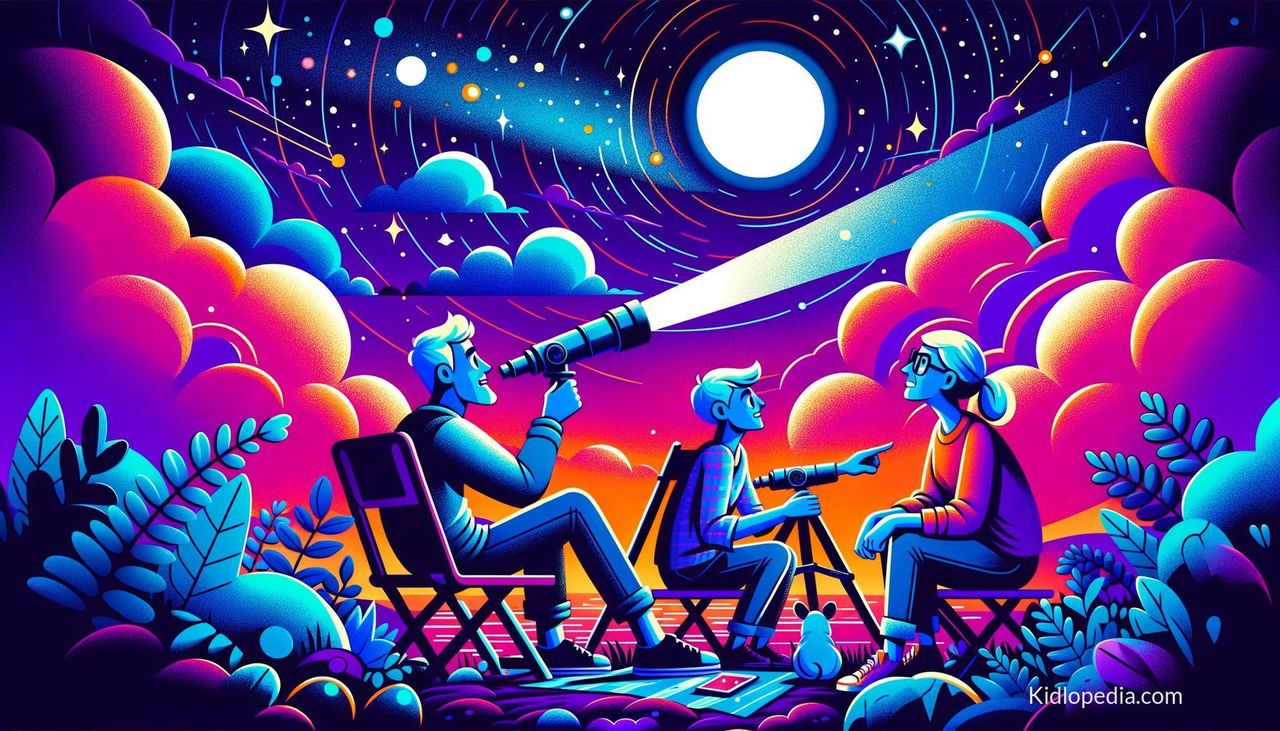
Stargazing is the activity of looking at and observing stars in the night sky. It is cool because it allows us to see beautiful and fascinating objects that are thousands or even millions of miles away. By studying the stars, we learn about the universe, including the life cycles of stars and the formation of constellations.
Stargazing is the activity of looking at and observing stars in the night sky.
It is an exciting way to see objects that are very far away.
The stars we see are not just pretty lights; they are suns that are light-years from Earth.
Some stars are nearby, while others are incredibly distant.
When we stargaze, we often see stars twinkling.
This twinkling happens because the air in our atmosphere is not still.
It's like when you look through water that is moving.
The moving air causes the light from the stars to change slightly, making them appear to sparkle.
Stars are grouped into patterns known as constellations.
A constellation is a combination of stars that form a specific shape or picture in the sky.
For example, the Big Dipper looks like a spoon, and Orion resembles a hunter with a belt of three bright stars.
People have been naming these patterns for thousands of years, and many have stories connected to them.
To observe stars better, it is helpful to find a dark place away from city lights.
The fewer lights there are, the easier it is to see more stars.
Stargazing can be done with just your eyes, or you can use a telescope for a closer look.
Did you know?
There are an estimated 100 billion stars in our Milky Way galaxy alone! Also, some stars you see might no longer exist, as their light takes many years to reach us.
Explore more fascinating topics at Kidlopedia.com!
It is an exciting way to see objects that are very far away.
The stars we see are not just pretty lights; they are suns that are light-years from Earth.
Some stars are nearby, while others are incredibly distant.
When we stargaze, we often see stars twinkling.
This twinkling happens because the air in our atmosphere is not still.
It's like when you look through water that is moving.
The moving air causes the light from the stars to change slightly, making them appear to sparkle.
Stars are grouped into patterns known as constellations.
A constellation is a combination of stars that form a specific shape or picture in the sky.
For example, the Big Dipper looks like a spoon, and Orion resembles a hunter with a belt of three bright stars.
People have been naming these patterns for thousands of years, and many have stories connected to them.
To observe stars better, it is helpful to find a dark place away from city lights.
The fewer lights there are, the easier it is to see more stars.
Stargazing can be done with just your eyes, or you can use a telescope for a closer look.
Did you know?
There are an estimated 100 billion stars in our Milky Way galaxy alone! Also, some stars you see might no longer exist, as their light takes many years to reach us.
Explore more fascinating topics at Kidlopedia.com!