Study of Oceans: Oceanography
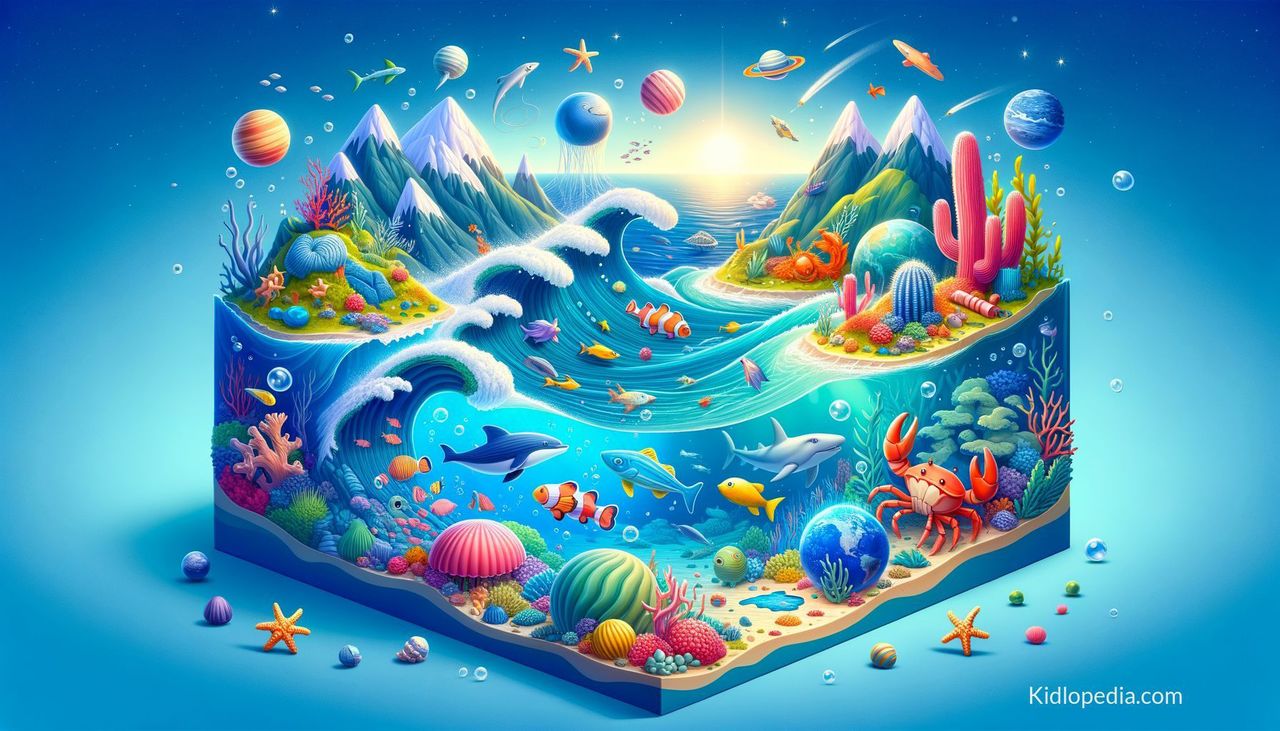

Oceanography is the study of oceans, including their ecosystems, currents, and properties. Oceans are important because they are home to countless marine animals, provide food for millions of people, regulate the Earth's climate, and produce much of the oxygen we breathe. Understanding oceans helps us take care of our planet and its resources.
Oceanography is the study of oceans.
It looks at how oceans work, what lives in them, and their physical features.
Oceans cover more than 70% of the Earth's surface.
They are important for many reasons.
First, oceans are home to many kinds of marine animals, such as fish, whales, and jellyfish.
These animals live in different parts of the ocean, from shallow waters to deep areas.
Oceans provide food for millions of people by supplying fish and other seafood.
Many communities rely on fishing for their livelihoods.
Second, oceans play a big role in the Earth's climate.
They help regulate temperatures and weather patterns.
For example, oceans absorb heat from the sun and distribute it around the planet.
This process affects rainfall and seasonal changes.
Third, oceans produce a lot of the oxygen we breathe.
Tiny plants in the ocean, like phytoplankton, create oxygen during photosynthesis.
This process is similar to how trees and plants on land work.
Finally, oceanography helps us understand how to protect our oceans.
Pollution, overfishing, and climate change threaten marine life and ecosystems.
Learning about the ocean enables us to make better choices to keep it healthy.
Did you know?
The ocean contains more than 230,000 known species of animals, with many more yet to be discovered! Also, the deepest part of the ocean is called the Mariana Trench, and it's about 36,000 feet deep.
Explore more fascinating topics at Kidlopedia.com!
It looks at how oceans work, what lives in them, and their physical features.
Oceans cover more than 70% of the Earth's surface.
They are important for many reasons.
First, oceans are home to many kinds of marine animals, such as fish, whales, and jellyfish.
These animals live in different parts of the ocean, from shallow waters to deep areas.
Oceans provide food for millions of people by supplying fish and other seafood.
Many communities rely on fishing for their livelihoods.
Second, oceans play a big role in the Earth's climate.
They help regulate temperatures and weather patterns.
For example, oceans absorb heat from the sun and distribute it around the planet.
This process affects rainfall and seasonal changes.
Third, oceans produce a lot of the oxygen we breathe.
Tiny plants in the ocean, like phytoplankton, create oxygen during photosynthesis.
This process is similar to how trees and plants on land work.
Finally, oceanography helps us understand how to protect our oceans.
Pollution, overfishing, and climate change threaten marine life and ecosystems.
Learning about the ocean enables us to make better choices to keep it healthy.
Did you know?
The ocean contains more than 230,000 known species of animals, with many more yet to be discovered! Also, the deepest part of the ocean is called the Mariana Trench, and it's about 36,000 feet deep.
Explore more fascinating topics at Kidlopedia.com!