Searching for Aliens: Extraterrestrial Life
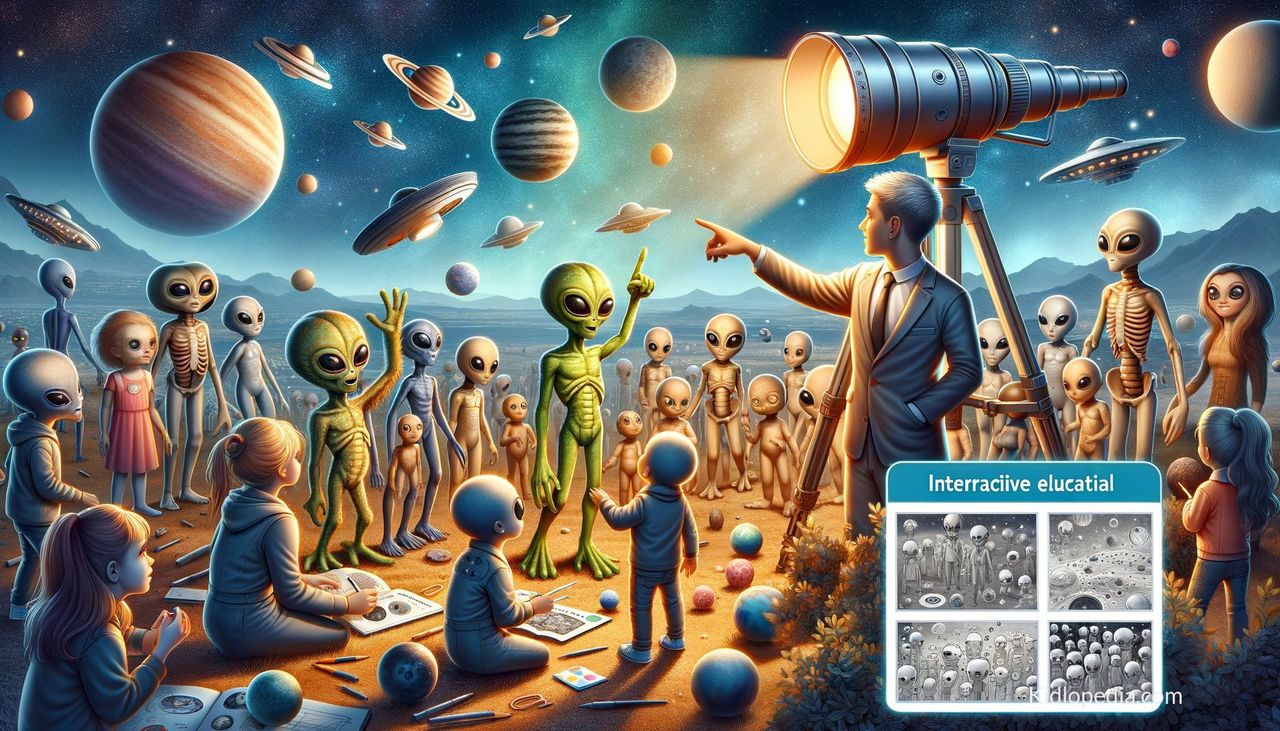

Extraterrestrial life refers to any form of life that may exist beyond Earth. Scientists search for aliens by studying planets, moons, and other celestial bodies, looking for signs of life. Understanding extraterrestrial life helps us learn more about the universe and our place in it.
Extraterrestrial life refers to any form of life that may exist beyond Earth.
Scientists are very curious about aliens.
They look for signs of life on other planets and moons in our solar system and beyond.
This search helps us understand more about our universe.
To find extraterrestrial life, scientists use telescopes to observe distant stars and planets.
They look for places that might have water, which is important for life as we know it.
For example, Mars and some moons of Jupiter and Saturn have ice or evidence that liquid water could exist.
Understanding the atmosphere of these celestial bodies is also crucial.
Scientists study if those atmospheres contain gases, like oxygen or methane, which might suggest life.
Space missions play a big part in searching for aliens.
Robots and rovers have been sent to Mars to find signs of ancient life.
These machines take photos and collect soil samples.
By analyzing these samples, scientists can check for tiny organisms or chemicals that might indicate past or present life.
Another method scientists use is called SETI, which stands for the Search for Extraterrestrial Intelligence.
This program listens for radio signals from outer space.
If aliens exist, they might send signals that we can detect.
Scientists analyze these signals for patterns that could mean they are made by intelligent life.
Did you know that scientists have found more than 5,000 planets outside our solar system?
Many of them are in the "habitable zone," where conditions might be right for life! Also, some scientists believe there could be life forms that are very different from the ones we know, perhaps living in extreme conditions on other planets.
Explore more exciting topics at Kidlopedia.com!
Scientists are very curious about aliens.
They look for signs of life on other planets and moons in our solar system and beyond.
This search helps us understand more about our universe.
To find extraterrestrial life, scientists use telescopes to observe distant stars and planets.
They look for places that might have water, which is important for life as we know it.
For example, Mars and some moons of Jupiter and Saturn have ice or evidence that liquid water could exist.
Understanding the atmosphere of these celestial bodies is also crucial.
Scientists study if those atmospheres contain gases, like oxygen or methane, which might suggest life.
Space missions play a big part in searching for aliens.
Robots and rovers have been sent to Mars to find signs of ancient life.
These machines take photos and collect soil samples.
By analyzing these samples, scientists can check for tiny organisms or chemicals that might indicate past or present life.
Another method scientists use is called SETI, which stands for the Search for Extraterrestrial Intelligence.
This program listens for radio signals from outer space.
If aliens exist, they might send signals that we can detect.
Scientists analyze these signals for patterns that could mean they are made by intelligent life.
Did you know that scientists have found more than 5,000 planets outside our solar system?
Many of them are in the "habitable zone," where conditions might be right for life! Also, some scientists believe there could be life forms that are very different from the ones we know, perhaps living in extreme conditions on other planets.
Explore more exciting topics at Kidlopedia.com!