The Universe's Particles: The Standard Model
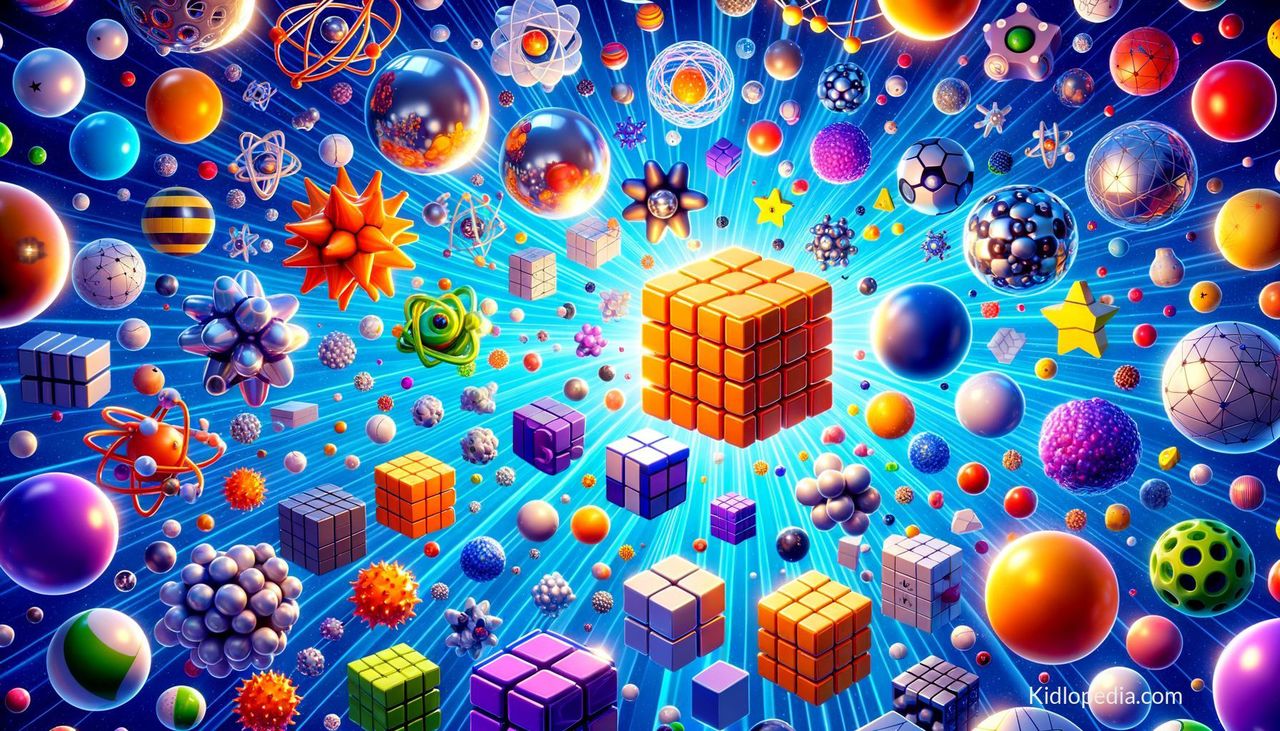
The Standard Model is a scientific theory that describes the fundamental particles and forces that make up the universe. It explains how particles like quarks and leptons combine to form protons, neutrons, and electrons, which are the building blocks of atoms. Understanding the Standard Model helps scientists learn more about the nature of everything around us, from tiny particles to massive galaxies.
The Standard Model is a scientific theory that describes the fundamental particles and forces that make up the universe.
It explains how different types of particles combine to form the building blocks of matter, such as protons and neutrons.
These particles are essential for creating atoms, which are the basic units of everything around us.
At the heart of the Standard Model are two groups of particles: quarks and leptons.
Quarks are the particles that combine to form protons and neutrons.
Protons and neutrons, in turn, make up the nucleus of an atom.
Electrons, another type of lepton, orbit around the nucleus, creating the structure of an atom.
Together, these particles create the diversity of matter we see in the world.
Quarks come in six different types, called "flavors": up, down, charm, strange, top, and bottom.
Protons are made of two up quarks and one down quark, while neutrons are made of two down quarks and one up quark.
This combination of quarks gives protons and neutrons their properties.
Leptons include not only electrons but also other types of particles like muons and neutrinos.
Electrons are crucial for forming chemical bonds between atoms, which result in all the different materials and substances in the universe.
This model also explains how fundamental forces, like gravity and electromagnetism, work between these particles.
Understanding the Standard Model helps scientists learn more about the nature of everything from tiny particles to the vastness of galaxies.
Did you know that while humans are made from atoms, those atoms are 99.9999999% empty space?
Or that the universe is made up of about 80% dark matter, which we still do not fully understand?
To learn more fascinating topics, visit Kidlopedia.com!
It explains how different types of particles combine to form the building blocks of matter, such as protons and neutrons.
These particles are essential for creating atoms, which are the basic units of everything around us.
At the heart of the Standard Model are two groups of particles: quarks and leptons.
Quarks are the particles that combine to form protons and neutrons.
Protons and neutrons, in turn, make up the nucleus of an atom.
Electrons, another type of lepton, orbit around the nucleus, creating the structure of an atom.
Together, these particles create the diversity of matter we see in the world.
Quarks come in six different types, called "flavors": up, down, charm, strange, top, and bottom.
Protons are made of two up quarks and one down quark, while neutrons are made of two down quarks and one up quark.
This combination of quarks gives protons and neutrons their properties.
Leptons include not only electrons but also other types of particles like muons and neutrinos.
Electrons are crucial for forming chemical bonds between atoms, which result in all the different materials and substances in the universe.
This model also explains how fundamental forces, like gravity and electromagnetism, work between these particles.
Understanding the Standard Model helps scientists learn more about the nature of everything from tiny particles to the vastness of galaxies.
Did you know that while humans are made from atoms, those atoms are 99.9999999% empty space?
Or that the universe is made up of about 80% dark matter, which we still do not fully understand?
To learn more fascinating topics, visit Kidlopedia.com!