The World of Microbes: Microbiology
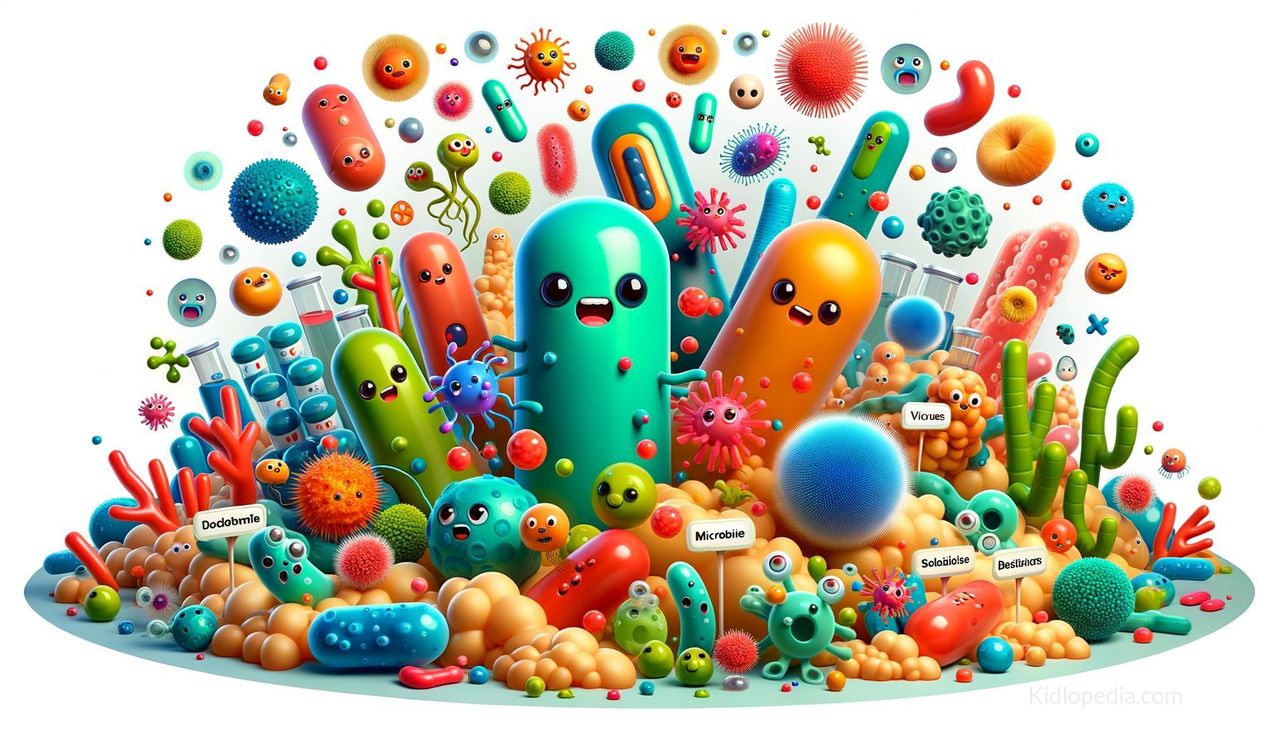
Microbes are tiny living organisms that can only be seen with a microscope. They include bacteria, viruses, fungi, and protists, and they play important roles in our world, such as helping to break down waste, aiding in digestion, and even making food like yogurt and bread. Understanding microbes is important because while some can cause illness, many are essential for life and help keep the environment healthy.
Microbes are tiny living organisms that can only be seen with a microscope.
They include bacteria, viruses, fungi, and protists.
Microbes are all around us, and they play important roles in our lives and the environment.
Bacteria are a type of microbe that can be found in many places.
Some bacteria are helpful.
For example, certain bacteria help make yogurt, cheese, and other foods.
They also live in our stomachs and help us digest food.
Other bacteria can be harmful and make us sick.
It is important to wash our hands to keep harmful bacteria away.
Viruses are another type of microbe.
Unlike bacteria, viruses cannot live on their own.
They need a host, like a human or an animal, to survive.
Some viruses can cause illness, but the body can often learn to fight them off.
This process helps our immune system get stronger over time.
Fungi are microbes that include molds and yeasts.
They help break down organic material, like old leaves and food waste, returning nutrients to the soil for plants to use.
Some fungi are used to make bread and other tasty foods.
Without fungi, many ecosystems would struggle to thrive.
Protists are diverse microbes that can live in water or inside other organisms.
Some protists help clean water and provide food for other small creatures.
They are essential in many aquatic ecosystems and play a role in the food web.
Did you know?
Microbes make up a huge portion of Earth’s biomass, and they can be found in extreme environments, like hot springs and deep-sea vents.
Also, our bodies contain more microbial cells than human cells!
Explore more fascinating topics at Kidlopedia.com!
They include bacteria, viruses, fungi, and protists.
Microbes are all around us, and they play important roles in our lives and the environment.
Bacteria are a type of microbe that can be found in many places.
Some bacteria are helpful.
For example, certain bacteria help make yogurt, cheese, and other foods.
They also live in our stomachs and help us digest food.
Other bacteria can be harmful and make us sick.
It is important to wash our hands to keep harmful bacteria away.
Viruses are another type of microbe.
Unlike bacteria, viruses cannot live on their own.
They need a host, like a human or an animal, to survive.
Some viruses can cause illness, but the body can often learn to fight them off.
This process helps our immune system get stronger over time.
Fungi are microbes that include molds and yeasts.
They help break down organic material, like old leaves and food waste, returning nutrients to the soil for plants to use.
Some fungi are used to make bread and other tasty foods.
Without fungi, many ecosystems would struggle to thrive.
Protists are diverse microbes that can live in water or inside other organisms.
Some protists help clean water and provide food for other small creatures.
They are essential in many aquatic ecosystems and play a role in the food web.
Did you know?
Microbes make up a huge portion of Earth’s biomass, and they can be found in extreme environments, like hot springs and deep-sea vents.
Also, our bodies contain more microbial cells than human cells!
Explore more fascinating topics at Kidlopedia.com!