Beyond Our Galaxy: Interstellar Travel
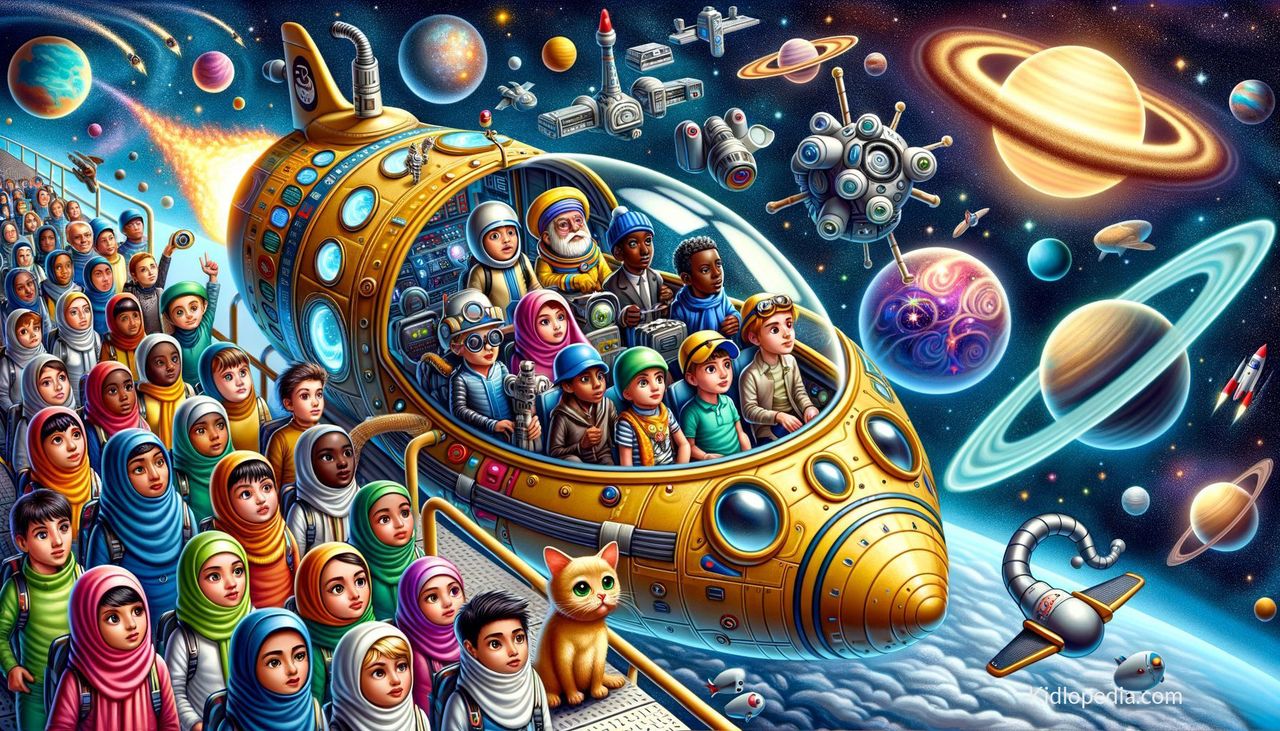
Interstellar travel is the concept of traveling between stars or even to other galaxies outside our own. While scientists believe there are billions of galaxies in the universe, our current technology does not allow us to travel to these distant places yet. Understanding interstellar travel is important because it helps us learn about the universe and inspires future discoveries.
Interstellar travel is the idea of traveling between stars or visiting other galaxies beyond our own.
Our galaxy is called the Milky Way, and it contains billions of stars.
Traveling to distant galaxies poses many challenges because they are incredibly far away and our current technology is not advanced enough for such journeys.
To understand interstellar travel, we must first look at our nearest star, Proxima Centauri.
It is about 4.24 light-years away, which means that even if we could travel at the speed of light, it would still take more than four years to reach it.
However, the fastest spacecraft we have built so far would take tens of thousands of years to get there.
This shows how vast the universe is and how much we still need to learn about traveling through space.
Currently, scientists study the universe using powerful telescopes.
These telescopes allow us to see distant stars and galaxies, even though we are unable to travel to them.
By observing these galaxies, we can learn about their composition and formation.
This research helps scientists understand more about how our own galaxy works.
The concept of interstellar travel is exciting and inspires people to think about the future of space exploration.
Researchers and engineers are looking into advanced technologies, such as faster-than-light travel and spacecraft that could operate for long durations.
These inventions might allow humans to visit other galaxies one day.
Did you know?
The Milky Way galaxy is just one of an estimated 2 trillion galaxies in the universe.
Each galaxy can contain millions or even billions of stars!
To learn more about space and other fascinating topics, visit Kidlopedia.com!
Our galaxy is called the Milky Way, and it contains billions of stars.
Traveling to distant galaxies poses many challenges because they are incredibly far away and our current technology is not advanced enough for such journeys.
To understand interstellar travel, we must first look at our nearest star, Proxima Centauri.
It is about 4.24 light-years away, which means that even if we could travel at the speed of light, it would still take more than four years to reach it.
However, the fastest spacecraft we have built so far would take tens of thousands of years to get there.
This shows how vast the universe is and how much we still need to learn about traveling through space.
Currently, scientists study the universe using powerful telescopes.
These telescopes allow us to see distant stars and galaxies, even though we are unable to travel to them.
By observing these galaxies, we can learn about their composition and formation.
This research helps scientists understand more about how our own galaxy works.
The concept of interstellar travel is exciting and inspires people to think about the future of space exploration.
Researchers and engineers are looking into advanced technologies, such as faster-than-light travel and spacecraft that could operate for long durations.
These inventions might allow humans to visit other galaxies one day.
Did you know?
The Milky Way galaxy is just one of an estimated 2 trillion galaxies in the universe.
Each galaxy can contain millions or even billions of stars!
To learn more about space and other fascinating topics, visit Kidlopedia.com!