How Rainbows Form
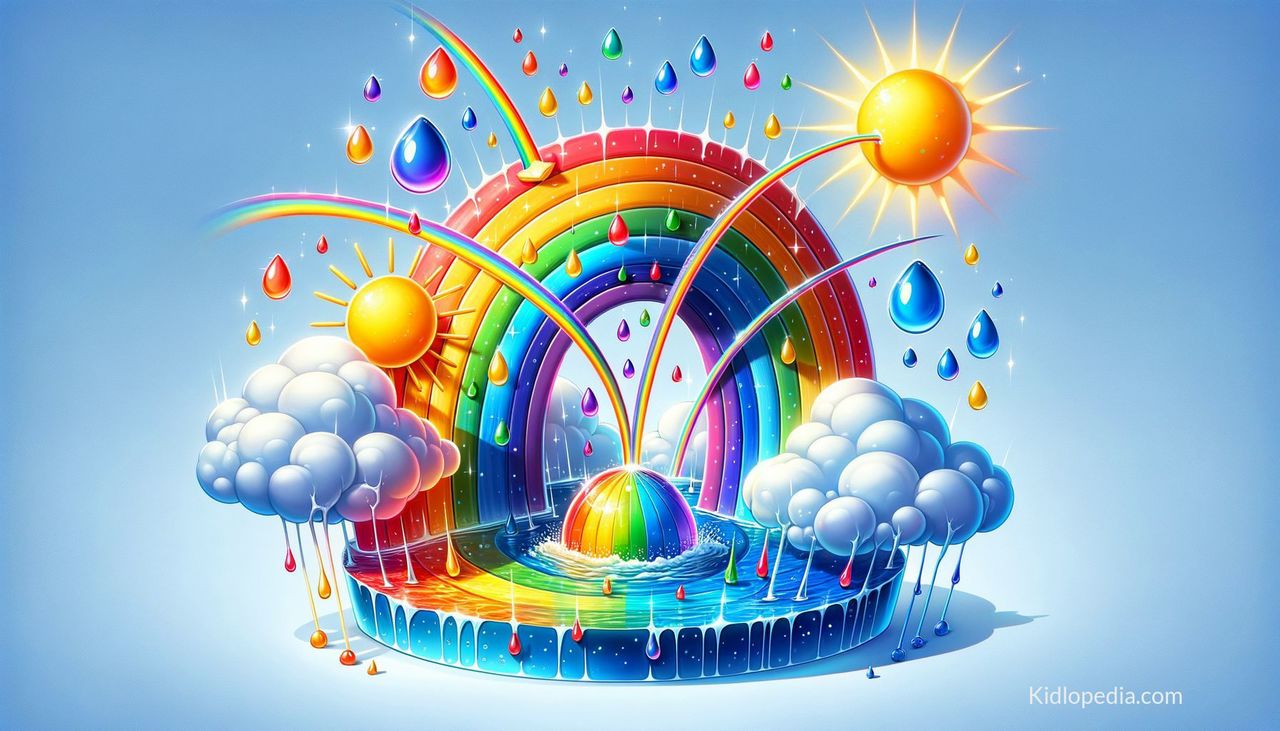
Rainbows are colorful arcs that appear in the sky when sunlight shines through raindrops. When the light enters the raindrop, it bends and splits into many colors, creating a spectrum that we see as a rainbow. Understanding how rainbows form helps us learn about light and nature's beautiful displays.
Rainbows are colorful arcs that appear in the sky when sunlight shines through raindrops.
The formation of a rainbow occurs through a process called refraction, which involves bending and splitting light.
When sunlight enters a raindrop, it slows down and bends.
This bending of light causes it to separate into different colors.
The light continues to travel through the droplet and reflects off the inside surface.
After reflecting, the light bends again as it exits the droplet.
This second bending separates the colors even more, creating a spectrum.
Each color bends at a slightly different angle, which is why we see a band of colors in a rainbow.
The colors of a rainbow are orange, red, yellow, green, blue, indigo, and violet.
An easy way to remember this order is the acronym ROYGBIV. When you look up at a rainbow, you are seeing all these colors blended together to form a beautiful arch.
Rainbows are usually visible when it is sunny and raining at the same time.
The sun needs to be behind the observer, and the rain must be in front.
This position allows the sunlight to enter the raindrops and create the rainbow effect.
Did you know that you can also create a small rainbow using a garden hose?
If you spray water into the sunlight at the right angle, you can see your own mini-rainbow! Did you know that no two rainbows are exactly the same?
Each one is unique based on the size of the raindrops and the angle of the sunlight.
If you want to discover more fun facts about nature, visit Kidlopedia.com!
The formation of a rainbow occurs through a process called refraction, which involves bending and splitting light.
When sunlight enters a raindrop, it slows down and bends.
This bending of light causes it to separate into different colors.
The light continues to travel through the droplet and reflects off the inside surface.
After reflecting, the light bends again as it exits the droplet.
This second bending separates the colors even more, creating a spectrum.
Each color bends at a slightly different angle, which is why we see a band of colors in a rainbow.
The colors of a rainbow are orange, red, yellow, green, blue, indigo, and violet.
An easy way to remember this order is the acronym ROYGBIV. When you look up at a rainbow, you are seeing all these colors blended together to form a beautiful arch.
Rainbows are usually visible when it is sunny and raining at the same time.
The sun needs to be behind the observer, and the rain must be in front.
This position allows the sunlight to enter the raindrops and create the rainbow effect.
Did you know that you can also create a small rainbow using a garden hose?
If you spray water into the sunlight at the right angle, you can see your own mini-rainbow! Did you know that no two rainbows are exactly the same?
Each one is unique based on the size of the raindrops and the angle of the sunlight.
If you want to discover more fun facts about nature, visit Kidlopedia.com!