Basics of Life: Biology
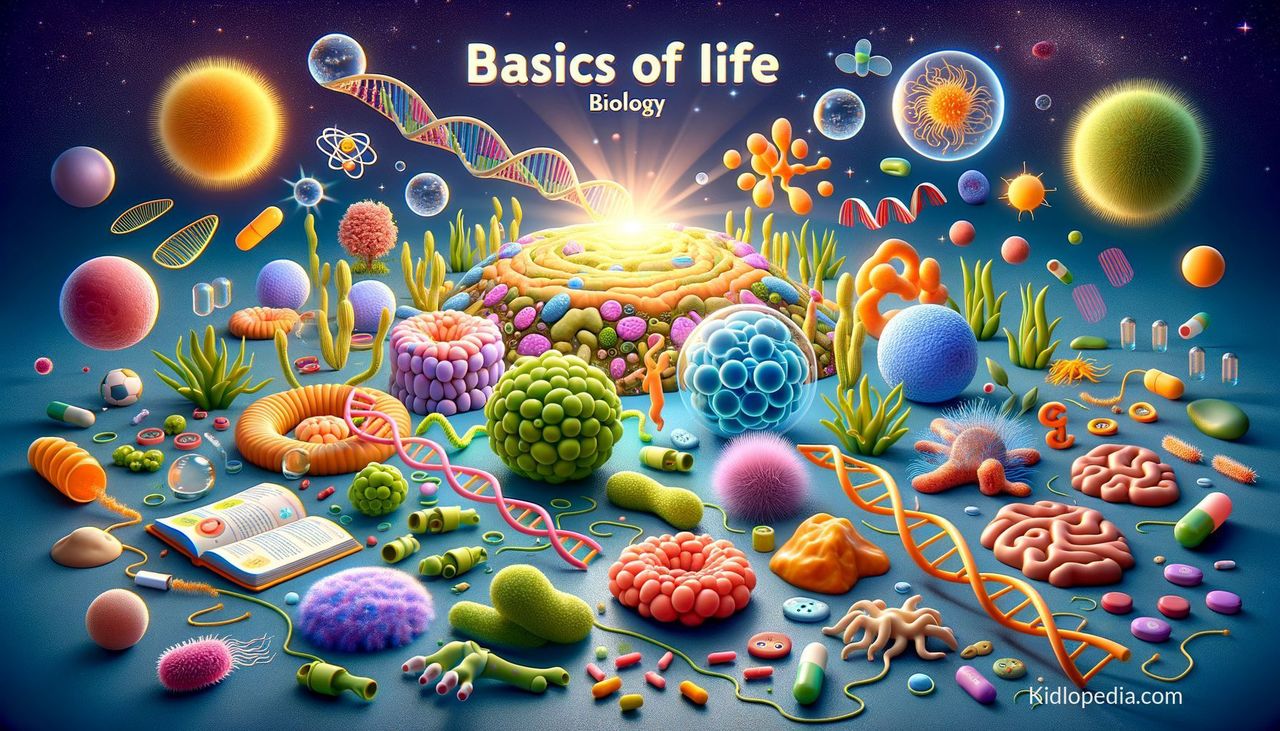
Living things are organisms that exhibit characteristics such as growth, reproduction, and response to their environment. To be alive, they require five essential needs: air, water, food, shelter, and a way to eliminate waste. Understanding these basics helps us appreciate the many forms of life around us and how they interact with their surroundings.
Biology is the study of living things.
Living things are called organisms.
They can be animals, plants, fungi, or tiny microorganisms.
To be alive, organisms share certain traits.
They grow, reproduce, and respond to their environment.
This means they change, make new living things, and react to what happens around them.
All living things require five essential needs to survive.
These needs are air, water, food, shelter, and a way to eliminate waste.
Air is vital because it contains oxygen, which many organisms breathe.
Water is necessary for all living things to stay hydrated and carry out life processes.
Food provides energy needed for growth and daily activities.
Shelter offers a safe place to live, while eliminating waste prevents buildup of harmful substances in their bodies.
Each type of organism has its own way of meeting these needs.
For example, plants take in air and water through their roots and leaves.
They make food using sunlight in a process called photosynthesis.
Animals, on the other hand, eat food to gain energy and need a safe place, like a nest or a den, for protection.
They also have specific ways to get rid of waste, like visiting the bathroom.
Understanding these basics helps us appreciate how different forms of life interact with their surroundings.
For instance, a tree provides air and shelter for birds, while also needing sunlight and water to grow.
Each organism plays a role in its ecosystem, showing how connected all living things really are.
Did you know that some plants can live for thousands of years, while tiny bacteria can reproduce in just a few minutes?
Both are important parts of the living world!
For more exciting topics, visit Kidlopedia.com!
Living things are called organisms.
They can be animals, plants, fungi, or tiny microorganisms.
To be alive, organisms share certain traits.
They grow, reproduce, and respond to their environment.
This means they change, make new living things, and react to what happens around them.
All living things require five essential needs to survive.
These needs are air, water, food, shelter, and a way to eliminate waste.
Air is vital because it contains oxygen, which many organisms breathe.
Water is necessary for all living things to stay hydrated and carry out life processes.
Food provides energy needed for growth and daily activities.
Shelter offers a safe place to live, while eliminating waste prevents buildup of harmful substances in their bodies.
Each type of organism has its own way of meeting these needs.
For example, plants take in air and water through their roots and leaves.
They make food using sunlight in a process called photosynthesis.
Animals, on the other hand, eat food to gain energy and need a safe place, like a nest or a den, for protection.
They also have specific ways to get rid of waste, like visiting the bathroom.
Understanding these basics helps us appreciate how different forms of life interact with their surroundings.
For instance, a tree provides air and shelter for birds, while also needing sunlight and water to grow.
Each organism plays a role in its ecosystem, showing how connected all living things really are.
Did you know that some plants can live for thousands of years, while tiny bacteria can reproduce in just a few minutes?
Both are important parts of the living world!
For more exciting topics, visit Kidlopedia.com!