Space Research: Astronomical Observatories
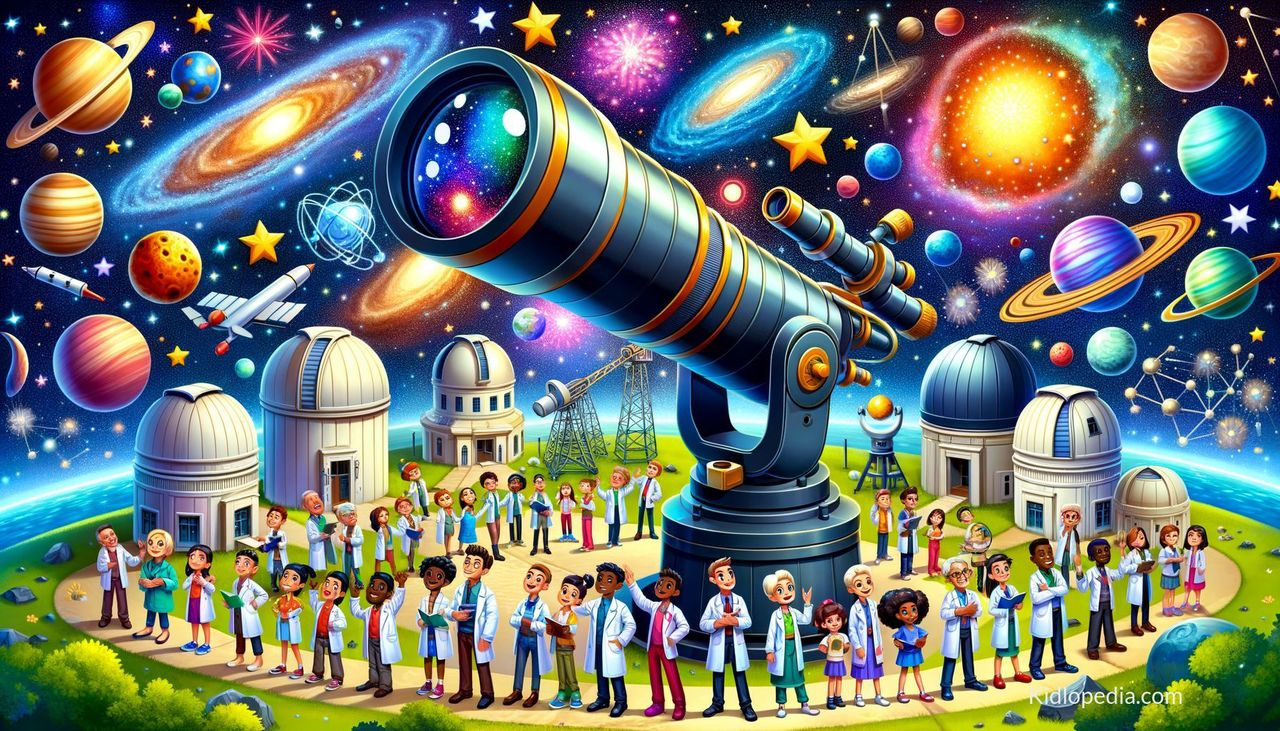
Astronomical observatories are special places equipped with powerful telescopes and instruments that allow astronomers to study celestial objects like stars, planets, and galaxies. Astronomers use these observatories to learn about the universe, including how stars are formed and what other planets are like. Their research helps us understand the nature of space and our place within it, revealing the mysteries of the cosmos.
Astronomical observatories are special places equipped with powerful telescopes and tools that astronomers use to study the universe.
These observatories are often located on mountaintops or remote areas to avoid light pollution from cities.
This allows astronomers to see stars, planets, and galaxies more clearly.
By using these advanced instruments, they can gather important information about celestial objects.
Astronomers study many things at these observatories.
They investigate how stars are formed, how they live, and what happens when they die.
They also look for planets that might have conditions similar to Earth.
Some astronomers search for comets and asteroids, which are small objects that travel through space.
These studies help us learn more about the universe and our place in it.
To gain knowledge, astronomers combine their observations with research from books and articles.
They analyze photographs taken by their telescopes using computers.
This process helps them make sense of what they see in the sky.
Many astronomers work together, sharing their discoveries and findings, which makes their research even stronger.
It is like a big team working to unlock the secrets of space.
Did you know that the largest telescope in the world is located in Hawaii?
It is called the Keck Observatory, and it can see objects billions of light-years away! Also, there are telescopes in space, like the Hubble Space Telescope, which give astronomers a clearer view of the universe without the interference of Earth’s atmosphere.
If you want to discover more fascinating topics about space and science, visit Kidlopedia.com!
These observatories are often located on mountaintops or remote areas to avoid light pollution from cities.
This allows astronomers to see stars, planets, and galaxies more clearly.
By using these advanced instruments, they can gather important information about celestial objects.
Astronomers study many things at these observatories.
They investigate how stars are formed, how they live, and what happens when they die.
They also look for planets that might have conditions similar to Earth.
Some astronomers search for comets and asteroids, which are small objects that travel through space.
These studies help us learn more about the universe and our place in it.
To gain knowledge, astronomers combine their observations with research from books and articles.
They analyze photographs taken by their telescopes using computers.
This process helps them make sense of what they see in the sky.
Many astronomers work together, sharing their discoveries and findings, which makes their research even stronger.
It is like a big team working to unlock the secrets of space.
Did you know that the largest telescope in the world is located in Hawaii?
It is called the Keck Observatory, and it can see objects billions of light-years away! Also, there are telescopes in space, like the Hubble Space Telescope, which give astronomers a clearer view of the universe without the interference of Earth’s atmosphere.
If you want to discover more fascinating topics about space and science, visit Kidlopedia.com!