How the TV Works
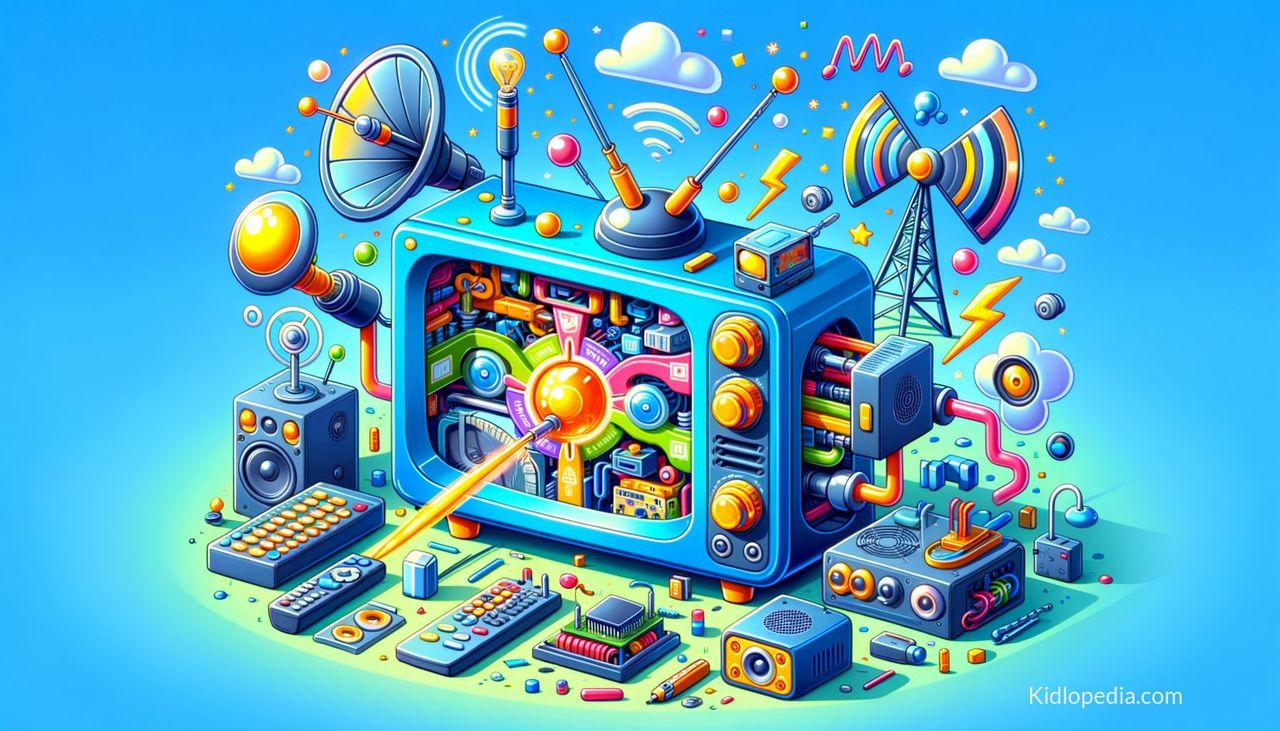
Televisions are devices that receive signals to display pictures and produce sounds so we can watch shows and movies. Signals come from various sources like satellites, cable, or the internet, and they travel through the air to our TV. Inside the TV, a special decoder processes these signals, turning them back into the images and sounds that entertain us.
Televisions are devices that receive signals to display pictures and produce sounds so we can watch shows and movies.
These signals come from sources like satellites, cable, or the internet.
They travel through the air to reach our TV.
First, signals are sent from a satellite or a cable line.
The satellite or cable company sends a stream of information that includes all the show and movie content.
This information travels as invisible signals through the air or through wires to your home.
Inside the TV, there is a special part called a decoder.
The decoder processes the incoming signals.
It breaks down the signals into parts that can be turned into images and sounds.
This is how you see the characters on the screen and hear their voices.
Once the signals are decoded, the TV transforms them into pictures that show on the screen.
At the same time, it produces sounds that come from the speakers.
Together, the images and sounds create the show or movie you are watching.
Did you know that satellites orbit the Earth to send signals to televisions?
Also, the first televisions were very different from the flat screens we use today!
You can discover even more interesting topics at Kidlopedia.com.
These signals come from sources like satellites, cable, or the internet.
They travel through the air to reach our TV.
First, signals are sent from a satellite or a cable line.
The satellite or cable company sends a stream of information that includes all the show and movie content.
This information travels as invisible signals through the air or through wires to your home.
Inside the TV, there is a special part called a decoder.
The decoder processes the incoming signals.
It breaks down the signals into parts that can be turned into images and sounds.
This is how you see the characters on the screen and hear their voices.
Once the signals are decoded, the TV transforms them into pictures that show on the screen.
At the same time, it produces sounds that come from the speakers.
Together, the images and sounds create the show or movie you are watching.
Did you know that satellites orbit the Earth to send signals to televisions?
Also, the first televisions were very different from the flat screens we use today!
You can discover even more interesting topics at Kidlopedia.com.