How the Internet Works
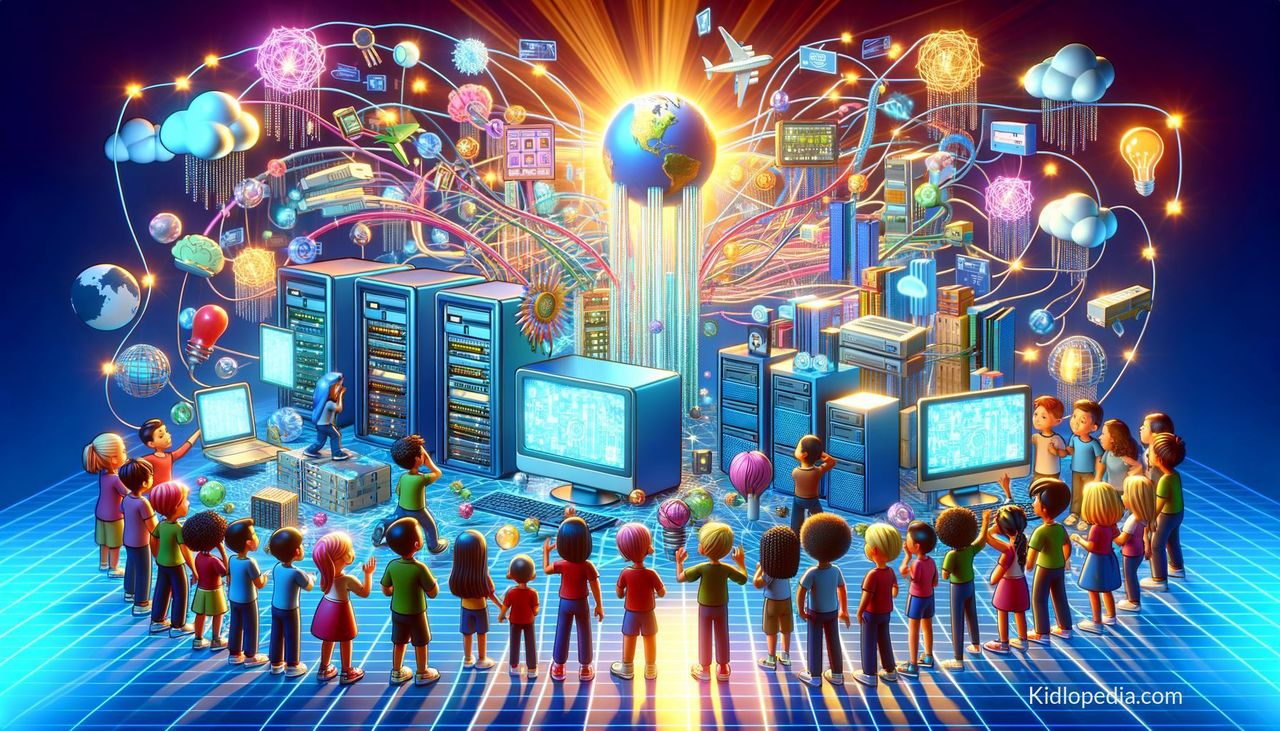
The Internet is a vast network that connects computers and devices around the world, allowing people to communicate and share information instantly. It works by sending messages through cables, including those that run under oceans, using a special address called an IP address to ensure messages reach the correct destination. This connectivity enables activities such as video calls, online learning, and accessing information from anywhere at any time.
The Internet is a vast network that connects computers and devices around the world.
It allows people to communicate and share information instantly.
The Internet works by sending messages through cables.
Some of these cables run underground, while others even stretch under oceans.
When someone wants to send a message, it travels through these cables.
This process is similar to mail delivery, where letters move from one mailbox to another.
Each device connected to the Internet has a special address called an IP address.
This address ensures that messages reach the correct destination, just like how a home address ensures a letter gets to the right mailbox.
The Internet enables many activities.
People can make video calls, send emails, learn online, and access information from anywhere at any time.
All of this happens quickly because of the advanced technology behind it.
The Internet sends and receives data almost instantly, making communication fast and efficient.
Did you know that the first message sent over the Internet was “LO”?
It was meant to say "LOGIN," but the system crashed after just two letters! Also, the cables that connect the Internet worldwide are long enough to circle the Earth several times.
If you want to learn more about fascinating topics, visit Kidlopedia.com!
It allows people to communicate and share information instantly.
The Internet works by sending messages through cables.
Some of these cables run underground, while others even stretch under oceans.
When someone wants to send a message, it travels through these cables.
This process is similar to mail delivery, where letters move from one mailbox to another.
Each device connected to the Internet has a special address called an IP address.
This address ensures that messages reach the correct destination, just like how a home address ensures a letter gets to the right mailbox.
The Internet enables many activities.
People can make video calls, send emails, learn online, and access information from anywhere at any time.
All of this happens quickly because of the advanced technology behind it.
The Internet sends and receives data almost instantly, making communication fast and efficient.
Did you know that the first message sent over the Internet was “LO”?
It was meant to say "LOGIN," but the system crashed after just two letters! Also, the cables that connect the Internet worldwide are long enough to circle the Earth several times.
If you want to learn more about fascinating topics, visit Kidlopedia.com!