The Subatomic World: The Quantum Universe
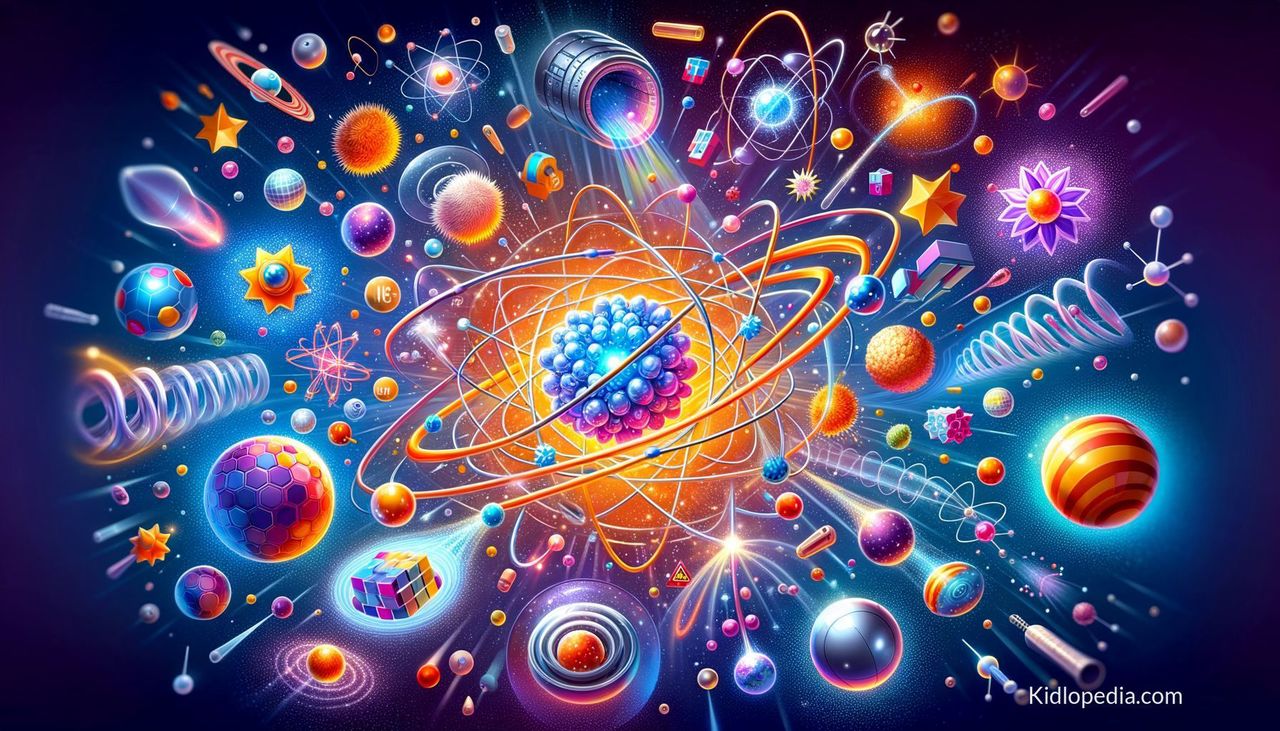
Quantum physics is the branch of science that studies the behavior of the smallest particles in the universe, like atoms and subatomic particles. It explores how these tiny particles interact, move, and exist in ways that can seem strange and surprising compared to our everyday experiences. Understanding quantum physics is important because it helps scientists explain how matter and energy work at a fundamental level, which is essential for the development of new technologies and innovations.
Quantum physics is the branch of science that studies the smallest particles in the universe.
These particles include atoms and subatomic particles, which are even tinier.
Quantum physics helps us understand how these tiny particles behave and interact with each other.
In the subatomic world, particles can act very differently compared to what we see in our everyday lives.
For example, one particle can be in more than one place at the same time.
This can seem strange because in our world, we only see things in one place at a time.
Quantum particles can also disappear and reappear, making them seem like they are playing a game of hide and seek.
These particles work together to make up everything we see around us.
Atoms, which are made of even smaller particles like protons, neutrons, and electrons, combine to form molecules.
Molecules are the building blocks of all matter, including the air we breathe and the food we eat.
Understanding quantum physics is very important.
It helps scientists create new technologies, like computers and smartphones.
By studying how tiny particles work, scientists can invent new ways to harness energy and create materials with special properties.
Did you know that quarks are the building blocks of protons and neutrons?
Also, a photon is a particle of light that can travel at incredible speeds!
Explore more topics like this at Kidlopedia.com!
These particles include atoms and subatomic particles, which are even tinier.
Quantum physics helps us understand how these tiny particles behave and interact with each other.
In the subatomic world, particles can act very differently compared to what we see in our everyday lives.
For example, one particle can be in more than one place at the same time.
This can seem strange because in our world, we only see things in one place at a time.
Quantum particles can also disappear and reappear, making them seem like they are playing a game of hide and seek.
These particles work together to make up everything we see around us.
Atoms, which are made of even smaller particles like protons, neutrons, and electrons, combine to form molecules.
Molecules are the building blocks of all matter, including the air we breathe and the food we eat.
Understanding quantum physics is very important.
It helps scientists create new technologies, like computers and smartphones.
By studying how tiny particles work, scientists can invent new ways to harness energy and create materials with special properties.
Did you know that quarks are the building blocks of protons and neutrons?
Also, a photon is a particle of light that can travel at incredible speeds!
Explore more topics like this at Kidlopedia.com!